
Last updated November 17, 2026








Free written scope consultation - allowances, timeline, and change-order rules on paper before a single trade is scheduled
Seasonal Construction Care for Tustin: Year-Round Homeowner’s Guide
Tustin averages more than 280 days of sun a year, and that steady exposure does quiet work on your home: it dries out sealant joints, shrinks caulk lines, and breaks down surface coatings long before you notice anything wrong. Most homeowners here are told Southern California has no real seasons, so they skip the maintenance cycles that catch the majority of construction problems while they’re still cheap to fix. This guide lays out a month-by-month maintenance calendar built specifically for Tustin’s climate, its drainage patterns, and the way its inland heat cycles hit roofing, flatwork, and exterior finishes.
Quick Answer
Seasonal construction care in Tustin means running four maintenance passes a year: a pre-Santa Ana wind-stress check in late summer (August-October), active winter rain prep for low-lying and slope-adjacent lots, a post-rain foundation and flatwork assessment in early spring, and a UV and heat-cycle review in mid-summer. Log every observation in a rolling 12-month record so any future contractor, inspector, or buyer can see what was checked and when.
Styles & brands we work with
- Kitchen remodeling
- Bathroom remodeling
- Home additions & ADU
- Roofing
- Windows & doors
- Driveway & pavers
- Fence
Table of Contents
- Why “No Seasons” Is the Most Expensive Myth in Tustin
- The Pre-Santa Ana Checklist: August through October
- Winter Rain Prep: Reading Tustin’s Drainage Patterns
- Spring Post-Rain Assessment: What Winter Revealed
- Summer UV and Heat Cycle Maintenance
- Building a Rolling 12-Month Maintenance Log
- Neighborhood Notes Across Tustin
- Common Mistakes to Avoid
Why “No Seasons” Is the Most Expensive Myth in Tustin
Tustin sits in the inland coastal transition of Orange County, which means it avoids the marine layer that keeps Newport Beach cool but catches a lot more direct sun and bigger afternoon temperature swings than people expect. A house in Old Town Tustin can swing 35 to 40 degrees between a June morning and afternoon. That daily expansion and contraction is the engine behind most of the slow damage we see on exteriors.
The climate here isn’t extreme. It’s relentlessly consistent, and consistency is what accumulates. You won’t get the dramatic freeze-thaw cycles that crack foundations in the Midwest. You’ll get hundreds of smaller cycles that work on the same seams year after year until one of them opens up. By the time water is showing up in a garage or a stucco patch is crumbling, that seam has usually been failing for two or three years.
Here’s what the pattern looks like in practical terms:
- Ultraviolet load: Roughly 280+ sunny days a year degrade elastomeric sealants, paint film, and asphalt roofing faster here than in cloudier climates at the same temperature.
- Heat cycling: Daily expansion and contraction stress the joints between dissimilar materials – stucco to wood trim, concrete flatwork panels, window frames to wall openings.
- Dry-then-wet patterns: Long dry stretches shrink soils slightly, then winter rain hits a shrunken soil bed all at once. That’s where most of the settlement cracking we see in Tustin flatwork comes from.
- Wind events: Santa Ana winds in fall push on roof edges, fences, awnings, and tree limbs at exactly the point when sealants have spent all summer cooking.
The good news is that a homeowner who runs the four seasonal passes in this guide tends to stay ahead of the curve. Most of the problems we’re called out to fix in Tustin could have been caught as a $200 reseal or a $400 drainage correction if someone had looked at the right thing at the right time of year.
The Pre-Santa Ana Checklist: August through October
Santa Ana winds arrive most reliably between October and December, but the damage window starts in August. That’s when the sealants around your roof penetrations, flashing edges, and window perimeters have taken a full summer of heat and UV and are most brittle. A wind gust hitting a brittle joint is how a small leak becomes a ceiling repair.
The pre-Santa Ana pass has three jobs: clear drainage, inspect joints, and catalog surface cracks before the wind stress arrives. Everything you do here is preparation, not repair – the point is to arrive at the first wind event with nothing loose, nothing clogged, and a written record of what you found.
- Clear the drainage path (early September). Get on the roof and remove debris from valleys, scuppers, and downspout inlets. Clear the grade-level channels, French drains, and yard drains. A leaf-clogged scupper in October is a flooded garage in December.
- Walk the roof perimeter from the ground with binoculars. Look for lifted shingle tabs, curled edges, and any ridge or hip cap that’s sitting proud. Those are the pieces Santa Ana winds take first.
- Inspect every caulk and sealant joint you can safely reach from a ladder – and only from a ladder. Window perimeters, door frames, stucco control joints, and the sealant band where any roof penetration meets the roof surface. Flag anything that has pulled away, cracked, or gone chalky.
- Catalog surface cracks with photographs. Walk the driveway, patio, walkways, and any stucco walls. Photograph every crack alongside a ruler or a coin for scale, and note the date. You’ll use these photos in the spring to measure whether a crack has grown.
- Check fences and gates before the wind does. Post-to-rail connections, gate hinges, and any fence line close to the house. A leaning fence section that looks fine in calm weather can be a missile in a 60 mph gust.
- Trim trees away from the roofline. Aim for at least 6 feet of clearance from roof surfaces. Palm fronds and eucalyptus limbs are the most frequent roof-damage culprits in Tustin.
- Write it all down. Date, location, observation, action taken, and photos. The log entry takes five minutes and it’s the single highest-value habit in this guide.
What “brittle” looks like on a joint
A healthy sealant joint flexes slightly when you press on it with the pad of your thumb, and it looks continuous and slightly glossy. A deteriorating joint looks chalky, has pulled away from one side, or shows hairline cracks through its thickness. Once it reaches that stage it will not survive a wind event. That’s the entire decision rule: if the joint has gone chalky, plan to have it replaced before the fall wind window.
The roof edge and the fence line get special attention
Two assemblies take the brunt of Santa Ana winds. The roof edge – specifically the rake edge and the first course of shingles along it – is where uplift starts, and any weakness there cascades across the roof. The fence line is the other. The 730-Day Done Right Promise matters here in a practical way: if you’re replacing a failing fence before the wind season rather than after, you want a written guarantee behind the installation. Our fence installation in Tustin work typically uses Barrette or Master Halco systems because the fasteners and post anchoring are spec’d for wind exposure, not just appearance.
Winter Rain Prep: Reading Tustin’s Drainage Patterns
Most of Tustin’s rain comes between November and March, usually in a handful of concentrated storms rather than a slow, steady drizzle. That pattern matters: a dry soil bed takes the first big storm poorly, and any spot where water can pond for a few hours can turn into a grading problem within a couple of seasons. The prep work you do in October and November determines how well your property handles the first storm of the year.
Homes in Tustin break into two categories for drainage purposes, and they need different approaches.
Low-lying lots: active management
If your lot sits in a basin, near a drainage channel, or downhill from neighboring parcels, you need an active system – meaning water gets captured and moved, not just absorbed. That usually means a combination of yard drains in the low spots, a channel or swale directing water away from the structure, and a positive slope away from the foundation for the first six feet. The critical thing to check before the first storm is that none of those pathways are blocked. Leaves, sediment, and construction debris collect in yard drains over the summer and render them useless by December.
- Pop off each yard drain grate and clear the basin down to the pipe inlet.
- Use a hose to confirm each drain actually moves water and doesn’t back up.
- Verify that any swale or channel has a continuous downhill path – no low spots where water can pool.
- Confirm the soil immediately against the foundation slopes away from the house at roughly 6 inches of fall over the first 10 feet.
Slope-adjacent lots: passive systems plus erosion control
Homes on the uphill side of the city – the lots that back into the hills and foothills above Tustin Ranch and out toward the canyon edges – usually rely on passive systems: grading, swales, and the natural drainage of the slope. The failure mode on these lots isn’t a clogged drain. It’s water crossing a footing, undermining a retaining wall, or cutting a channel through landscaping on its way downhill.
Before the rain starts, walk the uphill boundary and confirm the swale or interceptor drain is clear and continuous. If you have a retaining wall, check the weep holes at the base – they should be open and should not be discharging into a spot that runs back toward the foundation. For walls showing any bow, lean, or water staining on the face, get a professional assessment before the wet season, not after.
Gutters and downspouts
The worst drainage mistake we see in Tustin is a downspout that dumps water directly at the foundation. It looks fine in the dry season. When the first real storm hits, that single point takes 50 to 100 gallons of water against the footing in a short window. Extend downspouts at least 3 to 4 feet from the foundation and confirm they’re discharging onto a slope that carries water away.
Windows and doors before the rain
Check every window frame for a sealant joint that’s separated, and open and close every exterior door to confirm the weatherstripping is intact. Andersen and Therma-Tru units hold up well in Tustin’s climate, but they still depend on the perimeter seal at the wall opening. If you’re replacing windows this fall, plan for the Groundwork Construction Co. of Tustin home team to walk you through the correct flashing detail – that’s what keeps a rain event from becoming a wall-repair project.
Spring Post-Rain Assessment: What Winter Revealed
Spring in Tustin is when your home’s winter story becomes visible, and the window to read it correctly is short. As the soils dry out from March through May, they settle and re-shrink, which either closes cracks back up (hiding the evidence) or opens them up wider (making the problem permanent). The point of the spring pass is to look at the winter’s record before the soil fully dries.
The right time is right after the last significant storm, usually late March or early April. Walk the property with a camera and your fall photographs, and compare.
- Compare flatwork cracks to your fall catalog. A crack that has visibly widened, or a new crack that wasn’t there in October, tells you there was settlement or heave over the winter. Photograph it with a scale reference again.
- Look for mud staining or sediment lines at the base of walls and retaining structures. A visible line of dried mud at the base of a stucco wall or footing is the signature of water that stood against the structure for hours. That’s your cue to find where the water came from.
- Check the driveway, patio, and walkways for new ponding. After a storm, a spot that drains slowly in the daylight is a spot that will eventually undermine. Take note of which panel or corner ponds and note the depth with a tape measure it if you can.
- Inspect the interior for water evidence. Even under a slab-on-grade house, a persistent musty smell in the garage, or efflorescence (the white powdery staining) on interior concrete, points to a moisture path you need to trace.
- Inspect retaining walls for movement. A retaining wall that leans by even half an inch between fall and spring needs a professional evaluation. Note the date and location and photograph it against a level.
- Check the roof edge and the attic. A roof leak often shows in the attic before it shows on the ceiling. Look for water staining on rafters, sheathing, and insulation in the days after a storm.
- Log the findings. Date, location, observation, and any action taken. The log entries from spring are what make your next contractor’s job much easier.
How to read what winter revealed about foundation, flatwork, and retaining walls
The most useful distinction is between a cosmetic crack and a structural one. A cosmetic crack – typically hairline, on the surface, following the panel joints or the natural shrinkage pattern – is normal and doesn’t need immediate action. A structural crack is typically wider than a credit card, runs diagonally or in steps, offsets vertically between two sides, or is accompanied by wall or floor movement. Any of those signs should get a professional look before summer.
Retaining walls are in a category of their own. Weep holes that stopped discharging, a bow of more than an inch over the wall’s height, or visible soil movement at the top are signs the wall’s drainage system has failed. That’s a job for a professional, and correcting drainage behind a retaining wall early is dramatically less expensive than rebuilding it after a collapse. Our team typically finds this in Tustin at the base of canyon-edge lots, where the natural slope drains onto the property with nowhere else to go.
What the spring pass is NOT
The spring pass is not a repair trip. It’s a reading of the winter’s evidence, and what you decide to repair depends on what you find. Doing the assessment and delaying the repair decision to the summer means you have clean information and can price the work without weather pressure.
Summer UV and Heat Cycle Maintenance in Inland Orange County
The Tustin summer is deceptive because it doesn’t feel extreme – it’s 85 to 95 degrees, not 115 – but sustained heat above 90 degrees combined with high UV degrades exterior materials faster than a lot of hotter climates would, because here there’s very little cloud to break up the exposure. June through September is when you’ll see the fastest loss of flexibility in sealants and the most movement in flatwork and stucco.
Here’s what needs attention in the summer pass, roughly in order of how much it costs to skip.
Roof assemblies
Asphalt shingles in Tustin typically see their granule loss and curling start in summer, because that’s when the heat and UV load peaks. Walk the roof from the ground or a ladder and look for shingles losing granules, curling at the edges, or a soft dark look that was once a uniform color. GAF and Owens Corning shingle systems both specify UV exposure ratings that hold up here, but only if the roof is kept clear of overhanging tree limbs and the sheathing hasn’t previously been wet.
Exterior sealants and caulk
Every sealant joint in the house has a service life, and in Tustin that service life is shortened by the heat cycle. The joints that take the most abuse are window perimeters, control joints in stucco, expansion joints in concrete, and the seam where the roof apron meets the wall. If your fall walk flagged chalky joints and spring didn’t show water intrusion, summer is when to replace them – the dry weather gives new sealant the best chance to cure correctly.
Stucco and hardscape
Stucco on Tustin homes has to move with the sun and heat cycle, and it does – via the control joints. When a control joint fails, hairline cracks run diagonally across a wall. On the flatwork, the joint you want to inspect is the expansion joint between concrete panels. If the sealant in those joints has dried out, the summer expansion has nowhere to go, and that’s when panels crack.
Windows and doors
Andersen and ViewLux window installations in Tustin typically hold up well through the summer, but the trick is checking the perimeter seals and the hardware at the same time. Sticking doors, hard-to-close windows, and gap widths that change between morning and afternoon are all normal signs of thermal movement – they only become a problem when they don’t return to normal by evening.
Irrigation and the water bill trap
This is not landscaping advice, so much as a warning: a sprinkler head knocked out of alignment during the fall wind season will pump water against your foundation all summer if you don’t catch it. Walk the irrigation heads once a month and check the spray pattern is hitting planting beds, not wall surfaces. That single check has saved more foundations in Tustin than any other summer habit.
Building a Rolling 12-Month Maintenance Log That Any Contractor Can Use
The rolling 12-month maintenance log is the single most valuable habit in this guide. It’s also the one most homeowners never get around to. The reason is that people start a log for a single reason – a warranty claim, a leak, a home sale – and then abandon it. A rolling log, though, works because every entry stays in one place, in date order, and eventually covers the full seasonal cycle.
Here’s the record structure we recommend using – it works on paper, in a note app, or in a shared folder with the photos saved alongside.
- A single location. One folder or one notebook, not scattered photos on a phone and notes on the kitchen counter. The point is that the record survives year over year and is easy for someone else to read.
- One entry per inspection, dated. Date, the person who walked it (you, a contractor), the season, and what location was inspected.
- A photo reference number. Every entry gets a matching numbered photo. The fall and spring photos need a ruler or coin next to the crack for scale.
- Observation and status. What you saw, and one of three status flags: OK (nothing to do), Watch (needs re-inspection), or Action (repair scheduled or completed).
- Action record. If work was done, who did it, what was done, and when. This is the part that matters on resale.
- The date of the next scheduled inspection. Tie the next one to the season – pre-Santa Ana, winter rain prep, spring post-rain, summer UV.
Why this documentation helps on resale
A buyer’s inspector is going to find cracks and sealant wear. Every older home has them. The question the buyer’s agent asks is whether those are tracked problems or unknown problems. A rolling log that shows the fall-to-spring comparison on a driveway crack, or a dated record of the last window reseal, answers that question directly. Documentation that shows consistent, dated maintenance usually makes buyers more comfortable with an older home than a recently flipped one with no paper trail. It also supports any warranty coverage – if a contractor installed something and something failed, the log shows the date and the condition, which supports the claim.
A real, dated record of maintenance is the best possible thing to hand to a contractor you’re considering for a larger project. It shortens their discovery process for estimating and it gives them a real basis to plan against. If you’re planning a driveway and pavers project in Tustin, the log tells them which panels already had hidden settlement so they can plan the base correctly.
We build our project estimates around exactly that information. Every plan we quote includes a written line-item scope and our full home additions and ADU specialty for Tustin properties, backed by the 730-Day Done Right Promise – if the workmanship isn’t right, we make it right.
Neighborhood Notes Across Tustin
Tustin isn’t one climate – the micro-patterns across the city are noticeably different, and they change what the seasonal passes should focus on.
Old Town Tustin
The older homes in Old Town date back to the citrus and early residential era, and many have been through multiple re-roofs and re-seals. Sealant joints on those homes run wider than on modern construction, and the control joints and window profiles need more frequent inspection than a newer build. The pre-Santa Ana pass matters most here because the trees are mature and the wind exposure through the neighborhoods is high.
Tustin Ranch and the newer subdivisions
Homes in Tustin Ranch are typically 20 to 30 years old, which is right at the age when the first re-roof and first major exterior reseal become due. Summer UV exposure tends to be the driving concern here, and the roofs are the piece to watch closely through the summer pass. The flatwork on these lots drains well but tends to settle at the driveway approach and the front walkway – watch for that after the first rain.
Northwest Tustin and the low-lying areas
The lots closer to the creek channels and the lower parts of the city need active drainage management in the winter. If your property sits downslope from neighbors, the winter rain pass is the most important one on the calendar. Clear the drains, confirm the swale is continuous, and get the downspouts away from the foundation.
Slope-adjacent lots toward the canyon edges
The lots on the uphill side of Tustin – including the properties that back into the foothills above the city – depend on passive drainage and retaining walls. The spring post-rain pass matters most here, and any retaining wall movement should get a professional evaluation before summer.
Common Mistakes to Avoid
- Skipping the fall pass because the weather is still nice in October. The sealants are already at their most brittle by early fall, and a Santa Ana wind event can do the damage in an afternoon. Do the pre-Santa Ana inspection before the wind starts, not after.
- Treating every part of Tustin as one climate. The slope-adjacent lots need a different winter approach than the low-lying lots near the creek channels. Running the same checklist on both properties results in the wrong maintenance on each.
- Not photographing cracks with a scale. A crack without a ruler or coin in the photo is impossible to compare year over year. That comparison is the entire point of the log.
- Letting a downspout discharge at the foundation. This single oversight causes more foundation moisture problems than any other exterior detail. Extend it 3 to 4 feet and confirm the water runs away.
- Skipping the spring reading and jumping straight to repairs. Spring is when you read what winter revealed – if you repair before you read, you can’t tell whether a fix worked. Take the photos, fill out the log, then decide about repairs.
- Ignoring irrigation during summer. A misdirected sprinkler head will soak a foundation wall every day through the summer. Walk the heads once a month and confirm the spray pattern stays out of the wall surfaces.
- Not having a real warranty behind larger work. If a fence or a roof was installed and the workmanship fails in the second or third year, a one-year warranty leaves you paying twice. Confirm the length and terms in writing before the work starts.
See the difference
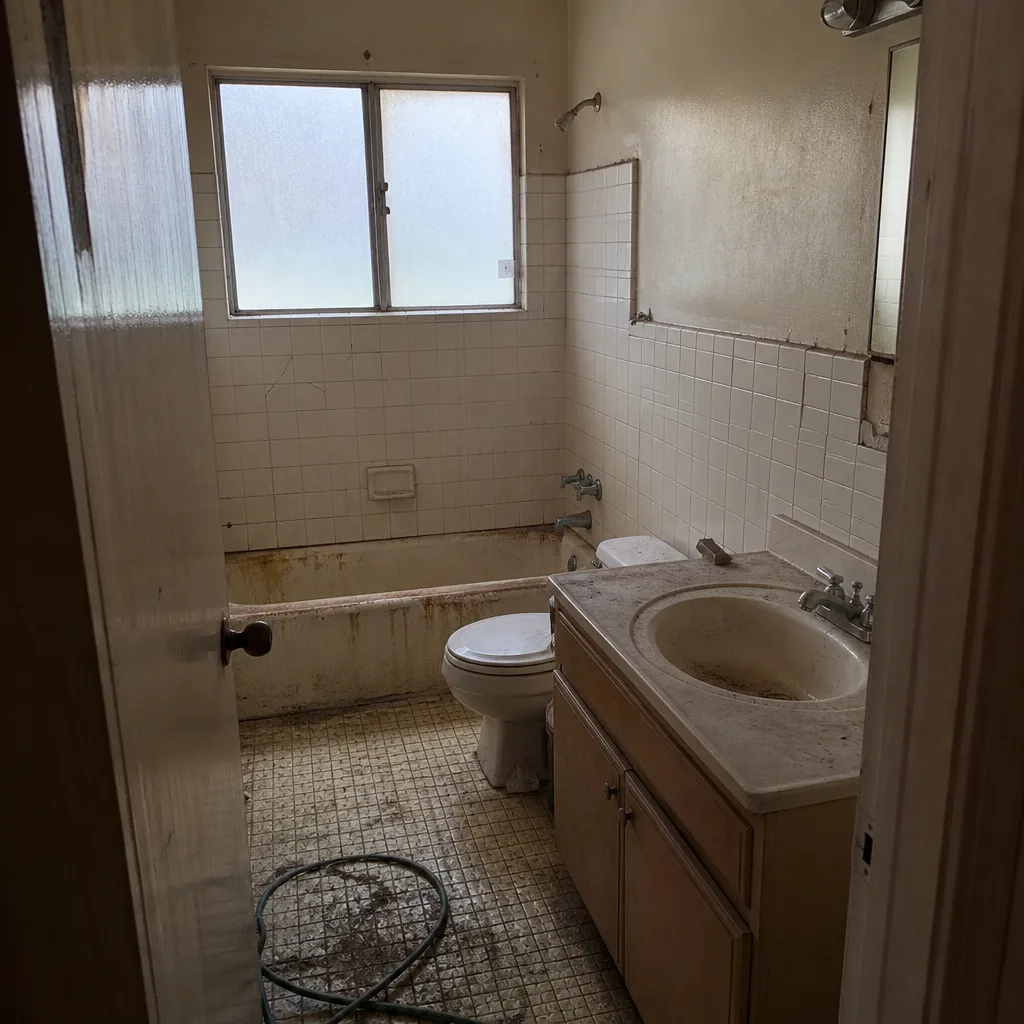 Before
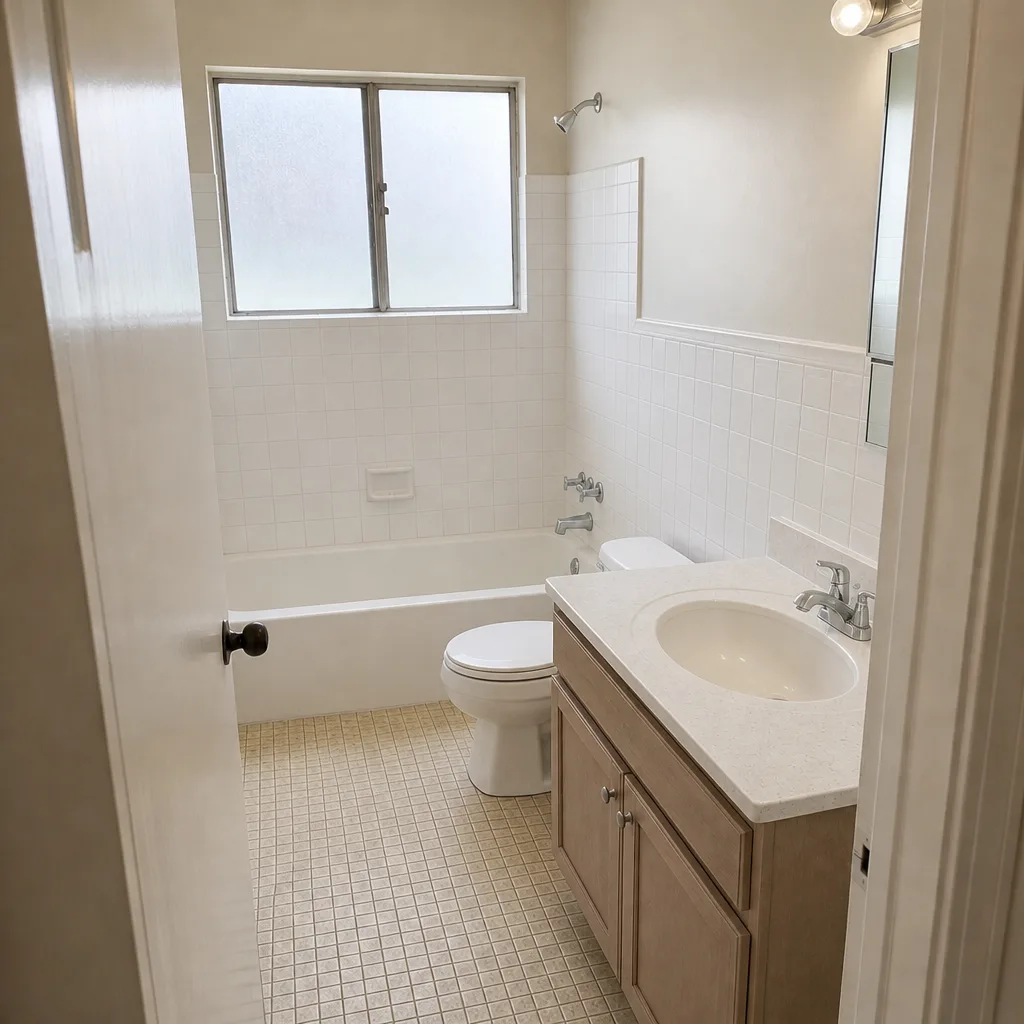 After
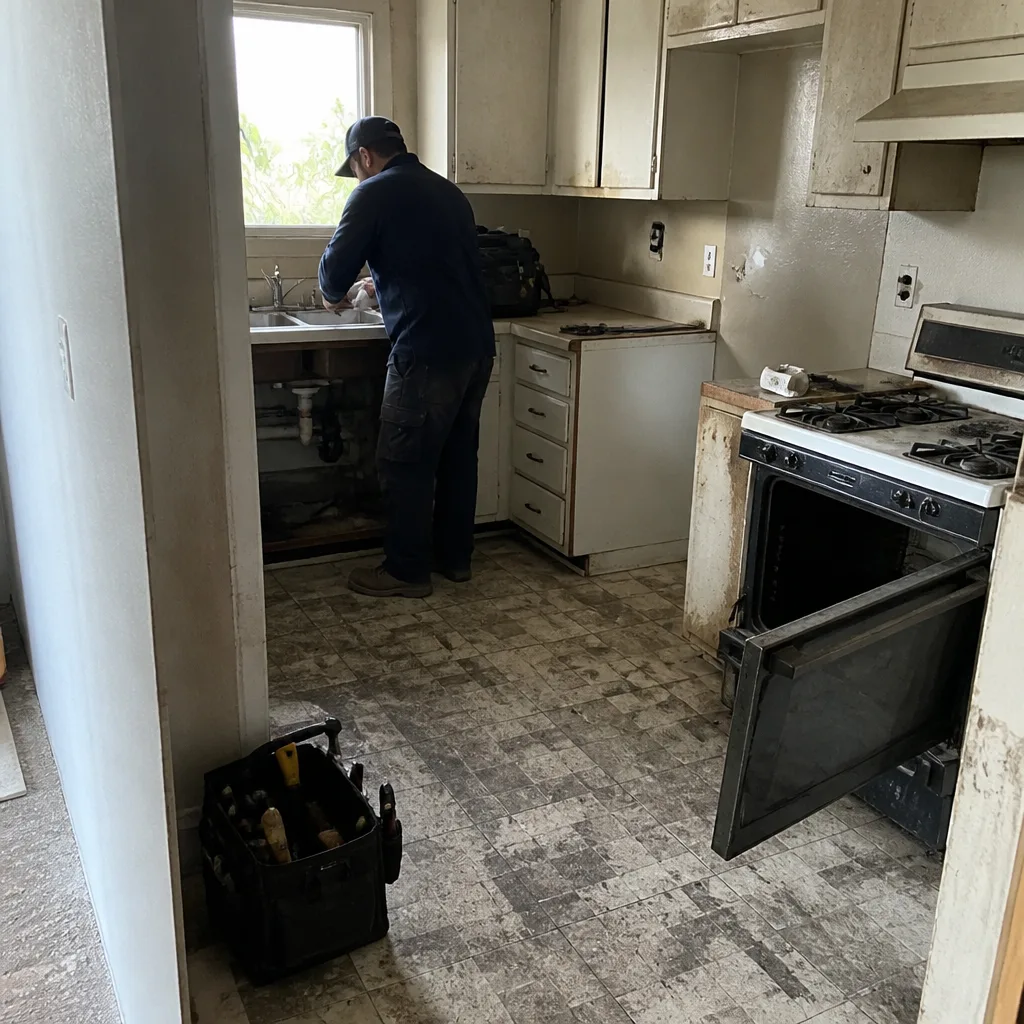 Before
 After
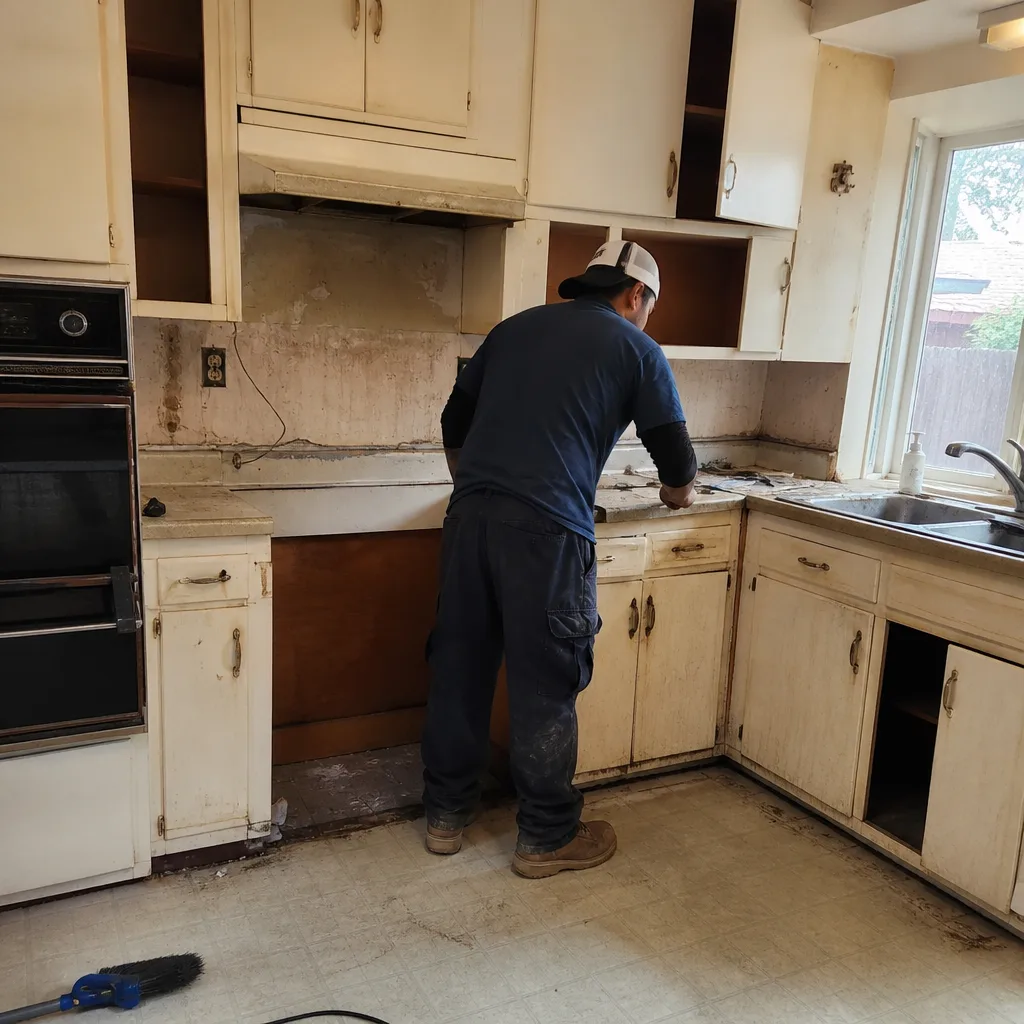 Before
 After
When to Call a Professional

Some parts of this guide are genuinely homeowner work. Photographing cracks, clearing a drain grate, checking a downspout, walking the roof from the ground with binoculars – all reasonable. But several of the tasks are not safe, and we’d rather say so plainly.
Get a professional involved for anything involving a working-height roof, especially steep-pitch or two-story roofs. That includes any actual sealant work at roof penetrations, flashing repair, or shingle inspection up close. Falls from a residential roof are among the most serious injuries a homeowner can suffer, and UV-degraded shingles are more slippery than they look. Same for any foundation assessment, retaining wall crack or movement, structural wall cracking, or sealant work above a standard step-ladder height.
The team at Groundwork Construction Co. of Tustin offers free estimates in Tustin and can walk the property with you, run the pre-Santa Ana inspection, and give you a written, line-item scope so you know exactly what a fix covers before any work begins. We answer calls with a live person around the clock – no voicemail, no waiting until Monday morning. Call (833) 954-6066 to schedule your free estimate.
Frequently Asked Questions
Four times a year, timed to the seasons: pre-Santa Ana in August through October, winter rain prep in November, spring post-rain assessment in late March or April, and summer UV and heat-cycle review in June through September. Each pass takes 30 to 60 minutes for a homeowner walking the property from the ground with a camera and binoculars.
Winter rain prep, without question. Prioritize clearing every yard drain, confirming a continuous swale or channel, and extending downspouts well away from the foundation. If the property sits downslope from neighbors, doing these three things before the first storm almost always prevents the water intrusion we see on these lots. Call (833) 954-6066 to have us walk the drainage with you before the wet season.
No, but it helps. A dated maintenance log – with photos of cracks and their change over time – gives a buyer’s inspector and agent a track record to point to. In our experience, documented maintenance on older Tustin homes usually makes buyers more comfortable than a fresh flip with no paper trail. A real log that shows a foundation crack was tracked, and didn’t grow, is more reassuring than a crack that was never mentioned.
Get a professional for anything at roof height, especially on a steep-pitch or two-story roof. UV-degraded shingles are more slippery than they appear and the sealant joint you’re trying to reach is often in the worst spot for footing. A homeowner can reseal a window frame or a control joint at step-ladder height safely; roof-level work is one where we’d recommend calling. Our technicians are background-checked and come in uniform, and a free estimate includes a full inspection of the roof-level details.
It shouldn’t. Upfront pricing, no surprises is how we quote every project – what you see in the written quote is what you pay, and the quote is line-itemed so you know what’s covered. If a contractor can’t give you a line-itemed written scope before work begins, that’s your cue to get a second quote. Call (833) 954-6066 for a free estimate, and our 0% financing for 18 months and $1,000 off projects over $10,000 apply to qualifying work.
Material life varies with the product and the install detail, but a properly installed fence or roof in Tustin should last well past the typical one-year workmanship warranty window. We back workmanship with the 730-Day Done Right Promise – if it’s not done right, we make it right, for 730 days. When you compare quotes, ask any contractor how long their workmanship warranty runs. If it’s 12 months, ask them why they’d bet less on their own work than the seasons will.
The Bottom Line

Tustin’s climate doesn’t punish houses with dramatic weather events. It punishes them with consistency: hundreds of sun cycles, hundreds of expansion-contraction cycles, a handful of concentrated winter storms. The four-pass maintenance calendar – pre-Santa Ana, winter rain prep, spring post-rain assessment, summer UV review – catches the vast majority of these slow problems while they’re still cheap. Add a rolling 12-month log and you’ve built something a future contractor, inspector, or buyer can read in five minutes. When a job goes beyond a homeowner checklist, get a professional on the roof, the foundation, or the retaining wall. And when you’re ready for a quote on real work, call (833) 954-6066 for a free estimate from Groundwork Construction Co. of Tustin – we’ll walk the property with you, write a line-itemed scope, and back the work with the 730-Day Done Right Promise.
Written by the team at Groundwork Construction Co. of Tustin.