Last updated November 17, 2026







Free written scope consultation - allowances, timeline, and change-order rules on paper before a single trade is scheduled
Fence Installation Warning Signs Every Homeowner Should Know
A fence that fails inspection in Tustin can legally be ordered demolished at the homeowner’s expense, and the contractor who installed it is often long gone by the time the notice arrives. That’s the part most guides won’t tell you. The contractor who quotes a number so low it makes you blink is rarely the honest one working on thin margins. The tell isn’t the price itself, it’s what that price quietly leaves out. A missing permit, a skipped utility locate, a post set 14 inches deep instead of 24. We’ve walked plenty of Tustin properties where a fence went up fast and then started leaning within two rainy seasons, long after the deposit cleared and the phone stopped being answered. Read this before you sign anything, and you’ll know how to spot a bad operator before the first shovel hits the ground.
Quick Answer
The biggest warning signs of a bad fence contractor are: a quote that’s dramatically lower than every other bid, refusal to pull a permit or call 811 for a utility locate, a contract with vague scope language like “standard installation,” and pressure to pay a large deposit in cash before any work is scheduled. If a contractor can’t or won’t put post depth, footing specs, and hardware details in writing, walk away. In Tustin, where clay-heavy soil and dry summers test every post, those missing details are exactly what fails first.
Styles & brands we work with
- Kitchen remodeling
- Bathroom remodeling
- Home additions & ADU
- Roofing
- Windows & doors
- Driveway & pavers
- Fence
Table of Contents
- Why the Lowest Bid Is the Warning Sign
- The 811 Utility Locate: The Warning Sign Most People Miss
- Contract Red Flags: “Standard Installation” and Other Empty Phrases
- The Post-Hole Depth Test: What California Code Requires
- On-Site Behavioral Signals a Crew Is Rushing
- How to Check a License with the CSLB in 60 Seconds
- Common Mistakes to Avoid
- When to Call a Professional
Why the Lowest Bid Is the Warning Sign
Here’s the counterintuitive truth: the most dangerous fence contractor isn’t the one who quotes sky-high and gets ignored. It’s the one who quotes suspiciously low, takes a deposit, and disappears once the check clears. That gap between the low bid and a realistic one has to come from somewhere, and it’s never the contractor’s profit. It comes out of your fence.
When we see a bid 30% below the others, we know exactly where that money went. Concrete footings get skipped or cut shallow. Posts go in at half the required depth. Hardware gets swapped for a lighter-gauge hinge that rusts out in a couple of seasons. The crew doesn’t pull a permit because pulling one means an inspector will look at the depth and the footings. That low number isn’t a discount, it’s a deferred bill you’ll pay later in demo costs, repairs, and sometimes a city order to remove the whole thing.
In Tustin specifically, a budget fence bid usually reveals itself in the footing specs. Local soil holds a lot of clay, which shrink-swells hard through a dry summer and a wet winter. Shallow posts in that soil heave and lean quickly. We’ve watched fences on North Tustin hillside lots start tilting within 18 months of a rushed install, no matter how good the panels looked on day one.
How to read three bids side by side
- Line up the post-depth spec. If one bid omits it, that’s your lowest number.
- Compare the footing material. “Concrete setting” and “post set in concrete footing with gravel base” are not the same thing.
- Check the hardware list. Brand names, gauge, and finish should be named, not summarized as “quality hardware.”
- Ask each bidder to list what’s excluded, then see who hedges on the permit, the haul-away, or the finish.
A trustworthy contractor is happy to be compared line for line. A contractor who gets defensive when you ask for that comparison just told you something too. If you’d rather skip the guessing entirely, our Fence Installation in Tustin page lays out exactly what a complete scope should include.
The 811 Utility Locate: The Warning Sign Most People Miss
Before a fence crew digs a single hole, they should call 811 to have underground utilities located and marked. It’s free, it’s fast, and skipping it isn’t cutting a small corner. It’s exposing you to liability for any damage to buried gas, water, electrical, or fiber lines on your property. If a line gets hit, the cost of the repair and any injuries can land on you, the property owner, because you hired the crew that didn’t do the required call.
In urban Tustin, this matters more than most homeowners realize. Older neighborhoods near Old Town have gas and water lines running close to property boundaries where fences commonly go. Irrigation and low-voltage landscape lines crisscross nearly every backyard. A crew that shows up and starts digging without a locate ticket in hand is a crew that either doesn’t know the law or doesn’t care. Neither is a good sign.
The 60-second verification
- Ask for the locate ticket number. Every 811 request generates one. If they can’t produce it, the call wasn’t made.
- Look for paint or flags on the ground. Utility locators mark the lines in the colors specific to each utility before digging starts.
- Confirm timing. The locate needs to be done within a set window before digging, not months earlier. A stale ticket doesn’t cover a new trench line.
This one check separates professionals from the crews that leave you holding the bill. We’ve seen line strikes in Tustin that shut off water to an entire cul-de-sac, and the homeowner was named in the utility’s claim because the crew vanished. A real estimate conversation includes the locate as a stated step, in writing, before work begins.
If your project runs beyond a fence and touches grading or a new driveway, the same discipline matters. Our Driveway & Pavers in Tustin page covers how excavation and locating are handled when a project gets bigger.
Contract Red Flags: “Standard Installation” and Other Empty Phrases
The single most revealing line in any fence contract is the phrase “standard installation.” It sounds reassuring. It means nothing. Standard installation lets a contractor skip concrete footings, deepen or shallow a post hole at will, and substitute whatever hardware is on sale that week, all without breaking a promise, because no promise was made. When you read a contract, every line that stays vague is a door the contractor can walk through later.
Red-flag language to circle in red pen
- “Standard installation”: named with no spec sheet attached. Ask for the spec in writing or you’re agreeing to whatever happens.
- “Post depth per code”: code gives a minimum, and street-level crews often deliver the minimum. Depth should be an explicit number.
- “Concrete footings included”: included how deep, mixed to what ratio, with what base? Vague on all three means thin on all three.
- “Hardware as available”: the door to cheap, rust-prone hinges and latches.
- “Permits are the homeowner’s responsibility”: sometimes true, sometimes a tell. In Tustin, ask who’s filing, who’s paying, and who meets the inspector.
What a real line-item scope looks like
A professional contract names the post material and dimension, the footing diameter and depth, the concrete mix or setting method, the gravel base, the gate hardware brand and gauge, the finish, and the cleanup. It states who pulls the permit. It states the warranty terms in writing. When we write an estimate for a Tustin homeowner, every one of those items is a line, not a sentence bumped into a paragraph. That’s what “upfront pricing, no surprises” means in practice: the number you see is the number you pay, tied to specs you can read.
The Post-Hole Depth Test: What California Code Requires
California building code and most local fence ordinances require fence posts to sit in a footing deep enough to resist frost heave, wind load, and soil movement, and in practice that’s almost always expressed as a minimum depth tied to the post and the soil. For most standard residential fences in Tustin, that’s a post set roughly 24 inches into the ground with a concrete footing around it, and often deeper on slopes or in the heavier clay on the eastern side of town. Some budget crews deliver 14 to 18 inches and call it done. That six-inch difference is the whole difference between a 15-year fence and a three-year problem.
How to check it yourself
- Ask before the hole is filled. Once concrete goes in, the depth is unverifiable without digging. Ask the crew lead to show you a couple of dug holes before the first pour.
- Measure with a tape. Hole depth minus a couple of inches of gravel base should clearly clear the code minimum. If it’s borderline, that’s too shallow.
- Look at the concrete mix. Thin, watery concrete from the truck that day, mixed for sloppy fill, cures weak and cracks in Tustin’s dry heat. It should read like a proper footing mix, not soup.
- Check the center line. Posts should sit in the center of the footing with concrete on all sides, not jammed against the hole wall.
We can’t recommend you dig out an installed footing to check a contractor after the fact. Once the work is done wrong and the crew is gone, the fix is a re-dig at your expense. The check happens before the pour, while the crew is still on site. If they won’t let you look, that’s the answer to your question. The same principle applies to any structural work: probe before you commit, not after. For larger structural projects, our Home Additions & ADU in Tustin page explains why the foundation inspection is the moment to speak up.
On-Site Behavioral Signals a Crew Is Rushing
You don’t have to be a contractor to read a crew. Rushing leaves a trail, and once you know what to watch, you’ll see it in the first hour. These signals show up on site long before they show up as a leaning fence.
Rushing signals to watch for
- No level checks between posts. A good crew checks level and plumb repeatedly. A rushed crew eyeballs it and moves on.
- Mixing concrete too thin so it flows fast. Watery concrete is faster to pour and cures weak. You’ll see it slopping into the hole.
- Setting gate posts and hanging the gate the same day. Concrete needs to cure before the gate load goes on. A gate hung on green concrete twists out of alignment within weeks.
- Panels going up while posts are still wet. Posts need to set before the rails carry load, or alignment drifts.
- No site cleanup plan. Crews that skip the cleanup usually skipped the footing depth too.
- No one checking the string line. A fence in a straight run should be dead straight. If the crew never runs a line, it won’t be.
In Tustin, we see this stress-tested in the dry months. A gate hung on uncured concrete looks fine in June and starts dragging by the following March, when the wood moves and the ground shifts. A background-checked, uniformed crew that follows the sequence pays attention at every step, and you’ll see it: tape measures out, levels on the posts, concrete mixed to spec. Professional presentation on site is the same standard we hold in every trade, from a fence to a kitchen. You can see the philosophy across our Groundwork Construction Co. of Tustin home page. It’s one standard, applied everywhere.
How to Check a License with the CSLB in 60 Seconds
The Contractors State License Board (CSLB) runs a free public database where you can verify any California contractor’s license status, classification, and complaint history. You don’t need an account. You don’t need to call anyone. The whole check takes about a minute on your phone, and it’s the single fastest way to filter out the contractors you should never let on your property.
Step by step
- Go to the CSLB license lookup site.
- Type the contractor’s business name or license number exactly as it appears on the bid.
- Confirm the license is active, not expired, suspended, or lapsed.
- Confirm the classification matches the work. Fence work generally falls under a landscape or general building classification. A license for the wrong trade isn’t a license for your fence.
- Check the bond and workers’ comp lines. Current bonding means there’s a fund to claim against if the contractor defaults.
- Read the complaint history. Multiple unresolved complaints are a pattern, not bad luck.
- Confirm the business name matches the person you’re talking to. Bait and switch on the entity name is a common dodge.
Why this matters beyond a legal technicality: an unlicensed crew voids your homeowner’s insurance coverage for any claim related to the work. If a worker gets hurt on your property, or the fence later causes damage, your policy can deny the claim outright because you hired an unlicensed contractor. That’s a much bigger number than the savings on the bid. If you live in a Tustin HOA, the HOA may also require proof of a current license and insurance before approving your project. Ask your HOA board for its fence approval process before you sign anything.
When you work with a company that puts its commitments in writing, the verification is easy. Our commitments include a 730-Day Done Right Promise: if it isn’t done right, we make it right. That’s backable in writing because there’s a licensed, insured team behind it.
Common Mistakes to Avoid
- Choosing the lowest bid without comparing scope. If the cheapest bid has fewer line items, you’re comparing a fence to a fence-shaped thing. Ask why the number is low before you accept it.
- Paying a large cash deposit before work is scheduled. A 50% cash deposit up front is a warning sign. A reasonable deposit is tied to a scheduled start, not to the promise of one.
- Skipping the permit because the contractor said it isn’t needed. In Tustin, a fence above a certain height or along a front property line often requires a permit or a zoning check. A contractor who waves it off is the one who won’t be around when an inspector shows up.
- Not asking who calls 811. If nobody does, the liability is yours. This is the most expensive mistake on the list and the easiest to verify.
- Ignoring HOA restrictions until the fence is up. Tustin HOAs often limit fence height, material, color, and placement along front and side yards. Get written HOA approval before signing.
- Accepting “we’ll fix it later” as a warranty. A warranty that isn’t in writing is a conversation. A warranty in writing is a promise you can enforce. Our 730-Day Done Right Promise is the latter.
- Not checking the license before signing. One minute on the CSLB site is the cheapest insurance on the project.
When to Call a Professional
Some fence projects are genuinely simple. A straight replacement run on flat ground with no slope, no shared lines, and nothing buried in the way is manageable with care. Most Tustin lots aren’t that simple. Hillside properties in North Tustin, sloped lots, shared property lines with neighbors, any fence that needs a permit, and anything along a pool or a utility easement belong in professional hands. The wall of reasons to call someone is taller than the wall of reasons to DIY.
The right contractor does the boring parts right: pulls the permit, calls 811, writes the post depth and footing specs into the scope, and leaves you with a warranty you can hold them to. Groundwork Construction Co. of Tustin offers free estimates in Tustin. Call (833) 954-6066 to schedule yours. No surprise numbers, no pressure, and a live person answers the phone around the clock.
See the difference
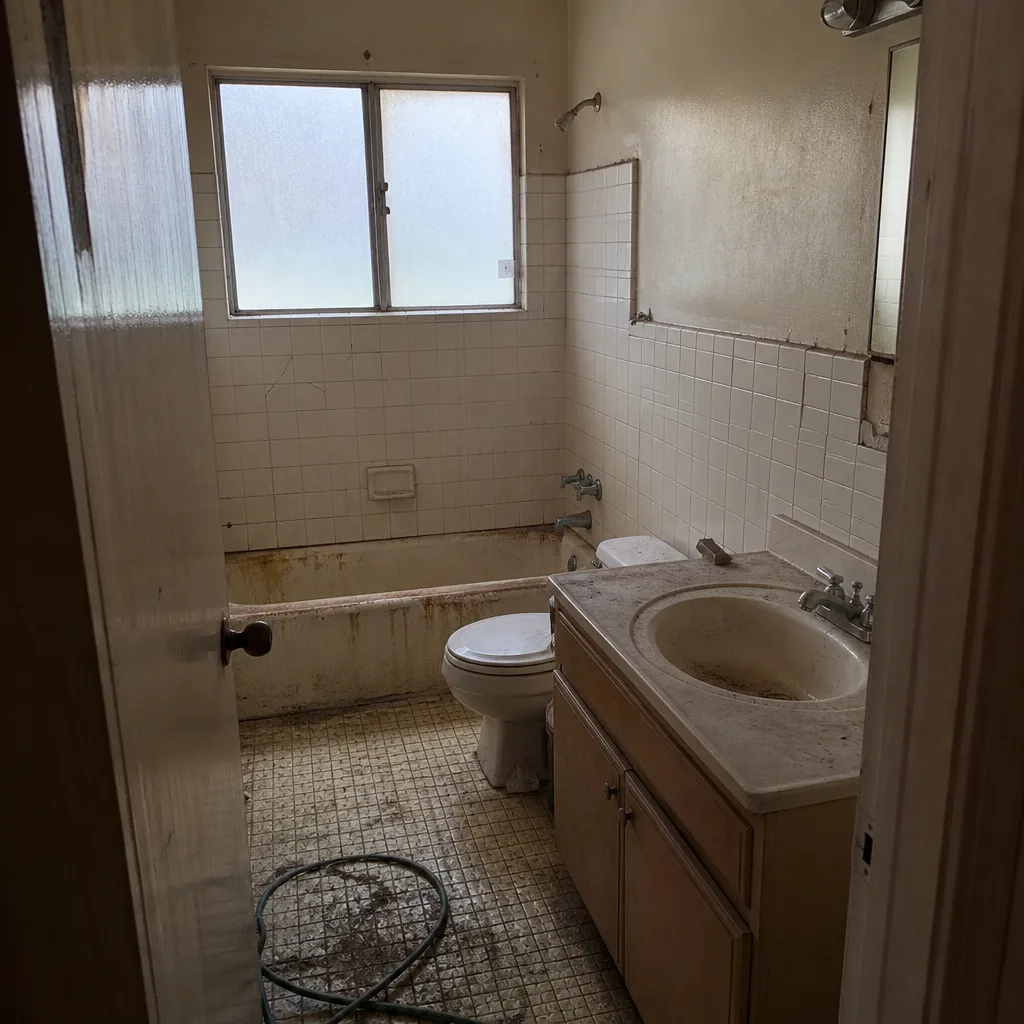 Before
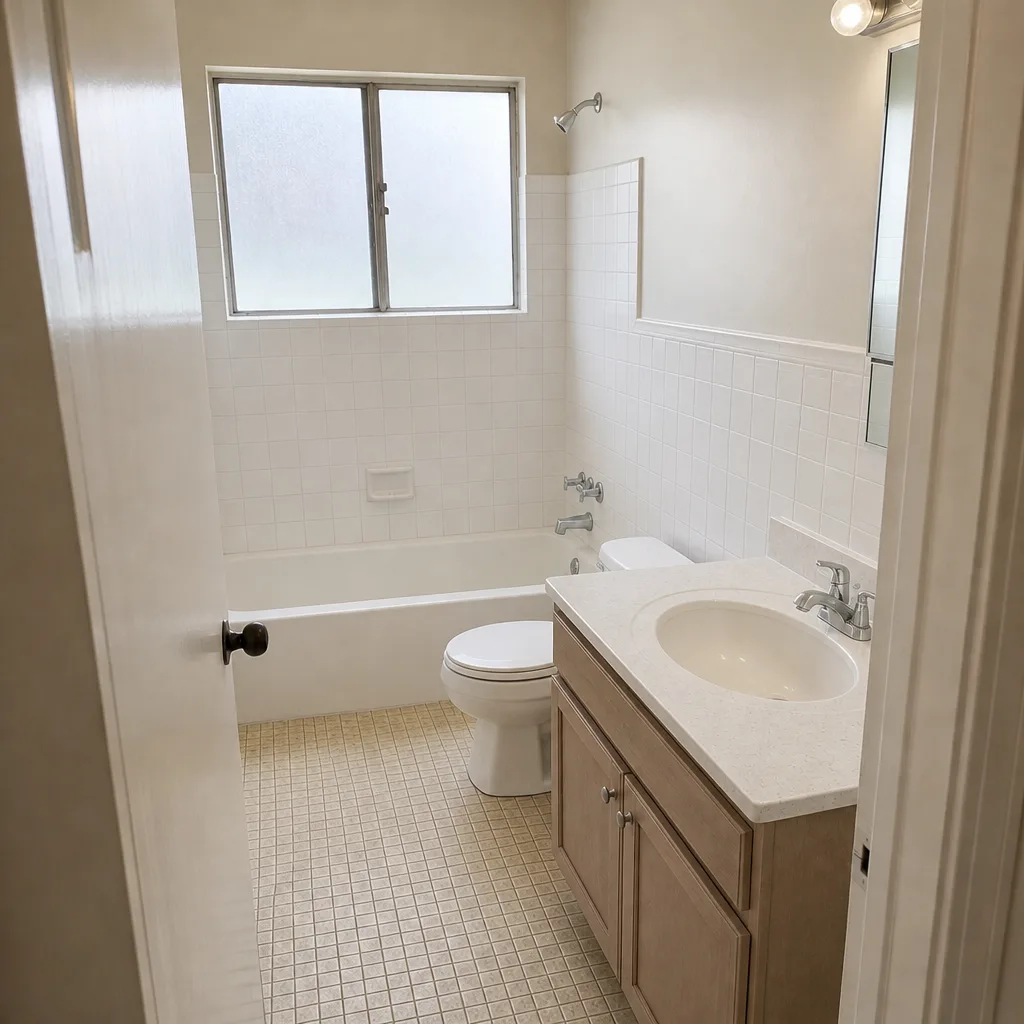 After
 Before
 After
 Before
 After
Frequently Asked Questions
A quote that’s dramatically lower than every other bid and a refusal to pull a permit are the two biggest warning signs. Either one alone should make you slow down and compare scope line for line. Both together mean walk away. In Tustin, we see this pattern most often on bids that leave out footing depth and hardware specs entirely.
Often yes, depending on height, location, and whether it’s along a front or corner property line. Tustin zoning and the local building department set the rules, and many fences require a zoning check even when a full building permit isn’t issued. Ask your contractor who is handling the permit before signing, and confirm with the city. A contractor who tells you permits are never needed for a fence is guessing.
For a standard residential fence, expect roughly 24 inches of post depth in a proper concrete footing, and deeper on slope or in heavier clay. California code and local practice set the minimum, and a reputable contractor states the number in writing. Budget crews commonly deliver 14 to 18 inches. Ask to see dug holes before the pour so you know what went in.
Because it’s free, required, and protects you from liability if a buried gas, water, electrical, or fiber line is struck. If a crew digs without a locate ticket and hits a line, the repair and any injuries can fall on you as the property owner. Ask for the locate ticket number before digging starts.
Go to the CSLB license lookup, enter the business name or license number, and confirm the license is active with the correct classification and current bond. Read the complaint history and make sure the business name on the license matches the one on the bid. The whole check takes about a minute, and it can save you the entire project cost.
It shouldn’t if the scope is written properly. A firm bid tied to a line-item scope means the number you accepted is the number you pay. Surprise change orders are usually the result of vague contract language like “standard installation.” Ask for a written line-item estimate up front, and you remove the room for mid-project price shifts. Call (833) 954-6066 for a free estimate with no surprises.
The Bottom Line
The fence contractor who costs you the most isn’t the expensive one. It’s the one who quoted low, skipped the 811 call, set shallow posts, wrote a vague contract, and was gone before the first panel started to lean. The defense is simple: compare scope line for line, verify the CSLB license, ask for the locate ticket and post-depth specs in writing, and watch the crew on day one. Do those four things and the cheap, disappearing contractor has nowhere to hide. A 730-Day Done Right Promise and a crew that answers the phone 24/7 is what a real contractor looks like. Call (833) 954-6066 for your free estimate in Tustin.
Written by the team at Groundwork Construction Co. of Tustin.