Last updated November 17, 2026







Free written scope consultation - allowances, timeline, and change-order rules on paper before a single trade is scheduled
Construction Emergency Preparedness Guide for Tustin Homes
After every major Santa Ana wind event or hard rain season in Orange County, emergency contractor rates surge 60 – 80% and lead times stretch to weeks. Homeowners who’ve done the prep work before the event get to the front of that line. The storm passes in a day; the scramble to find someone who’ll show up lasts far longer. Tustin sits in a peculiar spot – foothills to one side, flat valley to the other, clay-heavy soil under a lot of it – and that combination means the construction failures that follow a big weather event tend to be predictable. This guide walks through the five most common post-event emergencies we see in Tustin, how to build a contractor short list before you need one, what to document in the first 24 hours, and the insurance exclusions almost nobody reads until it’s too late.
Quick Answer
Construction emergency preparedness for a Tustin home means three things done in advance: a short list of pre-qualified, licensed contractors you’ve actually vetted (not just phone numbers saved), a documentation kit ready to go (phone camera, a written log, your policy number), and a clear sense of what your homeowner’s insurance does and doesn’t cover for sudden structural damage. The work you do before a Santa Ana wind event or a heavy rain season determines whether you’re first in line for repairs or waiting weeks alongside everyone else.
Styles & brands we work with
- Kitchen remodeling
- Bathroom remodeling
- Home additions & ADU
- Roofing
- Windows & doors
- Driveway & pavers
- Fence
Table of Contents
- The Five Most Common Post-Event Construction Emergencies in Tustin
- How to Build a Pre-Qualified Contractor Short List
- The Documentation Protocol: What to Capture in the First 24 Hours
- Temporary Stabilization: What You Can Safely Do Yourself
- What Homeowner’s Insurance Covers (And the Exclusions Tustin Homeowners Miss)
- Seasonal Preparation Calendar for Tustin Homes
- Warning Signs That Precede a Construction Emergency
The Five Most Common Post-Event Construction Emergencies in Tustin
In our experience, the calls that come in after a weather event in Tustin fall into five fairly predictable categories. Knowing what causes each and how to respond in the first day saves both money and stress.
1. Roof leaks and wind-lifted shingles
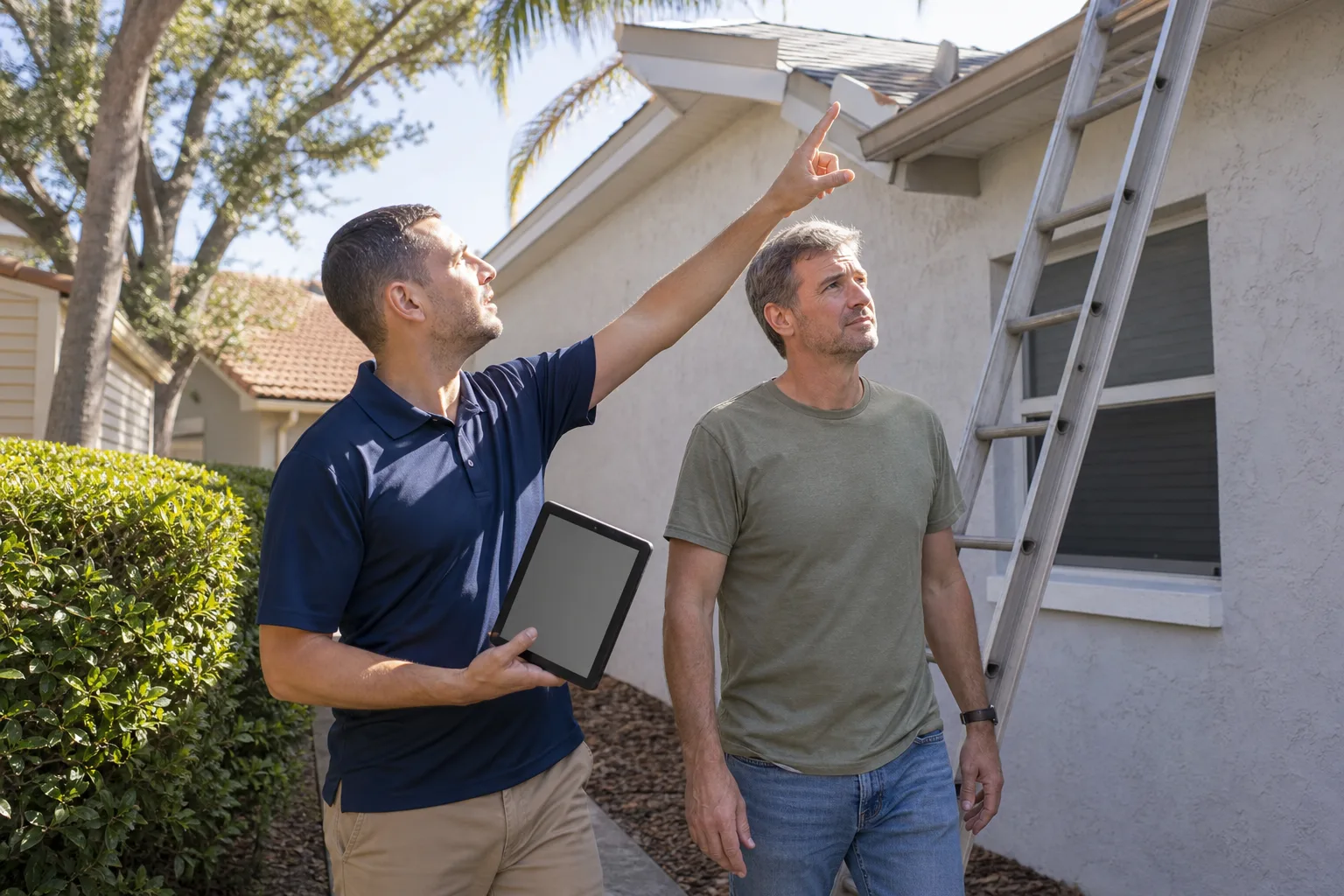
Santa Ana winds routinely hit 40 – 60 mph in the Tustin foothills, and the ridgeline is where they do the most damage. Lifted shingles, torn flashing around chimneys, and cracked pipe boots are the usual culprits. The first 24 hours: stop interior water with buckets and towels, photograph everything, and don’t climb the roof yourself. If water is actively pouring through a ceiling, that’s a call-now situation. If you’ve just noticed a shingle on the lawn, it can wait until morning.
2. Fence and gate failures
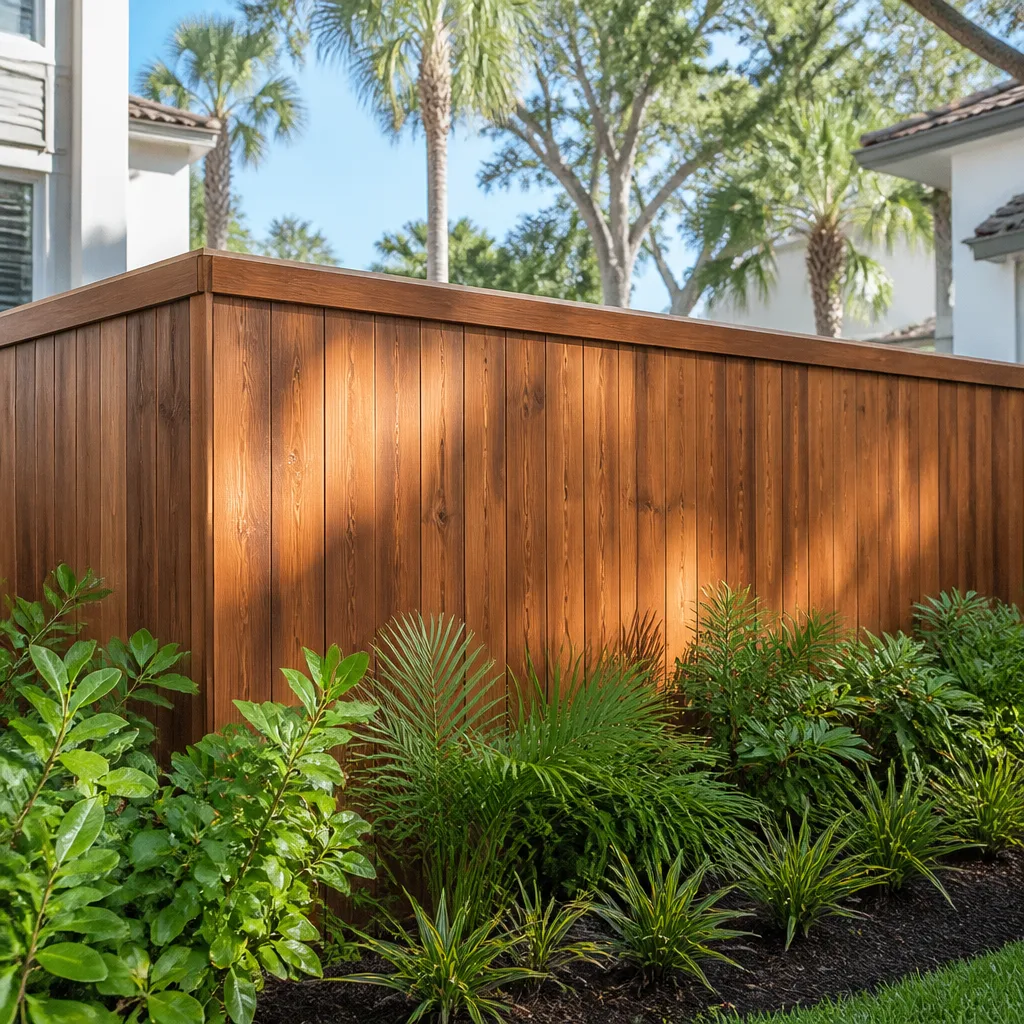
Wind events take out fencing across Tustin in waves – especially older wood fencing on the north side of a property line where wind accelerates. A leaning fence isn’t structurally urgent, but a downed section that leaves a pool exposed or blocks egress is. Note the failure mode (posts pulled out of the ground vs. rails snapped) because it tells a contractor whether the footings were undersized. When it’s time to replace, brands like Bufftech and ActiveYards make vinyl systems that hold up well to Orange County wind loads.
3. Retaining wall cracks and soil movement
Tustin has a lot of clay-heavy soil, and clay expands when wet and contracts when dry. After a hard rain season, we regularly see cracks appear in retention walls in neighborhoods like Peppertree and Columbus Square. A hairline crack is cosmetic. A wall that’s leaning, bulging, or showing horizontal separation at the soil line is a genuine hazard that needs professional assessment. Do not attempt to backfill or re-grade around a failing wall on your own.
4. Slab heave and driveway cracking
After a dry summer followed by rain, the soil beneath a concrete slab can swell unevenly, causing heaving cracks. This is a slow-burn problem, not a first-24-hour emergency, but it’s worth photographing as it develops so you have a documented timeline. When it’s clearly structural, a paving specialist can assess whether sections need replacement – see our Driveway & Pavers in Tustin service for how we approach that work with materials like Belgard and Unilock.
5. Window and door failures
Wind-driven rain finds every weak seal. Failed window and door units let water into wall cavities, which is where the expensive damage hides. If you see water pooling on a sill during a storm, photograph it and call for assessment after the event passes. Frames and glass from Andersen and Pella hold up well but sealant failures happen regardless of brand after eight to ten years.
How to Build a Pre-Qualified Contractor Short List
Having a contractor’s phone number saved doesn’t make them pre-qualified. It makes them saved. Pre-qualification means you’ve done enough homework that when the phone rings at 10 PM after a wind event, you’re not making decisions under pressure.
What “pre-qualified” actually means
Pre-qualification is a five-point check that most homeowners never do until they need the work done:
- License verification. Look up the contractor’s license with the California State License Board and check that it’s active and bonded. Tustin projects over a certain size require a licensed contractor by law, and unlicensed work voids most homeowner policies.
- Insurance certificate. Ask for a certificate of general liability and workers’ comp coverage before anything is signed. A contractor who can’t produce one isn’t insurable and shouldn’t be on your property.
- Written guarantee. A real workmanship warranty should be documented in writing, not spoken. Groundwork’s 730-Day Done Right Promise is one of the longest workmanship guarantees in residential construction – that’s the bar. Anything shorter than a year deserves questions.
- Response protocol. Ask how they handle after-hours calls. “Calls answered by a live person, 24/7” is a real commitment; a voicemail box that says “we’ll call you back Monday” tells you what you’ll get in an emergency.
- Local experience. A contractor who knows Tustin soil, Tustin wind patterns, and Tustin permit requirements will diagnose faster than one who’s driving in from thirty miles away.
How to build the list
- Pick three contractors: one for roof and exterior, one for structural and foundation, one for fencing and hardscape. These cover roughly 90% of post-event calls.
- Request a free estimate and walkthrough on a small job (even a minor repair) so you’ve worked with them once before the emergency.
- Save the direct line, not the general number. Groundwork’s line – call (833) 954-6066 for a free estimate – connects to a live person any hour of the day.
- Write down each contractor’s license number, insurance carrier, and typical response window. Put the list in your phone’s favorites and in your documentation kit.
Do this on a Saturday afternoon in April. It takes an hour and saves days.
The Documentation Protocol: What to Capture in the First 24 Hours
The difference between a clean insurance claim and a contested one usually comes down to documentation. In our experience, homeowners who lose claims do so because they couldn’t demonstrate when the damage happened or what caused it. Here’s the protocol.
Immediately
- Photograph everything before you touch anything. Wide shots showing the whole room, the whole roof line, the whole fence. Then close-ups of the damage itself. Timestamped photos are your best evidence.
- Start a written timeline. Date, time, what you observed, who you spoke to. A simple notes app file works. Be exact on the first two entries – “wind event, shingles on lawn at 7:15 AM” is useful; “roof looked bad” is not.
- Contact your insurance carrier within 24 hours to open a claim, even if you’re not sure you’ll file. Many policies have a notification window you don’t want to blow through.
Within the first week
- Keep every text, email, and estimate in one folder – contractor communications become part of the claim file.
- Don’t throw anything away until an adjuster has seen it. Damaged shingles, broken fence panels, and warped window frames are evidence.
- Get at least two written estimates for the work. Adjusters rely on scope detail; a single line item like “roof repair: $X” invites a lowball settlement.
- Log any temporary repairs you made, with photos. Most policies cover reasonable emergency stabilization, but only if it’s documented.
Temporary Stabilization: What You Can Safely Do Yourself
There’s a real line between temporary stabilization and dangerous DIY. Stabilization means preventing additional damage while you wait for a professional. It does not mean fixing the problem yourself.
Safe to do
- Interior water control. Buckets, towels, a wet/dry shop vac. Move furniture and electronics out of the way. Run fans on wet drywall to discourage mold growth.
- Tarping from the inside. If water is coming through a ceiling, a sheet of plastic on the underside channels it toward a bucket.
- Clearing debris. Move fallen branches, roof shingles, or fence pieces away from the house and out of drains.
- Turning off utilities. If you smell gas or see sparking, turn off the gas at the meter or the main breaker and evacuate.
Not safe to do
- Climbing on a roof. Wind-damaged roofs are unstable and a fall is a life-changing event. Don’t.
- Working on anything electrical. Unless the power is off at the panel and you know what you’re doing, stay away from wet electrical components.
- Re-grading soil around a retaining wall. You can trigger a collapse.
- Cutting into a damaged structure. What looks like a simple removal can open into a load-bearing failure.
If you’re unsure whether something falls into the safe or unsafe column, treat it as unsafe until a professional eyeballs it. That’s what a free estimate is for.
What Homeowner’s Insurance Covers (And the Exclusions Tustin Homeowners Miss)
Most homeowner policies cover sudden, accidental damage – the roof leak from a wind event, the fence taken out by a fallen tree. They don’t cover everything, and the specifics vary by carrier. Here are the exclusions Tustin homeowners most often discover the hard way.
What’s typically covered
- Sudden wind damage to roofing or siding.
- Water damage from a storm-related roof breach (yes, that’s usually covered – water from the ground up is a different story).
- Damage from falling trees and branches, including the cost of removing the tree from the structure.
- Reasonable cost of temporary stabilization.
What’s often excluded
- Earth movement. Clay-soil movement, slab heave, and retaining wall failure caused by soil expansion are typically excluded or covered only through a separate endorsement. Tustin’s clay-heavy soil means this matters. Ask your carrier directly.
- Gradual deterioration. A fence that’s been leaning for three years doesn’t become a covered loss because a wind event finally finished it off.
- Poor maintenance. A roof past its useful life isn’t going to be paid for. Regular maintenance documented over time is your best defense.
- Code upgrade costs. Even a covered loss may not pay to bring the repaired section up to current code. Separate coverage is often available for an added premium.
- Landscaping and hardscape. Trees, shrubs, and often driveway/paving damage are usually excluded or capped at a low sub-limit.
Pull your policy declaration page and read the “exclusions” section this week rather than after a storm. Five minutes of reading is worth thousands later.
Seasonal Preparation Calendar for Tustin Homes
Tustin’s weather has two predictable trouble windows: the dry Santa Ana wind season from roughly September through November, and the rain window from December through March. Landing your prep work in the shoulder months makes both easier.
August – September: Pre-wind season
- Inspect and re-secure fence posts and gates.
- Trim tree limbs that overhang the roof.
- Schedule a professional roof inspection if the roof is 10+ years old.
- Clean window tracks and test seals around older units.
October – November: Peak wind season
- Photograph the exterior of the house on a calm day. This becomes your baseline if you need a claim.
- Secure any outdoor furniture, shade sails, or planters that could become projectiles.
- Check that your contractor short list is still current – call each once to confirm they’re still in business and still responsive.
December – February: Rain season
- Clear gutters and downspouts before the first significant rain.
- Walk the perimeter after a rain event. Note any soil movement around footings.
- Inspect any siding or exterior trim for soft spots.
March – May: Post-season assessment
- Look at retaining walls for new cracks.
- Inspect driveways and paved surfaces for new cracking or heave.
- Get competing bids for repair work while contractor demand is low – this is the cheapest window to hire contractors all year.
Warning Signs That Precede a Construction Emergency
Most construction emergencies announce themselves before they happen. If you know what to look for, you get to solve them on a weekday during normal hours instead of at 11 PM after a storm.
Warning signs on the roof
- Missing or curling shingle granules in the gutters.
- Daylight visible through roof sheathing from inside the attic.
- Water stains on the ceiling that appear after every significant rain.
- Flashing that’s pulled away from a chimney.
Warning signs on fences and hardscape
- Posts that rock when you push on a fence panel.
- Hairline cracks in concrete growing over a season.
- Soil pulling away from the base of a retaining wall.
- Gate hardware that’s out of alignment – a sagging gate often signals a footing problem, not a hinge problem.
Warning signs on windows and doors
- Doors that stick seasonally (a sign of humidity moving into the wall cavity).
- Water stains or soft spots on interior sills.
- Caulking that’s shrunk or cracked around the exterior perimeter.
- Condensation between panes – the seal is failing.
Any of these signals deserves a professional inspection. The point of inspection isn’t to sell you work; it’s to put a dollar figure and a timeline on the risk before it triggers an emergency.
Common Mistakes to Avoid
- Not knowing the policy exclusions. Most Tustin homeowners only learn that clay movement and gradual deterioration are excluded after a claim gets denied. Read the exclusions section of your policy this week.
- Calling the general contractor number at 10 PM. The number saved in your phone should ring a live person, not a voicemail box that won’t see you until Monday morning.
- Skipping the pre-event walk through. A homeowner who has photographed the exterior on a calm day in October has a documented baseline. Without one, the insurer can argue damage predated the storm.
- Filing a claim without an estimate. Filing blind invites a low settlement. Get two written estimates first – the adjuster relies on scope detail you provide.
- Doing roof or electrical work yourself. We’ve seen homeowners take a fall trying to stop an active leak. The 20 minutes of water damage you save isn’t worth a hospital visit.
- Hiring the first contractor to knock. After a wind event, unlicensed storm-chasers move through inland OC. Verify the license, verify insurance, and never sign on the spot.
- Treating the short list as a one-time task. Contractors move, retire, or change phone numbers. Re-verify the list annually – ideally every August before wind season.
See the difference
 Before
 After
 Before
 After
 Before
 After
When to Call a Professional
Call a professional the moment you observe any of the following: active water intrusion that won’t stop, gas smells, sparking at an outlet, a retaining wall that’s leaning or bulging, a section of roof that’s lifted or lost shingles over more than a small area, or any fence failure that compromises property security. Also call when warning signs start accumulating – the early-water-stain route is always cheaper than the emergency-repair route.
For longer-term planning around a structural fix, a bathroom or kitchen rebuild after damage, or the addition of a garage, ADU, or second story, Groundwork Construction Co. of Tustin offers free estimates and design consultations. We connect Tustin homeowners with independent local professionals who work from Groundwork Construction Co. of Tustin home service pages across every trade – from Fence Installation in Tustin to Home Additions & ADU in Tustin. Call (833) 954-6066 and a live person will pick up, any hour of the day.
Frequently Asked Questions

Roof damage from lifted shingles and torn flashing is the most common call we see after Santa Ana wind events, followed closely by fence failures. The foothill neighborhoods on the north and east side of Tustin get hit hardest because wind accelerates as it crests the ridge. Call (833) 954-6066 for a free estimate once it’s safe to assess.
Usually not unless you have a specific earth movement endorsement. Standard policies treat clay-soil swelling and slab movement as excluded gradual events rather than sudden damage. Tustin’s clay-heavy soil makes this exclusion more relevant than in much of Orange County – read your exclusions section and call your carrier directly to confirm what’s covered before a wall fails. Then call us at (833) 954-6066 for a professional assessment of whether the wall is failing or just showing cosmetic cracks.
Three tasks: trim tree limbs that overhang the roof, secure fence posts and exterior furniture, and photograph the full exterior of the house on a calm day so you have a documented baseline. Roof inspections on homes 10+ years old are also worth scheduling in August or September before the wind arrives. Call (833) 954-6066 to schedule a free inspection and walkthrough.
Not when you work from a written, line-item scope. Upfront pricing means the number we quote is the number you pay. Any legitimate change should be documented in a written change order you sign off on before work proceeds. Call (833) 954-6066 to get a written estimate – the consult is free.
Small roof repairs are usually a single-day job; larger repairs or resheeting run two to four days depending on access and material availability. Fence sections typically restore in a day once the footing problem is addressed. Lead time matters more than work time after a wind event, which is why having a pre-qualified contractor on your short list before the storm gets you scheduled faster. Call (833) 954-6066 for a realistic timeline for your specific situation.
Stop any active water intrusion with buckets and towels, photograph everything before you touch anything, and if you smell gas or see sparking, shut off the utility at the meter and evacuate. Don’t climb on a damaged roof, don’t re-grade soil around a failing wall, and don’t try to cut into damaged structure yourself. Then call your insurance carrier to open a claim, and call us at (833) 954-6066 once the immediate danger has passed for a free assessment.
The Bottom Line
Construction emergencies don’t have to be financial disasters. The homeowners who come out of a Santa Ana wind event or a hard rain season in the best shape are the ones who did the boring work in the quiet months: verified their contractor short list, read their policy exclusions, photographed their exterior, and stabilized before the damage escalated. Tustin’s clay soil and wind exposure make these preparations more valuable here than in most of Orange County. The 730-Day Done Right Promise, upfront pricing, and live-person phone coverage exist for exactly this kind of planning – so homeowners can move from emergency to repaired without gambling on who shows up. Call (833) 954-6066 for a free estimate before the next event forces your hand.
Written by the team at Groundwork Construction Co. of Tustin.