





Free written scope consultation - allowances, timeline, and change-order rules on paper before a single trade is scheduled
Styles & brands we work with
- Kitchen remodeling
- Bathroom remodeling
- Home additions & ADU
- Roofing
- Windows & doors
- Driveway & pavers
- Fence
See the difference
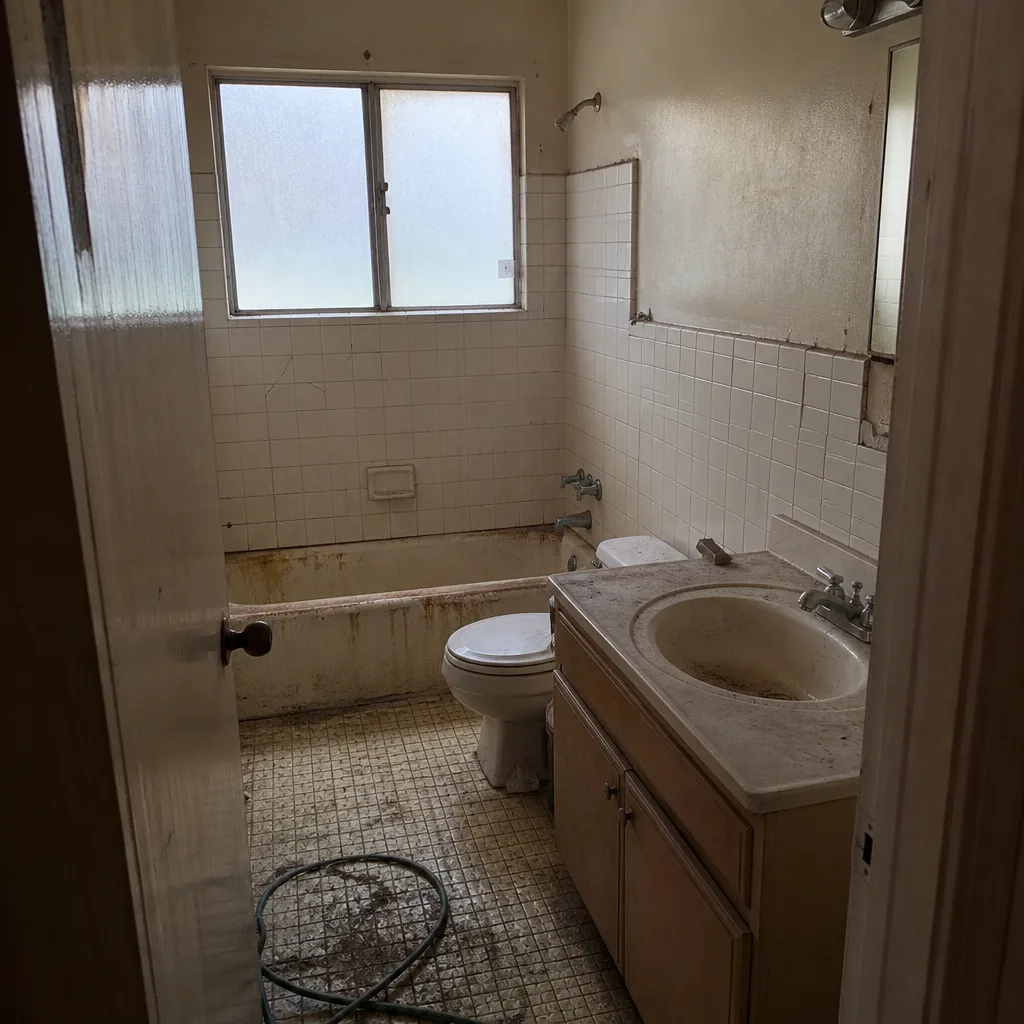 Before
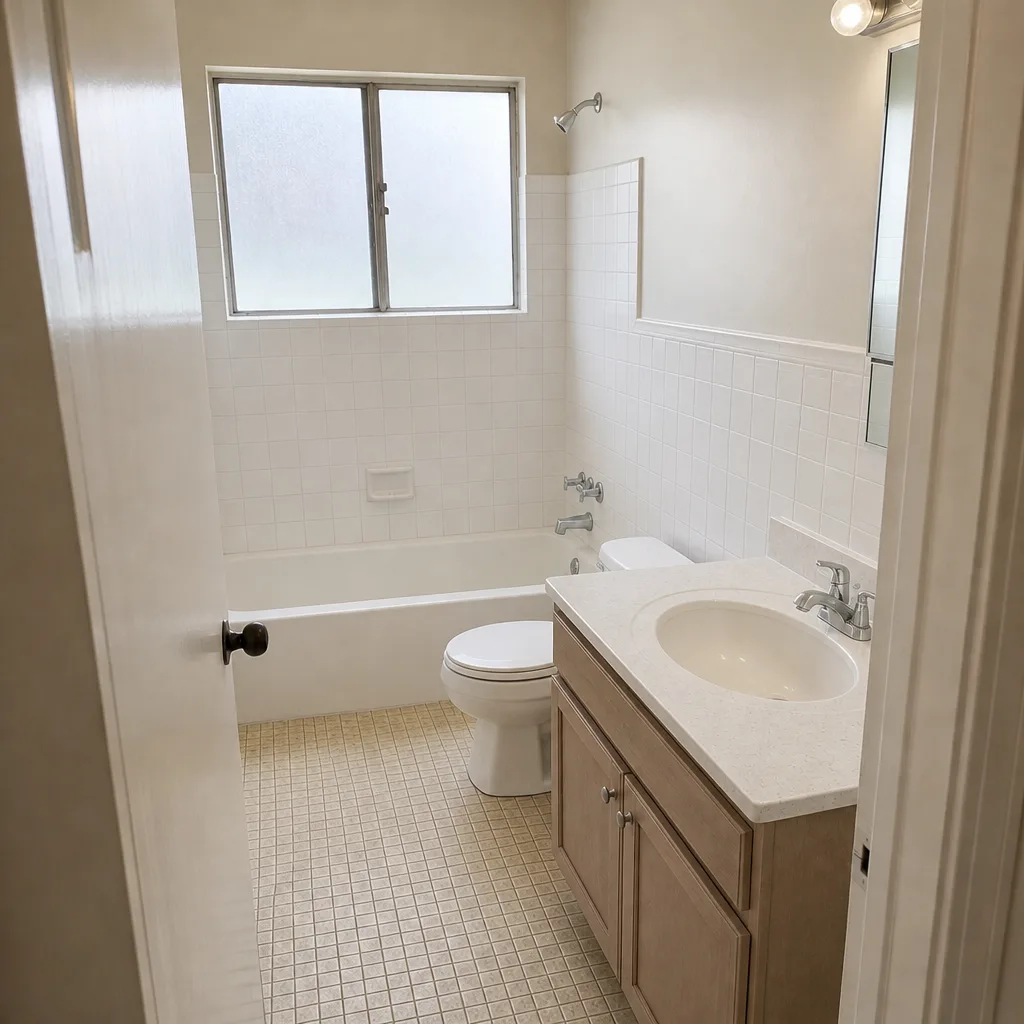 After
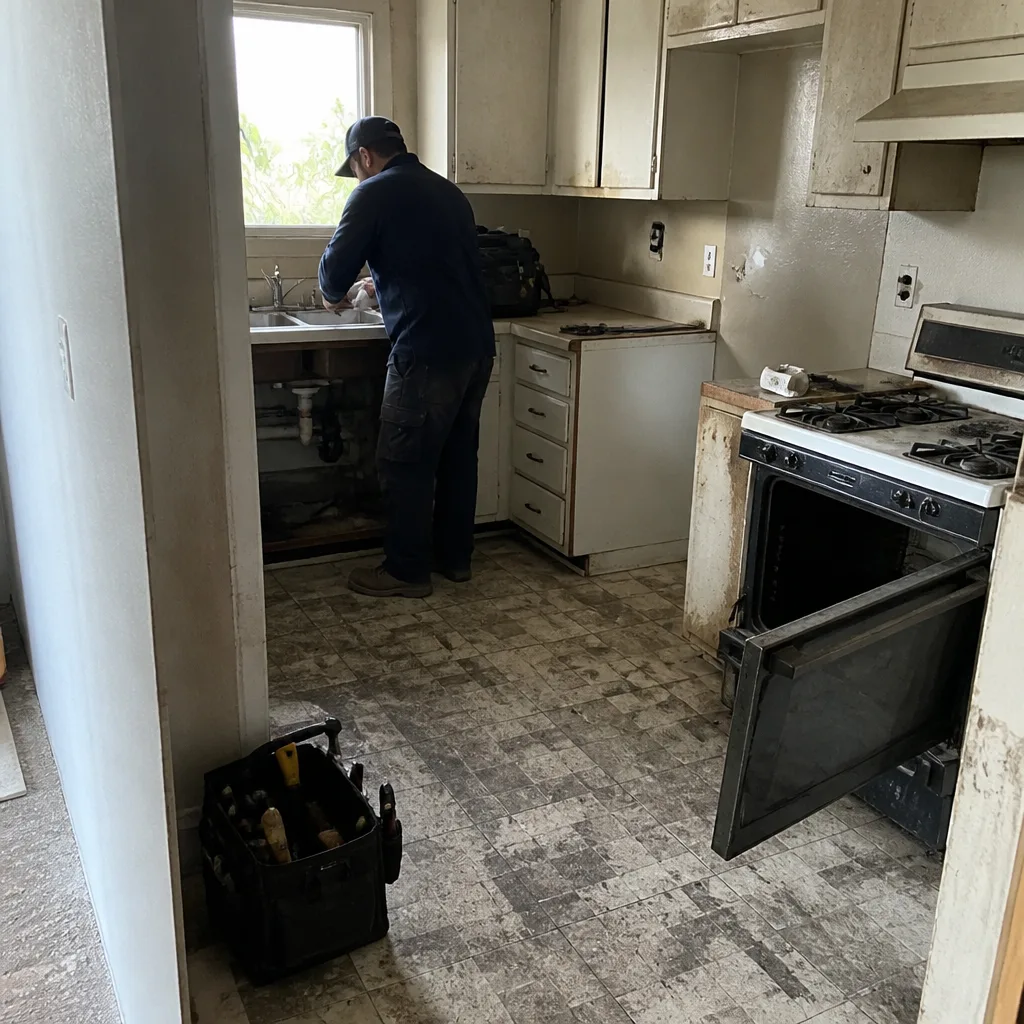 Before
 After
 Before
 After
What Causes Roof Leaks in Tustin, CA? The Short Answer
Most roof leaks in Tustin aren’t caused by storm damage – they’re caused by failed penetration and transition components: UV-degraded pipe boot collars, thermal-fatigued step flashing sealant, and valley metal lap failures. These parts expand and contract at a different rate than the surrounding shingles during Tustin’s hot, dry summers, opening micro-gaps that let water in the moment the first real rain arrives. If you’re seeing a ceiling stain or a drip after a winter storm, call (833) 954-6066 and we’ll find the actual failure point instead of guessing.
Orange County gets roughly 284 sunny days a year. That’s 284 days of thermal cycling stressing every pipe, valley, and wall intersection on your roof before a single raindrop falls. The first winter storm doesn’t create Tustin roof leaks. It reveals the ones that were already written months ago.
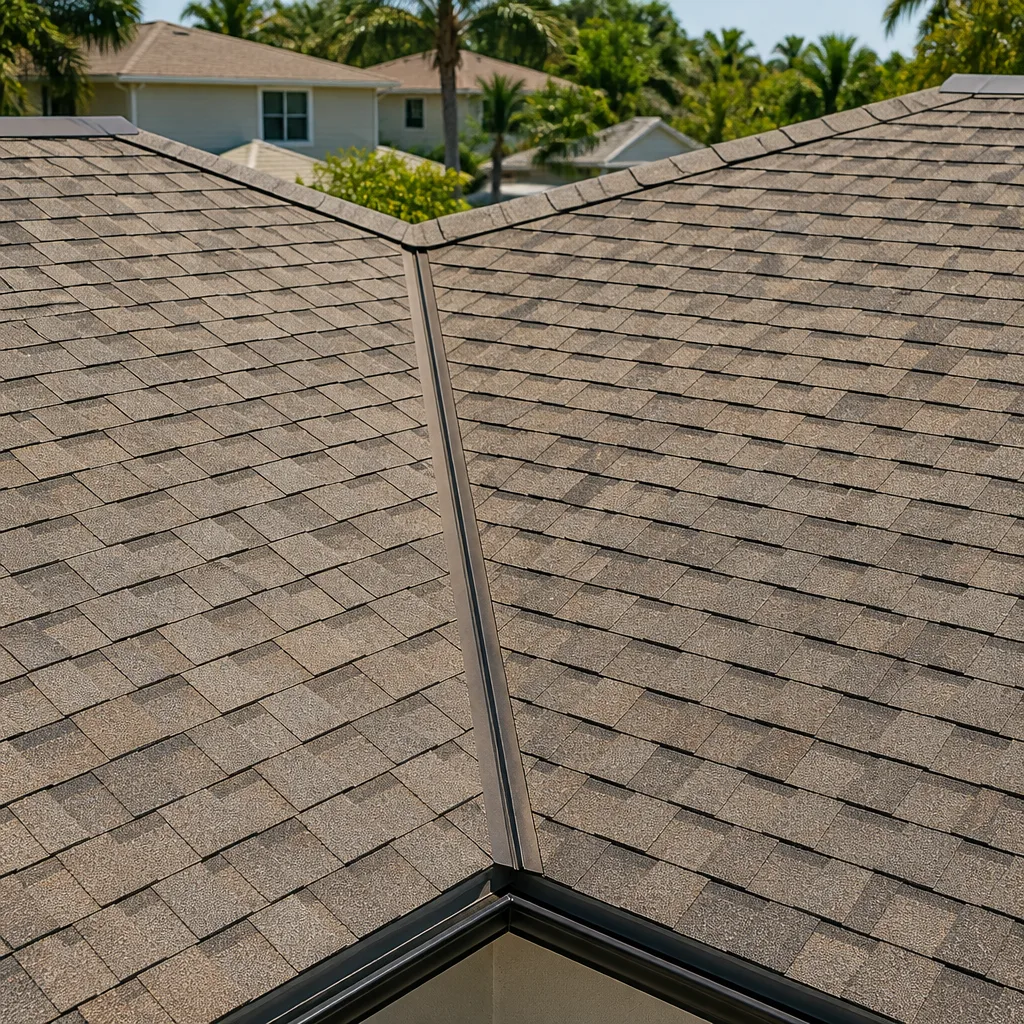
The Real Rank Order of Tustin Leak Causes
National roofing content usually leads with “storm damage” as the number one cause of leaks. In Tustin, that ranking is backwards. The dominant mechanism here is heat and UV exposure, not wind or hail. Here’s what we actually find, ranked by frequency.
- 1. UV-degraded pipe boot collars. Standard black EPDM rubber boots have a UV-rated service life of about 10-15 years. Tustin’s summer UV index regularly hits 8-10, so most boots on a 15-year-old roof are already past rated life even when they still look intact from the ground.
- 2. Thermal-fatigued step flashing sealant. The sealant around step flashings at wall intersections hardens and cracks as it cycles from 100+ degree afternoons to cool nights. Water finds the crack before you find the leak.
- 3. Valley metal lap failure. Metal valleys expand and contract more than the shingles around them. Over time, laps can open small gaps that a surge rain event pushes water through.
- 4. Ridge cap seal strip adhesive failure. The adhesive strip under ridge caps softens and lets go under sustained heat. Ridge leaks often show up as staining on a ceiling far from the ridge itself.
- 5. Field-shingle damage. Actual damaged shingles do cause leaks, but they rank last on most Tustin roofs we inspect. The material rarely fails first – the transitions do.
That inversion matters because it changes where you look. A roof inspection that only scans the field shingles from the ground will miss the four most common causes on this list. For the full scope of what proper roof work covers, see our Roofing services.
Why the Pipe Boot Fails First in Tustin’s Climate
The pipe boot is the small rubber collar around the plumbing vent pipes sticking out of your roof. It’s cheap, it’s effective, and it’s the single most common source of leaks we find in Tustin. The reason is UV.
Standard EPDM rubber degrades under ultraviolet exposure. Ten to fifteen years is the realistic rated life. In a climate where the UV index sits at 8-10 through July and August, that collar is taking a beating most of the year. The rubber dries out, cracks around the pipe, and pulls away from the pipe itself. From the ground it can still look fine. Up close, the crack is obvious.
Modern roofs sometimes use metal-based or high-UV-rated boots that last longer. When we replace a boot, we recommend the higher-rated material rather than the cheapest option – it’s a small cost difference for roughly double the service life. This is the same logic we apply across material choices, whether it’s GAF or Owens Corning shingles or the trim and flashing components around them.
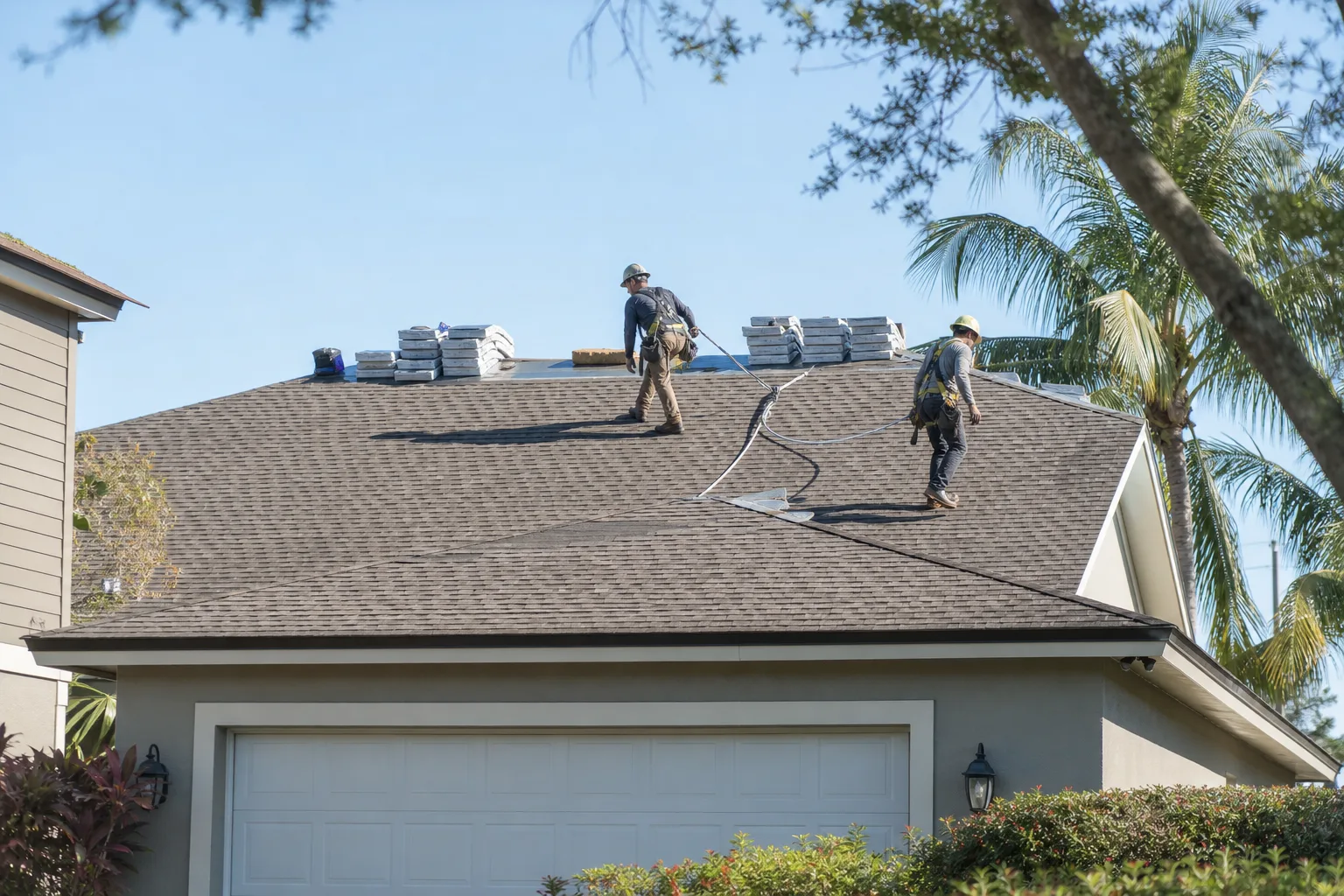
Tustin’s Mid-Century Ranch Roofs and the Gutter-Line Dam
Much of Tustin’s housing stock is mid-century ranch homes from the 1950s through the 1970s – low-slope gables with extended eave overhangs. That overhang design works well in a hot, dry climate, but it creates a specific problem during the rare heavy rain.
Debris collects at the gutter line and backs up under the bottom shingle course. During a surge rain event – the kind that drops an inch in an hour every few winters – the water has nowhere to go but up and under. The result is a leak that appears at the eave, often running down the fascia and showing up as staining on the exterior wall rather than the ceiling. Homeowners sometimes mistake it for a plumbing problem.
The fix here is usually maintenance, not reconstruction: clear the gutters before the rainy season, check the drip edge, and make sure the first shingle course isn’t sitting in standing water. In Old Town, where century-old Craftsman and Spanish Revival bungalows sit a few miles from brand-new Tustin Legacy builds, the roof geometry varies enough that a general rule doesn’t apply. Each roof gets its own assessment.
New Construction Leaks: The Tustin Legacy Problem
A leak on a house built in 2020 runs against every assumption a homeowner has. Yet we see it in Tustin Legacy, the master-planned development on the former MCAS Tustin airfield site, where thousands of homes went up between roughly 2018 and 2022.
The cause is through-deck fasteners on roof accessories – solar conduit, HVAC curbs, vent stacks – that were installed in new construction but not properly flashed to handle Southern California’s thermal cycling. The installer sealed the penetration with caulk or a basic boot that was never rated for this climate. Two or three summers later, the sealant is cracked and the first heavy rain finds it.
Age of the roof tells you almost nothing about whether it will leak. Construction quality at the penetration points tells you everything. When we assess a newer Tustin roof, we check the penetrations first.
What It Costs to Fix a Leak in Tustin
Roof repair in Tustin typically runs $400-$1,800 depending on what’s failed and how much access the job requires. A single pipe boot replacement sits at the low end; a valley metal repair or multiple step flashing sections push toward the upper end. Full roof replacement runs $8,000-$20,000. If your roof is a tile roof, targeted tile repair is $600-$2,500.
| Repair Type | Typical Tustin Range |
|---|---|
| Roof repair (leak diagnosis + fix) | $400-$1,800 |
| Tile roof repair | $600-$2,500 |
| Roof replacement | $8,000-$20,000 |
| Metal roof installation | $15,000-$40,000 |
We price leak repairs as line items, so you see what each identified cause costs before work starts. Upfront pricing, no surprises. The workmanship on all flashing and penetration repairs is covered by our 730-Day Done Right Promise – if it’s not done right, we make it right. If your roof is closer to replacement than repair, we’ll tell you that plainly rather than selling a patch that fails in eighteen months. Questions on scope, financing, or timing? Our Tustin service area page has the details, and our team can walk through both repair and replacement numbers with you.
When to Call a Pro Instead of Climbing Up
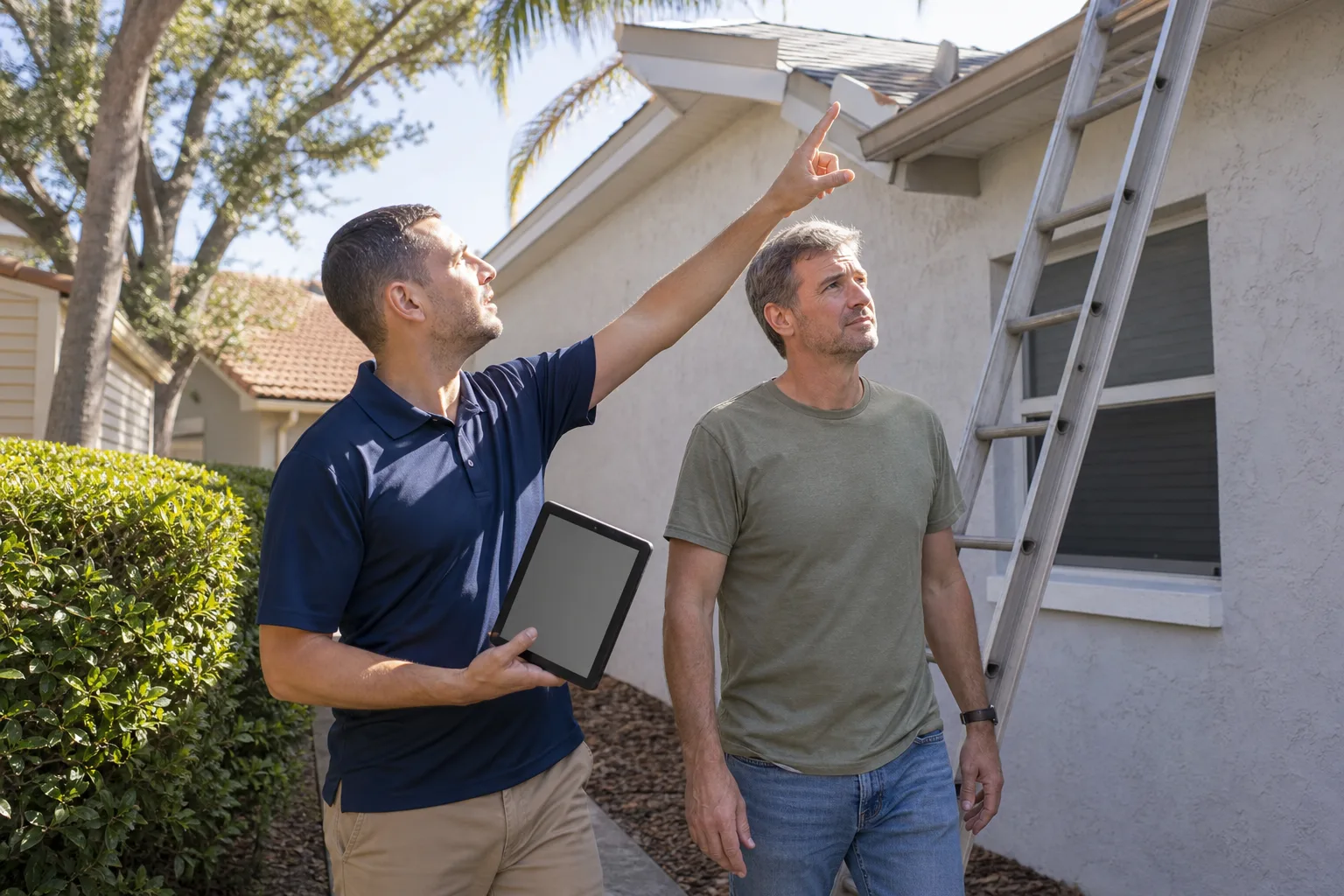
Roof work is one of the genuinely dangerous home repair categories. A fall from a two-story roof is a serious injury, and walking a wet roof after a rain event is how most roof-related ER visits start. If you’re seeing a leak, don’t go up to “take a look.” Stay off the roof, take photos from the ground if you can, and call us.
Our technicians have up to 12 years of experience, are background-checked, and arrive in uniform. Calls are answered by a live person 24/7 – no voicemail, no waiting until Monday morning when your ceiling is dripping into a bucket. During a rainstorm, that responsiveness is the difference between a $400 pipe boot repair and a water-damaged ceiling, soaked insulation, and a mold problem.
FAQs
The most common cause is a failed pipe boot – the rubber collar around plumbing vent pipes. Tustin’s high summer UV index (regularly 8-10) degrades standard EPDM boots faster than the national average, so most boots on roofs 15 years or older are past their rated service life even when they look intact from the ground. Call (833) 954-6066 for a free assessment – we’ll check every penetration, not just the obvious ones.
Because the failure happened gradually and the rain just revealed it. Thermal expansion and contraction stress the sealant and metal work around pipes, valleys, and wall intersections every sunny day. Micro-gaps open over months or years. The first heavy winter rain after a long dry spell pushes water through them. The leak didn’t start overnight – it just became visible. A full inspection finds the actual failure point instead of the visible stain.
Through-deck fasteners on roof accessories – solar conduit, HVAC curbs, vent stacks – were often not properly flashed to handle Southern California’s heat cycling when the home was built. Sealant cracks after a few summers. Newer construction doesn’t guarantee a leak-free roof at the penetration points. Call us and we’ll trace the leak to the specific accessory that failed – estimates are free.
We answer calls 24/7 with a live person, and active leaks get priority scheduling. Call (833) 954-6066 – we’ll get eyes on the problem, identify the cause, and give you an upfront written price on the repair before any work begins. No voicemail, no waiting until Monday.
If you’d rather have it looked at, Groundwork Construction Co. of Tustin offers a no-pressure assessment in Tustin – call (833) 954-6066. Our technicians have up to 12 years of experience, every flashing and penetration repair is backed by the 730-Day Done Right Promise, and you’ll have a written price before we start. Active leak? We answer live, 24/7. From foundation to finish line, we’re here to help.
Written by the team at Groundwork Construction Co. of Tustin, serving Tustin, CA.