
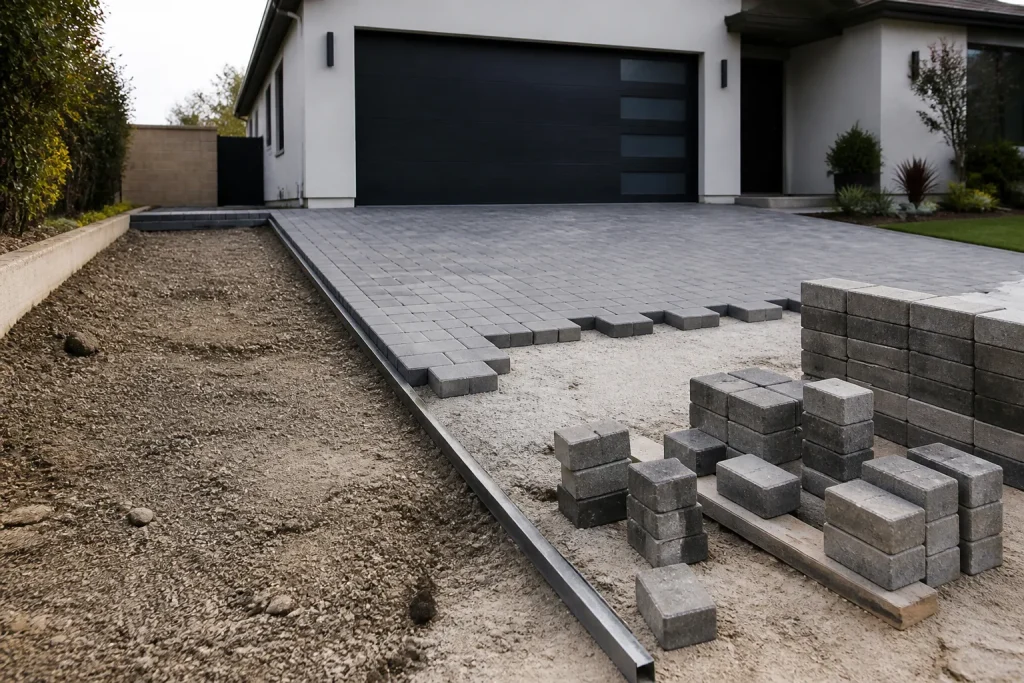
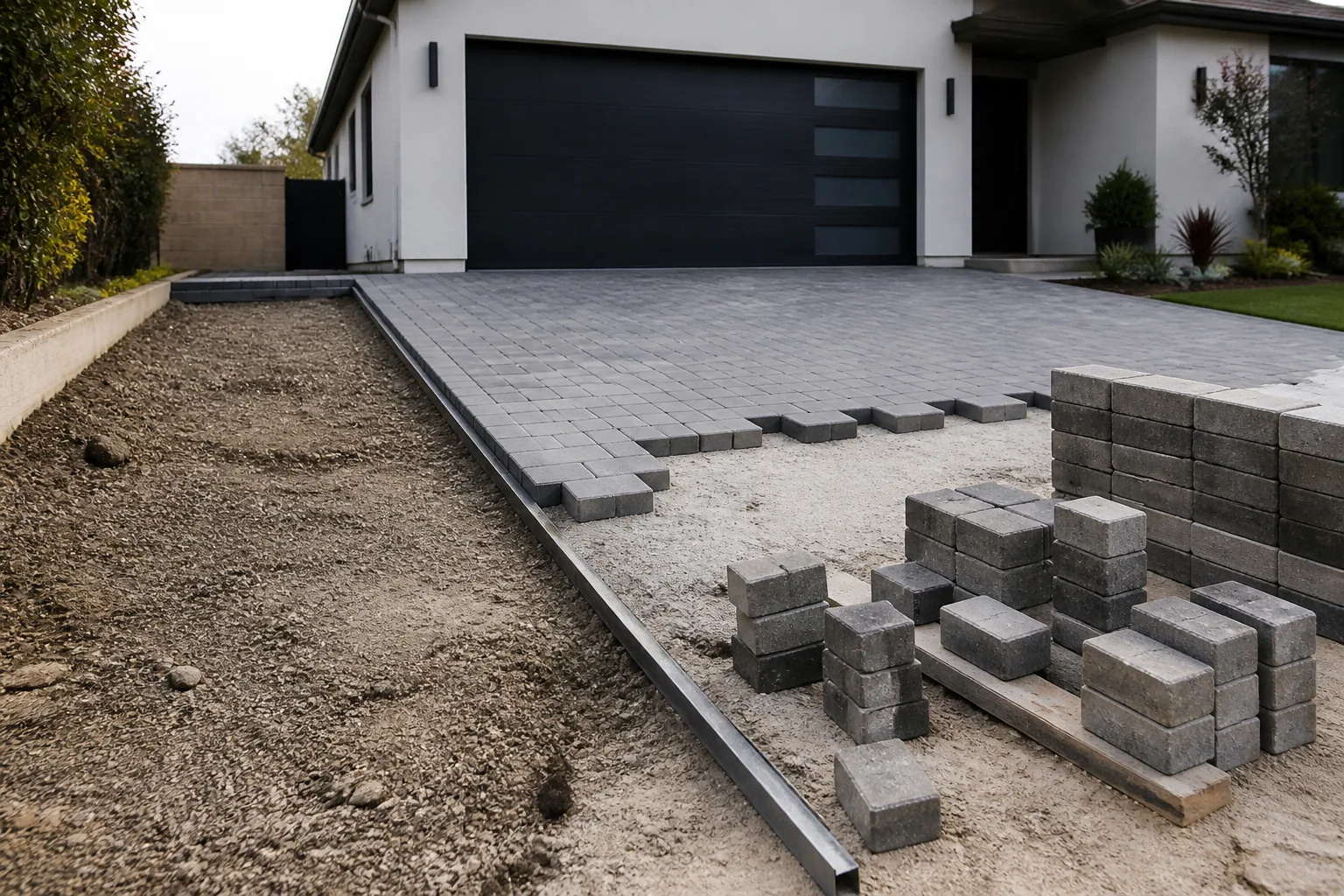
5 Mistakes to Avoid With Driveway & Pavers
Four out of five driveway paver failures that come back for warranty calls in Southern California trace back to decisions made in the first two hours of the project, before any pavers were touched. The stone almost never fails. The ground under it does. If you’re planning a driveway in Tustin, the money you save on the surface material means nothing if the base, the slope, or the paperwork was rushed. We see this constantly on re-do jobs around Old Town and along the streets near Tustin Ranch. Here are the five mistakes worth avoiding, and exactly how to spot each one before you sign. If you’d rather hand the whole thing to a crew and skip the guesswork, call (833) 954-6066 for a free estimate.
Key Takeaways
- Base compaction testing, not paver color, is what keeps a Tustin driveway flat for decades.
- Drainage and slope have to be designed before installation, not patched after the first rain.
- Paver thickness is a load-rating decision, not an aesthetic one.
- A contract without edge-restraint and joint-sand specs leaves the cheap stuff on the cutting-room floor.
- In Tustin, driveway replacement often needs a permit and always needs an HOA check.
Mistake 1: Skipping Compaction Testing on the Base Layer
This is the single biggest reason pavers fail early in Tustin, and it comes down to the soil. Much of the city sits on clay-heavy ground that holds moisture and shifts with the seasons. When a crew spreads base rock and hits it with a plate compactor a few times, that feels solid on day one. Under a loaded pickup it’s a different story. Without real compaction testing, the base settles unevenly, and within a couple of rainy winters you’ve got ruts, rocking pavers, and joints that open up.
What should happen: the base goes down in lifts (usually a few inches at a time), each lift gets compacted, and someone checks the density with an actual test rather than a thumb press and a hopeful nod. Ask your contractor how they verify compaction, and listen for the word “test,” not “feel.” If the answer is vague, that’s your signal.
Clay soil also drains slowly, so the base thickness and gradation matter more here than they would on sandy ground. We’ve torn out drives near Columbus Tustin Park where the stone was fine but the base was maybe half as deep as it should have been. The pavers did exactly what an under-built base told them to do. Good driveways are boring underneath, and that’s the point.
Mistake 2: Designing Slope and Drainage After Installation
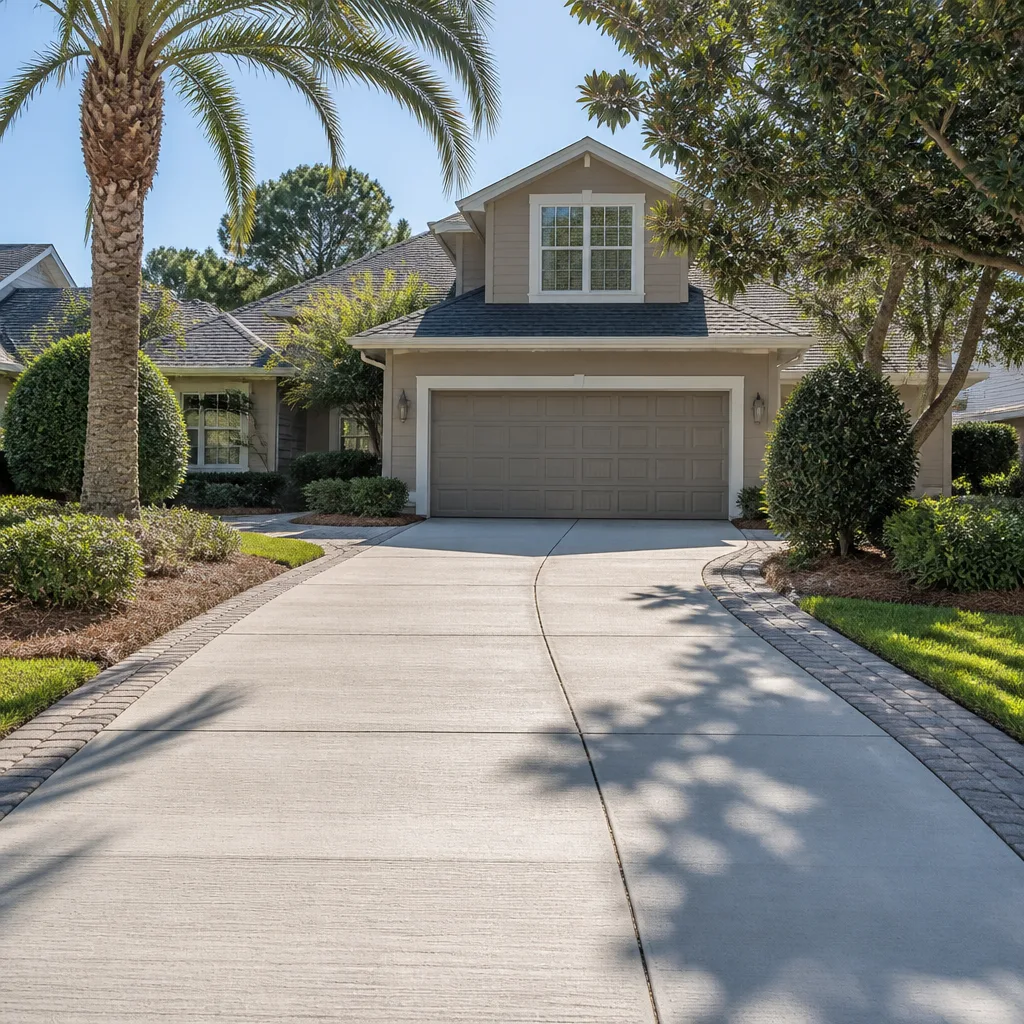
Water is patient. If you don’t give it somewhere to go, it will find a way into your base, your garage, or your neighbor’s yard, and it will do it slowly enough that you won’t notice until the damage is set. Drainage and slope are design decisions that belong on paper before a single paver is set. By the time the crew is laying stone, you’ve already locked in how the water behaves.
What to expect from a properly planned job:
- A slope that moves water away from the house and garage, not toward them.
- Low spots identified and handled with grading, channel drains, or both.
- Edge conditions that account for where runoff actually leaves the property.
- A plan for how the driveway meets the street without dumping water onto the sidewalk or a neighbor.
In Tustin, this matters most on sloped lots and where a driveway meets a garage apron. We’ve seen water sneak under a garage door over in the neighborhoods off Newport Avenue because the slope was “close enough.” It’s never close enough. Get the drainage design in the written plan and walk the grade with your contractor before work starts.
Mistake 3: Choosing Paver Thickness by Looks Instead of Load Rating
This is the spec detail most homeowners never think to ask about, and it’s where a low bid quietly cuts corners. Pavers come in different thicknesses, and the right one depends on what drives on them. A patio and a driveway are not the same job. Pick thickness by vehicle weight, not by which sample looks better on the table.
A quick guide to what drives the decision:
- Standard driveways: thicker units than you’d use for a walkway, sized for regular car and truck loads.
- Heavy vehicles or RV pads: step up further, and plan the base to match.
- Foot traffic and patios: a thinner profile is fine where nothing heavier rolls.
The trap is comparing two bids where one uses a thinner, cheaper paver and neither mentions it. The number looks lower. The driveway is under-built. Ask what thickness and what rating each bid is based on, and make sure both quotes are quoting the same spec. If a contractor can’t tell you why they chose a given thickness, they probably didn’t. Material quality carries the load here the same way it does in a kitchen reno, where we lean on brands like Cambria and Caesarstone for the same reason: the spec you can’t see is what lasts.
Mistake 4: Signing a Contract With No Written Edge-Restraint or Joint-Sand Scope
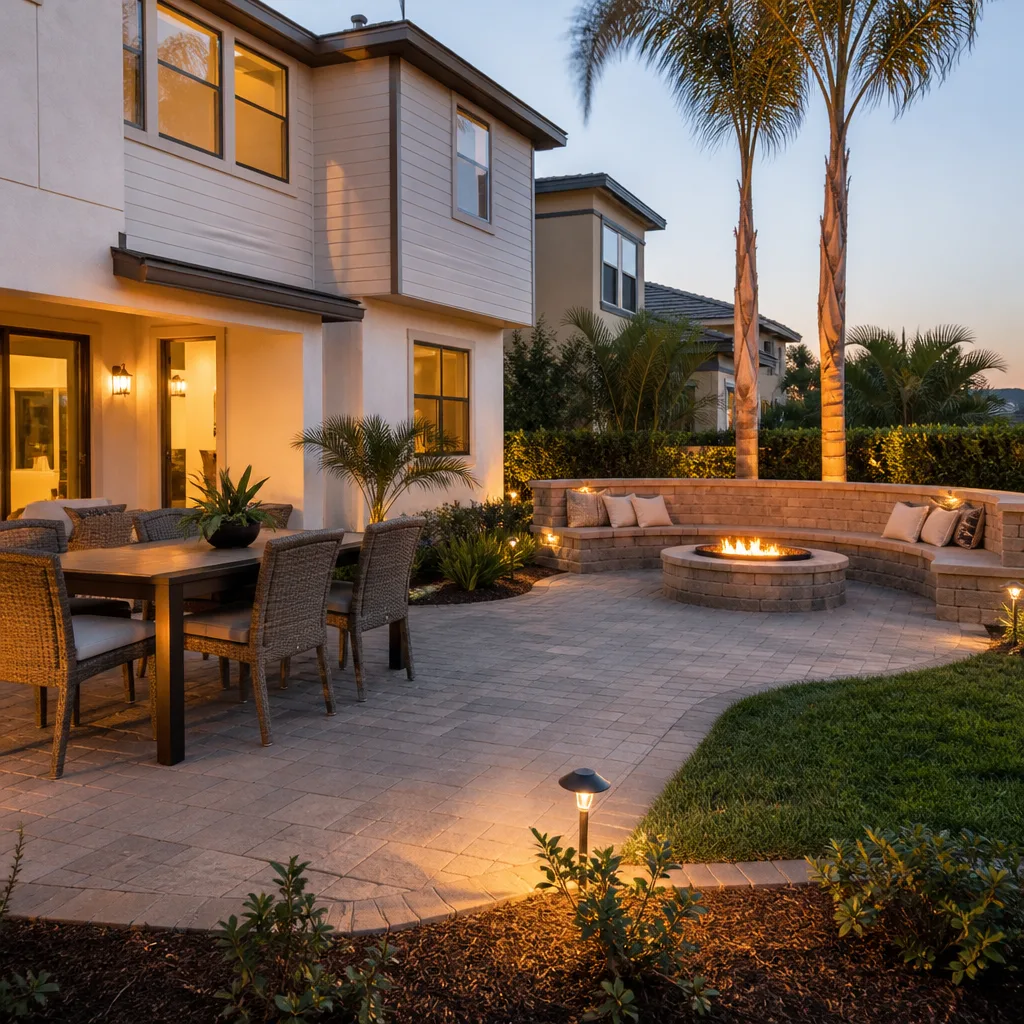
Edge restraints and joint sand are the first things cut to hit a low bid, and they’re the components that hold the whole driveway together. The edge restraint keeps the field of pavers from creeping outward under load and weather. The joint sand locks the units and keeps water from pouring straight into the base. Leave either out, or cheap out on them, and a perfectly good paver starts to splay and shift at the borders within a few seasons.
Your contract should spell out, in writing:
- The type of edge restraint and how it’s anchored.
- The joint sand spec, including whether a stabilized or polymeric sand is used.
- How the edges are pinned or set against the driveway perimeter.
- A line for what happens at the garage apron and the street transition.
A written, line-item scope is the whole game. No-hassle upfront pricing with every component named is how you avoid getting a beautiful quote that quietly omits the parts that keep it flat. If it isn’t in the contract, it isn’t in the driveway. We bring that same discipline to every scope we write, whether it’s pavers out front or a fence installation in Tustin along the property line.
Mistake 5: Assuming You Don’t Need a Permit or an HOA Green Light
Plenty of Tustin homeowners assume a driveway replacement is a simple swap that needs no paperwork. That assumption can cost you. Driveway work that changes the footprint, the slope, or how the property meets the public right-of-way can trigger a city permit, and a project done without one can mean code trouble and a fix at your expense. On top of the city side, many HOAs have their own rules on paver color, driveway width, and how the driveway meets the street. Skip the check and you can end up tearing out brand-new stone because it didn’t match the architectural guidelines.
Before work starts, confirm two things:
- Whether the city requires a permit for your specific driveway scope, and who pulls it.
- Whether your HOA has design standards that apply, and get approval in writing.
A contractor who knows Tustin will ask about both before quoting. One who waves it off with “you don’t need any of that” is telling you something about how the whole job will go. Permits pulled and inspections passed is the standard, not a favor.
When to Call a Pro
Some driveway work is genuinely fine to tackle yourself: resetting a few loose pavers, re-sanding joints, or power-washing and sealing. Call a professional when the work touches the base, the slope, or the load rating. Base failures, drainage problems, and driveway rebuilds that need compaction testing and permit coordination are not weekend jobs, and a bad base means you pay twice. Our technicians have up to 12 years of experience reading exactly these failures, and every job we take on is covered by our 730-Day Done Right Promise: if it’s not done right, we make it right. Pricing is upfront, with no surprises and no change orders sneaking in.
Related services in Tustin: if your driveway project is part of a bigger plan, take a look at Driveway & Pavers in Tustin for the full scope, or Home Additions & ADU in Tustin if you’re reworking how the front of the house and the drive connect. Everything we do runs from foundation to finish line under one contractor.
The Bottom Line
The five mistakes that cost Tustin homeowners the most are all decided before the first paver is set: untested base compaction on clay soil, drainage designed after the fact, thickness picked by looks instead of load, a contract missing edge-restraint and joint-sand specs, and skipped permits or HOA approval. Get those five right and your driveway will outlast the car parked on it. Get them wrong and you’ll be paying for the same job twice.
If you’re in Tustin and want it done right the first time, Groundwork Construction Co. of Tustin offers free estimates. Calls are answered by a live person, 24/7, and our background-checked, uniformed technicians show up ready to work. We also offer $1,000 off projects over $10,000 and 0% financing for 18 months, so a bigger job doesn’t have to wait. Call (833) 954-6066 to schedule your free estimate, and start with the Groundwork Construction Co. of Tustin home page if you want the full picture of what we handle.
Frequently Asked Questions
Most Tustin paver driveways land in a broad range depending on square footage, base depth, drainage work, and paver thickness, with heavier-duty specs and drainage additions pushing the number up. The only reliable figure comes from a written, line-item quote for your specific site. Call (833) 954-6066 for an exact quote, and the estimate is free.
Often yes, depending on whether the project changes the footprint, slope, or how the drive meets the public right-of-way, and your HOA may have its own rules on top of that. Confirm the city requirement and get any HOA approval in writing before work begins. Call (833) 954-6066 and we’ll walk you through what your scope likely needs.
Thick enough to carry the vehicles that will actually park on them, which is more than a walkway or patio needs. Standard cars and trucks call for a heavier unit than foot-traffic areas, and RVs or heavy vehicles call for more still. Ask each bid what thickness and load rating it’s based on. Call (833) 954-6066 if you want a spec review before you sign.
A properly built paver driveway with a tested base, correct slope, and sound edge restraints can last decades, while one with a rushed base can fail within a few seasons. The stone rarely fails first; the ground under it does. Call (833) 954-6066 to talk through your project, and remember every job we do is backed by our 730-Day Done Right Promise.
Most sinking and shifting in Tustin traces to an under-compacted base on clay-heavy soil, water that wasn’t given a path away from the drive, or weak edge restraints. Fixing the symptoms without fixing the base just delays the next failure. Call (833) 954-6066 for a free estimate and we’ll tell you what’s actually going on underneath.
Written by the team at Groundwork Construction Co. of Tustin.
Need Construction Help?
Call Groundwork Construction Co. of Tustin - licensed & insured, here with fast after-hours help in Tustin.
(833) 954-6066