Free written scope consultation - allowances, timeline, and change-order rules on paper before a single trade is scheduled
Styles & brands we work with
- Kitchen remodeling
- Bathroom remodeling
- Home additions & ADU
- Roofing
- Windows & doors
- Driveway & pavers
- Fence
See the difference
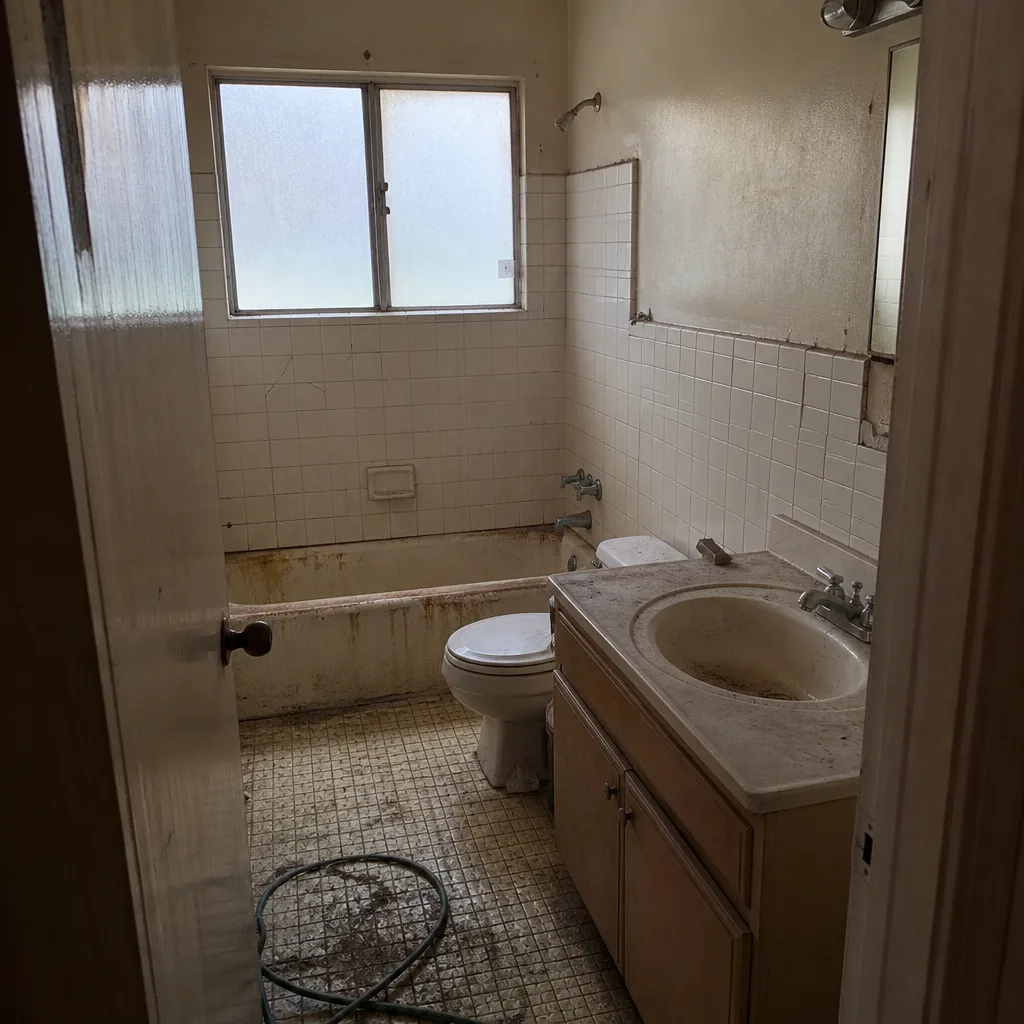 Before
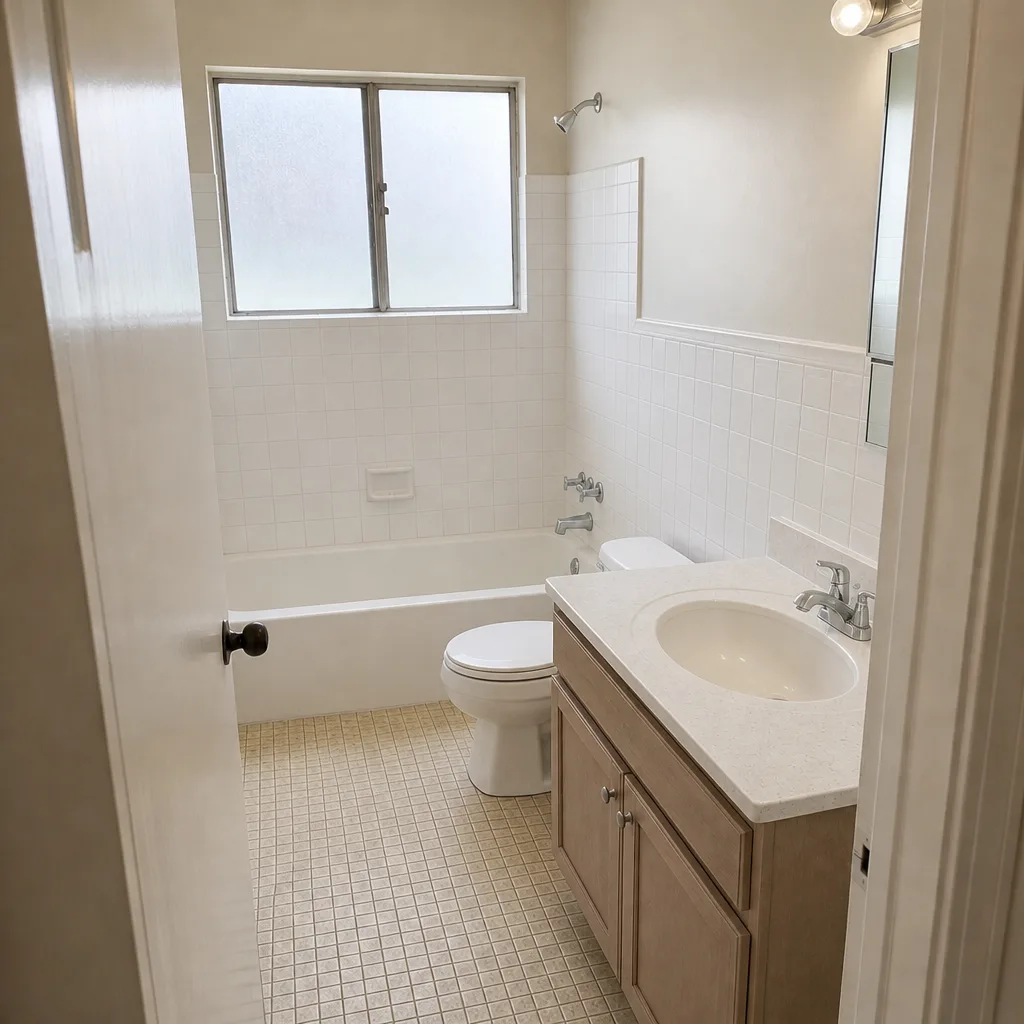 After
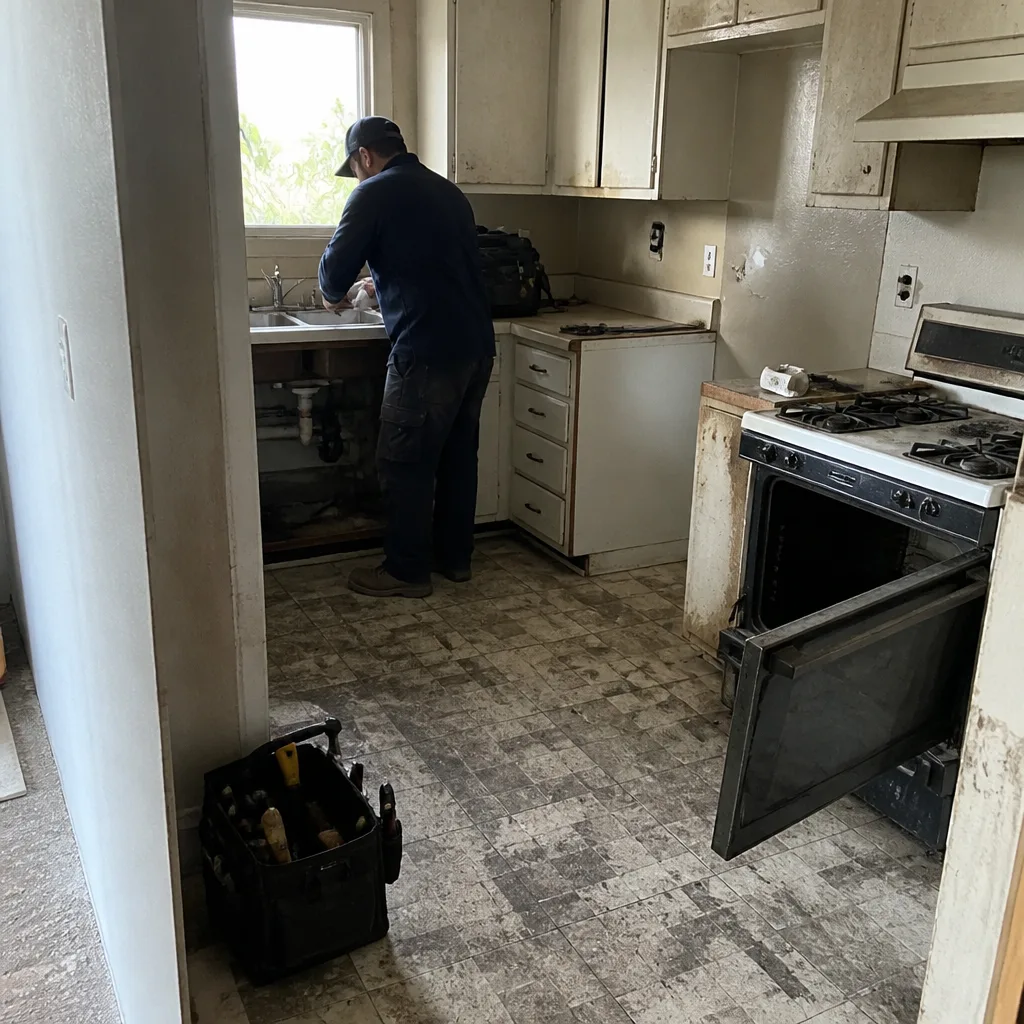 Before
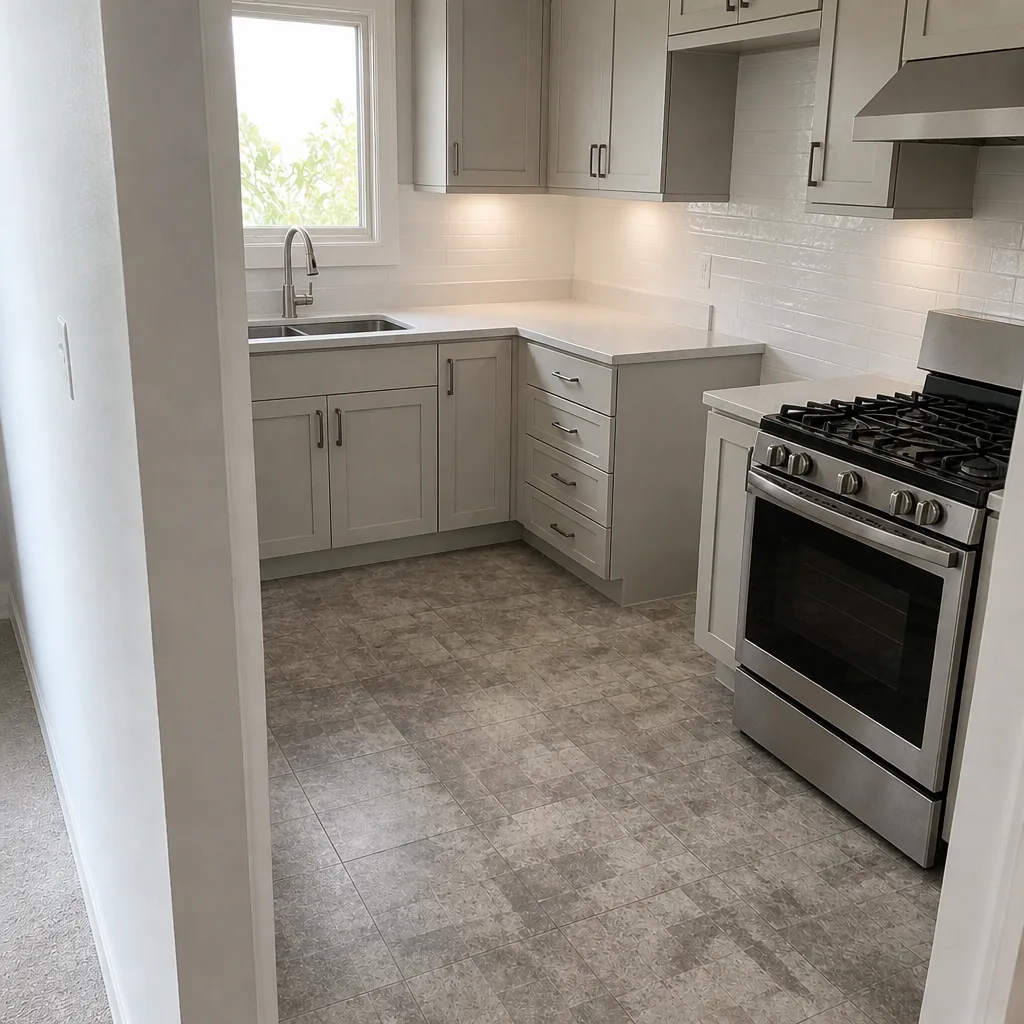 After
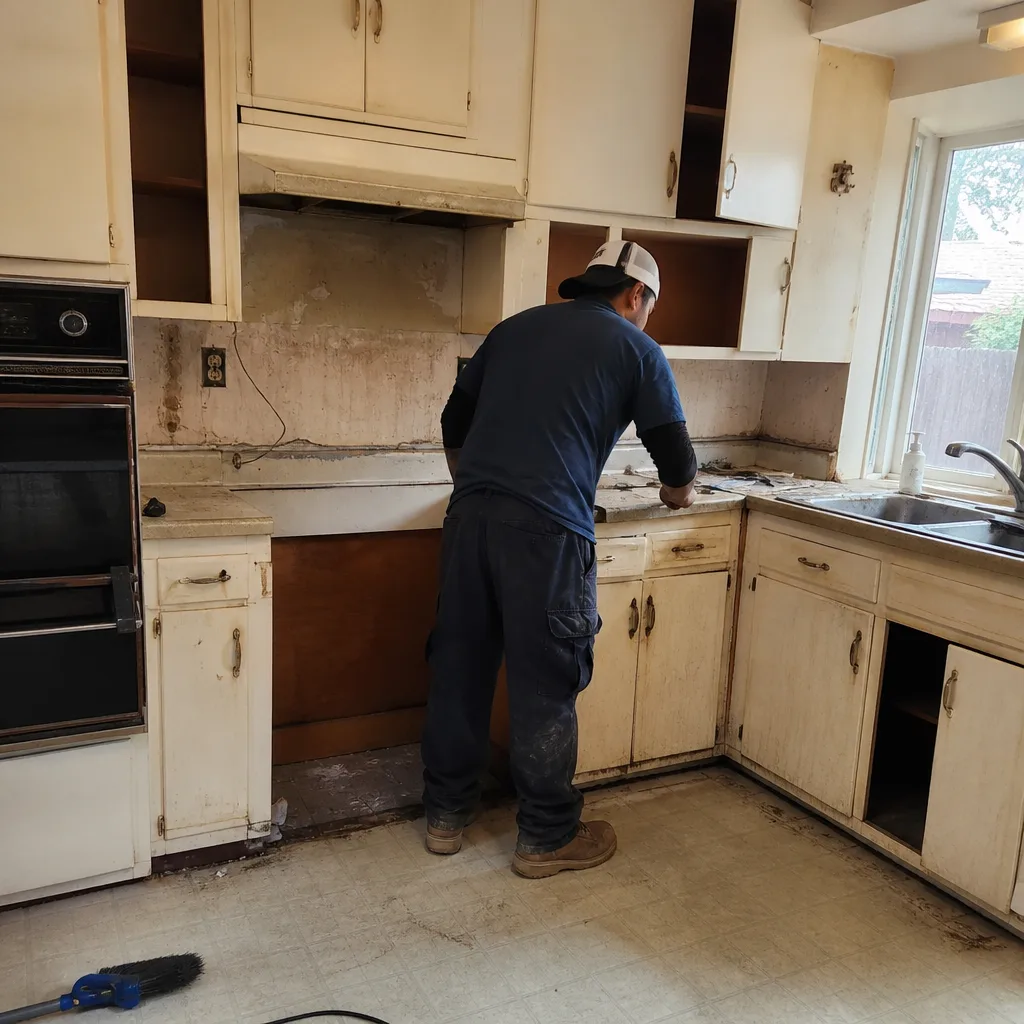 Before
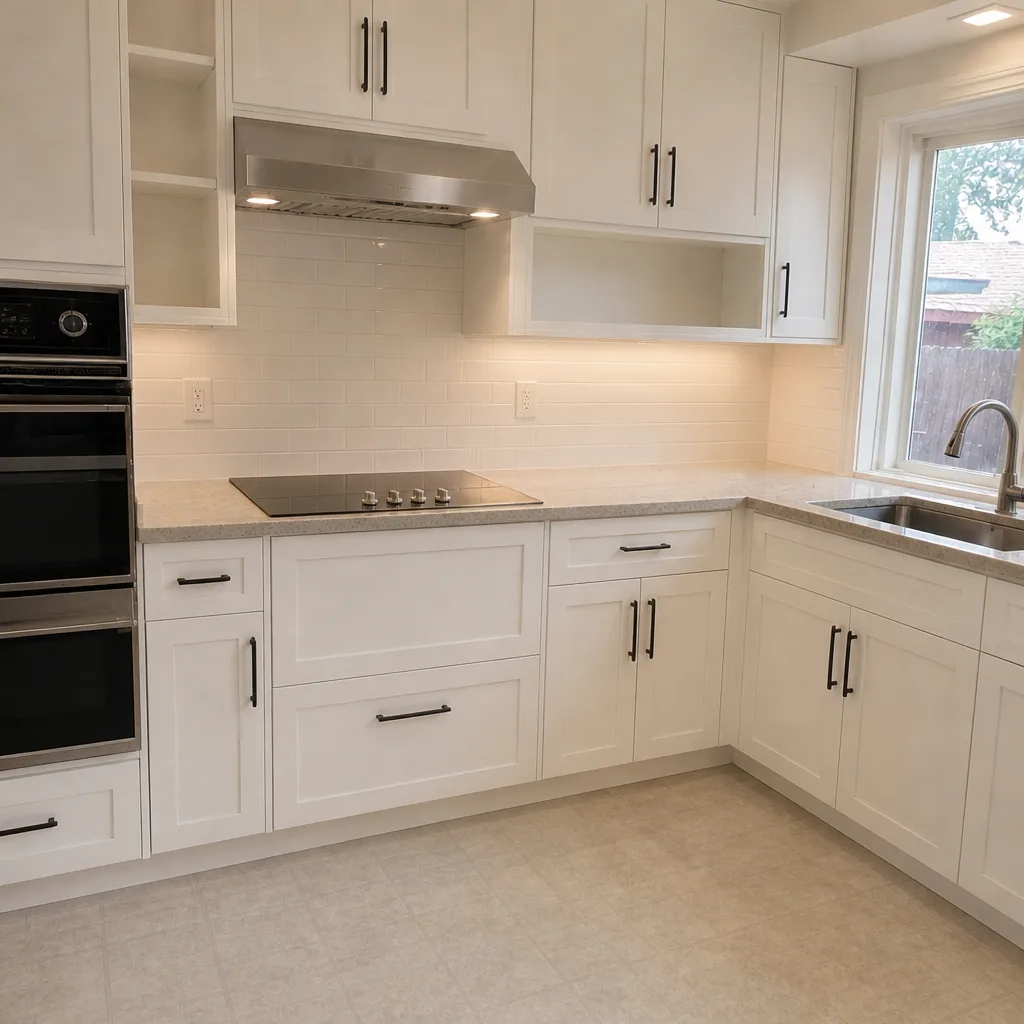 After
Tile vs Vinyl Plank Kitchen Flooring in Tustin: The Slab Underneath Decides It
For most Tustin kitchens sitting on an original 1960s slab, luxury vinyl plank is the smarter choice unless you’re prepared to pay for proper substrate prep or you’re restoring a historic Old Town home where tile is the design requirement. The reason isn’t style or durability on paper. It’s what’s under the floor. In Tustin’s mid-century ranch stock, a settled slab or a buried layer of old vinyl asbestos tile changes both the install cost and the right answer. Groundwork Construction Co. of Tustin handles full kitchen flooring and remodel work, and a no-pressure assessment starts with one call: (833) 954-6066.
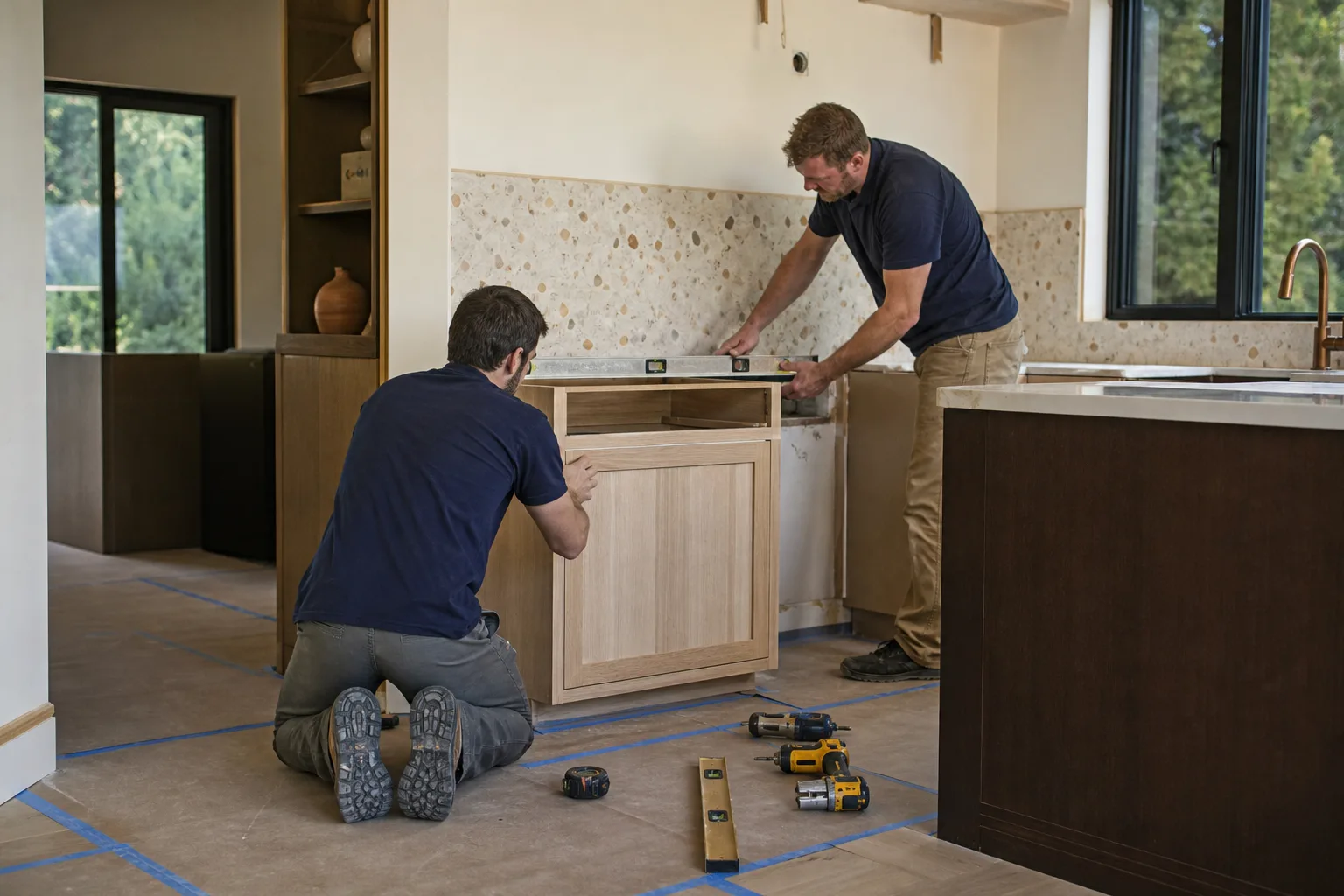
Why the Floor Under Your Tustin Kitchen Floor Matters More Than the Surface
Tustin’s housing splits hard down the middle. Old Town holds 1920s Craftsman and Spanish Revival bungalows on their original foundations. The mid-century ranch homes from the 1950s through the 1970s sit on poured concrete slabs that have had five to seven decades to settle, shift, and dry out. Then there’s Tustin Legacy, rising on the former Marine Corps Air Station ground in new construction. Each of those vintages responds to flooring differently, and a 1965 slab is the one that trips up most homeowners comparing tile to plank.
Concrete in Tustin’s semi-arid climate moves. Hot, dry summers and Santa Ana wind events pull moisture out of a slab, and the mild wet winters push some back. That thermal cycling doesn’t matter much to a floating floor. It matters a lot to rigid tile bonded to the concrete with thin-set. Which is why the decision framework below starts with the substrate, not the showroom samples.
What’s Actually Under an Older Tustin Kitchen Floor?
Three things show up again and again when we pull flooring in Tustin homes built between 1950 and 1978:
- Vinyl asbestos tile (VAT). A large share of homes from that era have original 9×9 or 12×12 vinyl asbestos tile laid beneath the current finished floor, sometimes under a layer of luan or carpet. California requires licensed abatement or a proper encapsulation system before any new flooring goes on top. That cost, roughly $800 to $2,500, applies whether you pick tile or vinyl plank. It’s the same either way, but it hits the total project budget before you’ve chosen a single material.
- Slab unlevelness. Settled concrete in these ranch homes is common. A slab can be out of level by a quarter inch over a 10-foot run and still look flat to the eye.
- Efflorescence and moisture wicking. The white chalky staining along older slab edges tells you moisture is moving through the concrete. Adhesive failure follows a floor laid over a slab that hasn’t been tested and sealed.
None of these are deal-breakers. They’re just the variables that separate a floor that lasts from one that fails inside two years. And they’re the reason a flat comparison chart you’d find online quietly misleads Tustin homeowners.
Tile vs Vinyl Plank: How Each One Handles a Tustin Slab
Large-format porcelain tile demands a floor that’s level within about 1/8 inch over 10 feet. Miss that tolerance and you get lippage, where one tile edge sits proud of the next and catches a bare foot, or worse, a hairline crack that spreads as the slab keeps moving. Luxury vinyl plank is far more forgiving. Floating LVP tolerates roughly 3/16 inch of variance across a 10-foot span, which means it goes down over most older Tustin slabs with minimal prep. That’s the concrete technical difference no generic comparison tells you about.
| Factor | Large-Format Tile | Luxury Vinyl Plank (LVP) |
|---|---|---|
| Substrate tolerance | Level within ~1/8″ per 10 ft | Accepts up to ~3/16″ variance |
| Prep on a settled Tustin slab | Self-leveler or grind, often required | Minimal; often none beyond cleaning |
| Response to thermal cycling | Grout can crack within 2-3 years if prep is skipped | Floats independently; moves with the slab |
| Asbestos tile handling | Abatement/encapsulation required first | Abatement/encapsulation required first |
| Water in a kitchen | Fully waterproof surface | Waterproof core, but seams need sealing care |
| Demo and repair later | Chisel and dust | Unlocks and lifts |
The honest recommendation
On an original slab with even minor settling, LVP wins on cost and on long-term behavior. Tile installed over an inadequately prepped slab in Tustin’s dry-humid cycle will show grout cracking inside two to three years. It’s not a scare tactic, it’s what happens. If a homeowner wants tile, the win comes from committing to the prep, not from skipping it and hoping. A proper grind-and-self-level (we use Quikrete or Sakrete products for this) adds real cost but delivers a floor that will hold for decades.
Where tile is the right answer
In Old Town Tustin’s Spanish Revival kitchens, Saltillo or large-format stone tile isn’t decoration, it’s authenticity. In a historic district where buyers pay a premium for period-appropriate materials, cutting to LVP undermines both the look and the resale story. Here the substrate investment is clearly worth it. Same for anyone who genuinely wants the permanence of tile and will pay for the slab work to support it.
What Does a Tustin Kitchen Floor and Remodel Cost?
Flooring rarely stands alone in a kitchen. Most Tustin homeowners pairing a new floor with cabinet and counter work are budgeting against the full Kitchen Remodeling range. Here’s how the line items stack up:
| Scope | Typical Tustin Range |
|---|---|
| Full kitchen remodel | $14,000 – $45,000 |
| Small kitchen remodel | $9,000 – $20,000 |
| Cabinet installation | $4,000 – $13,000 |
| Countertop installation | $2,000 – $6,500 |
| Backsplash installation | $800 – $2,500 |
| Kitchen island installation | $3,000 – $10,000 |
| Asbestos VAT abatement (if present) | $800 – $2,500 |
Those are upfront ranges, not teaser numbers. The number you see is the number you pay, which matters when substrate surprises show up mid-demo. We handle the whole scope in-house so you’re not coordinating a flooring crew, a cabinet installer, and an abatement contractor on three different schedules. From foundation to finish line, it’s one team.
The Kitchen Remodeling in Tustin page breaks down the full scope if you’re weighing a floor against a bigger overhaul, and our home page shows the wider service mix. Financing at 0% for 18 months and $1,000 off projects over $10,000 keep a full slab-and-floor investment within reach without stretching the budget.
The 730-Day Done Right Promise and Why It Fits Flooring So Well
Tile grout failure and LVP seam separation both typically show up at the 12 to 24 month mark. That’s not a coincidence. Both are the failure modes that hide beneath a brand-new floor for the first year and only surface once the slab has moved through a full hot-cold cycle. A standard one-year installation warranty expires just as the real problems ripen. The 730-Day Done Right Promise is calibrated to catch exactly that window. If the floor isn’t done right, we make it right, for two full years after install. It’s one of the longest workmanship guarantees in residential construction, and flooring is one of the places it earns its keep most.
Our technicians have up to 12 years of experience, arrive background-checked and uniformed, and we answer the phone live, 24 hours a day, seven days a week. No voicemail black hole when a slab issue comes up on a Saturday.
FAQs
For most mid-century Tustin ranch kitchens on original concrete slabs, luxury vinyl plank is the better choice because it tolerates slab settlement up to about 3/16 inch without the prep bill that large-format tile demands. Tile wins in Old Town historic kitchens where period authenticity is the point and the substrate work is worth doing. Call (833) 954-6066 for a free estimate on either path.
A full kitchen flooring and remodel in Tustin typically runs $14,000 to $45,000 depending on scope, with the substrate condition driving much of the spread. If a 1950-1978 home has buried vinyl asbestos tile, add $800 to $2,500 for abatement or encapsulation, a cost that applies equally to tile and LVP. Call us and we’ll give you the exact number after a site visit; estimates are free.
If your home was built between 1950 and 1978, there’s a real chance the current floor sits on top of original vinyl asbestos tile, and California requires licensed abatement or proper encapsulation before new flooring goes down. It’s not something to sand or scrape yourself. We assess it during the estimate and handle the compliant path. Call (833) 954-6066 to schedule the look.
Sometimes, but not always safely. A single thin layer over a sound, flat, asbestos-free surface can be encapsulated under certain conditions, but multiple layers, moisture issues, or a settled slab usually call for full removal. Call (833) 954-6066 and we’ll tell you straight which applies to your kitchen.
Get a Straight Answer on Your Tustin Kitchen Floor
If you’d rather have it looked at by someone who’s pulled hundreds of these floors, Groundwork Construction Co. of Tustin offers a no-pressure assessment in Tustin. We’ll test the slab, check for buried asbestos tile, and give you upfront pricing on both options. Call (833) 954-6066 for a free estimate.
Written by the team at Groundwork Construction Co. of Tustin, serving Tustin, CA.