Last updated November 17, 2026








Free written scope consultation - allowances, timeline, and change-order rules on paper before a single trade is scheduled
Bathroom Remodeling Warning Signs Every Homeowner Should Know
A soft spot in front of a toilet isn’t a flooring problem. It’s a subfloor rot problem that has usually been active for 6 to 18 months before anyone notices it. By the time you feel it underfoot, the repair scope has already doubled, and what looked like a tile replacement turns into a structural fix. Most bathroom remodel disasters aren’t random. They were preceded by ignored signals homeowners didn’t know to look for. This guide teaches you to read your bathroom the way a contractor reads it, so you catch a repair on the horizon instead of in the rearview. We’ll cover Tustin specifics along the way.
Quick Answer
The clearest bathroom remodeling warning signs are soft or spongy flooring near the toilet and tub, peeling paint that returns within weeks of repainting, caulk that keeps failing in the same spot, loose or hollow-sounding tile, and visible water staining on ceilings below the bathroom. These signals usually mean moisture has been sitting behind a finish for months. Any single one of them is worth a professional look before you plan a cosmetic refresh, because they change the scope from surface work to structural repair.
Styles & brands we work with
- Kitchen remodeling
- Bathroom remodeling
- Home additions & ADU
- Roofing
- Windows & doors
- Driveway & pavers
- Fence
Table of Contents
- Cosmetic Wear vs. Structural Deterioration: The 10-Minute Test
- What Peeling Bathroom Paint Is Actually Telling You
- Active vs. Old Water Damage: The Distinction That Saves Walls
- Red Flags That a Previous Remodel Was Done Wrong
- Partial Repair vs. Full Remodel: How to Decide
- Why Tustin’s Climate and Housing Stock Change the Timeline
- A 7-Step Walkthrough You Can Do This Weekend
- When a Bathroom Problem Spreads Beyond the Bathroom
Cosmetic Wear vs. Structural Deterioration: The 10-Minute Test
The line between “this bathroom is dated” and “this bathroom is failing” is the line between cosmetic wear and structural deterioration. Cosmetic wear is surface-level and cheap to fix. Structural deterioration means the substrate, framing, or subfloor has absorbed damage, and it gets more expensive every month you wait. The trick is knowing which one you’re looking at, and you can tell the difference in about 10 minutes with your hands, your eyes, and a screwdriver.
Run these checks in order. Write down what you find, because a contractor will ask.
- The press test on the floor. Stand in front of the toilet, then at the tub’s edge, and press down with your heel. Any give, bounce, or softness is subfloor damage. Sound tile on a solid subfloor does not move.
- The tap test on tile. Tap each tile with the handle of a screwdriver. A sharp, solid click is good. A hollow, dull thud means the thinset has released from the backer board.
- The caulk flex test. Press gently along the base of the tub and shower. Caulk should be firm. If it squishes or peels away in sheets, moisture is behind it.
- The nose test. A persistent musty smell with no visible mold is a moisture signal, often from under the floor or behind a wall.
- The floor line test at the toilet flange. Look at the base of the toilet. A toilet that rocks slightly, or a wax ring stain bleeding outward, points to a long-term slow leak.
- The ceiling-below test. If there’s a bathroom above a room below, look up. Any ring, stain, or bubbling paint is water coming through.
Any two failures on that list, or one soft spot on a floor, means this is no longer a cosmetic conversation. That’s true in any Tustin home built before 1990, and it’s especially true in the older single-story neighborhoods where original subfloors are approaching the end of their service life. If you find yourself planning around genuine structural issues, it helps to look at the full scope of what a bathroom renovation actually involves on our bathroom remodeling in Tustin page, because the financial planning changes.
What Peeling Bathroom Paint Is Actually Telling You
Peeling paint in a bathroom is not one problem. It’s three different problems that look similar on a Saturday morning and cost very different amounts to fix. Misreading which one you have is how homeowners end up repainting the same wall every six months, convinced they have bad paint when they actually have a ventilation issue or an active leak.
Here’s how to tell the three apart.
- Cause 1: High humidity and poor ventilation (low urgency, fixable). The paint peels in sheets near the ceiling and shower, and it comes back seasonally. This means the exhaust fan is undersized or run for too short a time after showers. Repair typically involves upgrading the fan, sealing the wall properly, and repainting with a bathroom-rated product. No structural work.
- Cause 2: Moisture migrating through the wall from behind (moderate to high urgency). The peeling is concentrated on an exterior-facing wall, or on the wall shared with another wet room. This is often condensation forming on the back of the drywall in winter. It means there’s a thermal or moisture barrier issue, and it usually requires opening the wall to diagnose.
- Cause 3: An active leak above or behind (high urgency). The paint blisters, bubbles, or peels from the bottom up, and the wall feels cool or damp to the touch. If you can press a dry paper towel against the wall and it comes away damp, this is active water intrusion, not a paint problem. Stop and call before you scrape anything.
We’ve seen Cause 3 misdiagnosed as Cause 1 many times in Tustin, especially in homes where an addition or a bathroom has been added over the years. The homeowner repaints, the paint fails within a month, and by the time the wall gets opened the drywall and part of the framing are already compromised.
Active vs. Old Water Damage: The Distinction That Saves Walls
Not all water damage means the same thing. Before you open a single wall, you need to know whether you’re looking at active water damage (water is entering right now) or old water damage (a leak happened, stopped, and left a stain). Getting this wrong wastes money in both directions: you either tear into a wall that didn’t need to come down, or you patch over a leak that is still running.
Active water damage signals:
- Stains that are still slightly darker at the center than the edges, and growing
- Paint or drywall that feels cool, damp, or soft to the touch
- A faint musty smell that gets stronger in warm weather
- Rust on the back of a vanity or on toilet supply lines
- Bubbling paint or lifted joint tape
Old water damage signals:
- Stains with a hard, sharp-edged ring and a lighter center
- Drywall that is fully dry and firm but discolored
- Cracked or flaking paint with no ongoing swelling
- Old caulk lines that were clearly re-caulked over a prior repair
The practical rule: if you haven’t confirmed the leak is fixed, treat every stain as active until proven otherwise. In our experience across Tustin, the single most expensive bathroom disaster we see is a homeowner who assumed a ceiling stain under a second-floor bathroom was “old,” tiled over the floor above, and then had to remove the new tile two months later when the stain reappeared. If you’re not sure, get someone who reads water damage for a living to look before you spend a dollar on finishes.
Red Flags That a Previous Remodel Was Done Wrong
Some of the worst bathrooms we walk into were remodeled within the last five years. The problem isn’t age, it’s that a previous contractor cut corners that don’t show up until long after the final invoice. If you bought a home with a recently remodeled bathroom, or you inherited a remodel, read these warnings before you plan anything on top of them.
Specific red flags in the work itself:
- Tile lippage you can feel. Run a fingertip across the grout lines in a shower. If you feel a step from one tile to the next, the substrate wasn’t flat and the installer set tile anyway. Water pools there and finds the seams.
- Caulk applied over wet or dirty joints. Fresh caulk that has already failed in a shower means it was applied over moisture. Caulk over moisture traps water behind it.
- No backer board behind tile. If a shower wall sounds hollow when tapped and flexes under pressure, the tile may be set directly on drywall, which is fine in dry areas and a guaranteed failure in wet areas.
- Toilet rocking or caulk sealing a toilet base. A properly installed toilet sits flat and doesn’t rock. A silicone bead around the base is often hiding a failed wax ring.
- Vanity piping without shutoff valves. Look under the sink. If the supply lines run straight into the wall with no valve between the wall and the fixture, the previous installer didn’t want you to be able to shut off the water without going outside.
- Exhaust fan venting into the attic instead of outdoors. A fan with no duct visible from the fan housing, or a duct that terminates in the attic, is pumping warm moist air into your framing every shower.
- Missing or poorly sloped shower pan. Water that doesn’t drain cleanly to the weep hole at the drain will pool and eventually find the floor below.
If three or more of these show up, treat the bathroom as needing verification before you consider finishes. A cosmetic update over a compromised wet area is money spent on a countdown timer. If that bathroom is part of a bigger improvement plan, our guide on home additions and ADU work in Tustin explains how a failing current space often triggers a larger planning conversation.
Partial Repair vs. Full Remodel: How to Decide
This is the hardest question homeowners ask us, and the honest answer depends on how much of the bathroom is affected and how far the moisture has traveled. A partial repair is viable when the damage is localized and the surrounding structure is confirmed sound. A full remodel makes financial sense when the damage is in more than one wet area, when the subfloor has failed, or when the shower and tub pan both need rebuilding.
The 18-month trap: addressing the visible problem without the underlying cause buys you roughly 18 months before a bigger failure. We see this most in Tustin homes where a homeowner replaces a shower valve or re-caulks a failing shower, and the cosmetic fix buys time until water has moved into the subfloor. By then the repair covers tile, backer board, subfloor, and often the framing, and the original fix is wasted money.
Use this decision framework:
- Damage in one wet area, no subfloor softness, no active leak: partial repair is viable. Expect work confined to tile, caulk, and finish.
- Damage in one wet area with subfloor softness but no wall involvement: partial repair with a subfloor replacement. Still manageable as a project, but the floor comes up.
- Damage in two wet areas, or water showing below the bathroom, or any framing involvement: plan a full remodel. The cost of doing it in pieces in this scenario is nearly always more than doing it once.
- More than one red flag from the previous-remodel list plus any active leak: open the walls before committing to a scope. You can’t plan a budget around damage you haven’t seen.
One thing most people don’t realize: a partial repair is fully viable in a well-built Tustin home from the 1970s or 1980s where the plumbing is still copper or PEX and the subfloor is solid. It’s far less viable in a home where the same bathroom has already been patched once and the warning signs have returned. If the same problem keeps coming back, it’s not a repair problem anymore, it’s a construction problem.
Why Tustin’s Climate and Housing Stock Change the Timeline
Tustin is unusually forgiving to exterior construction and unusually harsh on bathrooms in specific ways. Our weather doesn’t punish a bathroom the way cold climates do, so it’s easy for a moisture problem to build slowly and quietly. Two things make Tustin different.
First, the housing stock. A large share of Tustin homes were built between the late 1950s and the early 1990s, which means original bathrooms are now 30 to 65 years old. That covers a very wide range of ventilation standards. Older Tustin bathrooms were often built with a window instead of an exhaust fan, and windows don’t get opened in every season. A bathroom that relies on a window for ventilation can be quietly collecting moisture for two decades before a floor goes soft.
Second, the soil and slab conditions across Tustin. Areas with expansive clay soils and slab-on-grade construction are prone to hairline cracks under the bathroom floor and around the shower pan. Where that happens, a slow shower pan leak finds a path into the subfloor, which is why we’ve routinely seen spring failures in Tustin properties after a wet winter. The winter rain doesn’t put water in the bathroom. It raises the moisture in the ground and drives a small interior leak from “weep hole trickle” to “floor softness in front of the shower.” Homeowners in the older single-story Tustin neighborhoods near Old Town call us every spring with a shower that started leaking in December. If you’re in that situation and the roof took any of it, our roofing in Tustin page covers the exterior side, because water almost never enters a bathroom from only one direction.
None of this means every Tustin bathroom needs a remodel. It means every Tustin bathroom should be checked at the 10-minute test level at least once a year, and immediately after any wet season.
A 7-Step Walkthrough You Can Do This Weekend
This is the walkthrough we use on a first visit to a Tustin bathroom. You can run through it yourself in under half an hour. If you’re not confident about what you’re seeing, get a professional to look, but the pass gives you a written record of what was there before a project starts.
- Walk the floor and press. Check in front of the toilet, at the door threshold, and along the tub. Note any movement, softness, or give. Water damage to a subfloor almost always shows up at those three points first.
- Tap every tile above counter height. Shower walls and tile surrounds, from the bottom up. Note hollow spots. A tile that sounds dead is a tile that has already released.
- Look at the ceiling in the room below and the walls above. Any ring, stain, or bubbling is a moisture signal. Photograph it with a phone and date the photo.
- Test the exhaust fan. Hold a piece of toilet paper to the grille and run the fan. It should hold the paper. If it can’t, the fan is not moving air, and the bathroom is not ventilating. Run the fan for 20 minutes after every shower regardless.
- Open the vanity and check the shutoff valves. Turn each valve a quarter turn and back. If a valve won’t turn, it’s one you can’t rely on if a supply line fails.
- Trace the caulk lines with a fingernail. Anywhere the caulk peels, feels soft, or moves, note it. Anywhere the same joint has been recaulked multiple times, treat it as a leak to find.
- Check for softness at the base of the shower pan and at the outside corner of the curb. A shower pan that is not holding is the most common source of a Tustin bathroom remodel that gets expensive.
If everything passes, hold onto your notes and recheck in 12 months. If any step fails, that failure is the warning sign, and the earlier you deal with it, the cheaper the repair becomes. Homeowners with a failing bathroom often start planning a broader home project while they have the team onsite; our fence installation in Tustin and driveway and paver work in Tustin pages cover those adjacent upgrades.
When a Bathroom Problem Spreads Beyond the Bathroom
A bathroom is the most water-dense room in a home and the most common source of damage that reaches other parts of the house. The warning signs that it has spread are specific and worth knowing before you dig in.
- Soft flooring just outside the bathroom door. If the subfloor under the bathroom has failed, the water often reaches the adjacent hallway or bedroom floor before it shows up inside the bathroom itself.
- Bubbling or discoloration on a wall shared with a bedroom or closet. Water in a bathroom wall travels along the studs and shows up on the far side before it shows on the tile side.
- A musty smell in a closet or hallway beside the bathroom. Odor travels farther than visible damage.
- Sagging floor joists visible from a basement or crawlspace. If you have access below the bathroom, look up. Stained sheathing or a bow in a joist is a structural warning sign.
- Grout that keeps cracking in a line across the floor. Repeated cracking along the same line can signal movement in the subfloor, not just a loose tile.
When the damage has already left the bathroom, the scope changes. It’s no longer a bathroom project, it’s a moisture-mapping and repair project. Our team at Groundwork Construction Co. of Tustin handles the full scope from foundation to finish, so a homeowner with a spreading problem gets one plan and one point of accountability rather than three contractors passing the blame.
Common Mistakes to Avoid
- Re-caulking a shower without finding the leak. Fresh caulk over a failing shower pan holds moisture in, and the second caulk job usually follows within a year. Find the source before you touch the caulk gun.
- Repainting peeling bathroom paint as the first move. Paint fails for a reason. If the reason isn’t found and fixed, the paint fails again, and you’ve spent the budget twice.
- Assuming a floor soft spot is a flooring job. A soft spot in front of a toilet in a Tustin home older than 30 years is almost never only a flooring issue. Plan for subfloor inspection in the bid.
- Trusting a verbal scope from a previous remodel. Ask for the original permit history on the bathroom. If no permit was pulled for a major bathroom remodel, assume the plumbing and electrical work is unverified.
- Ignoring an exhaust fan that doesn’t move air. A dead fan is one of the most common hidden warning signs in Tustin bathrooms, because it fails silently. Test it with a piece of toilet paper once a year.
- Committing to a full remodel scope before opening the walls. The right sequence is inspection, then scope, then pricing. If a contractor gives you a firm full-remodel price without looking inside the walls, the number is a guess.
- Treating the same recurring problem as a separate event. The same water stain coming back three times over two years is one problem that was never fixed, not three problems.
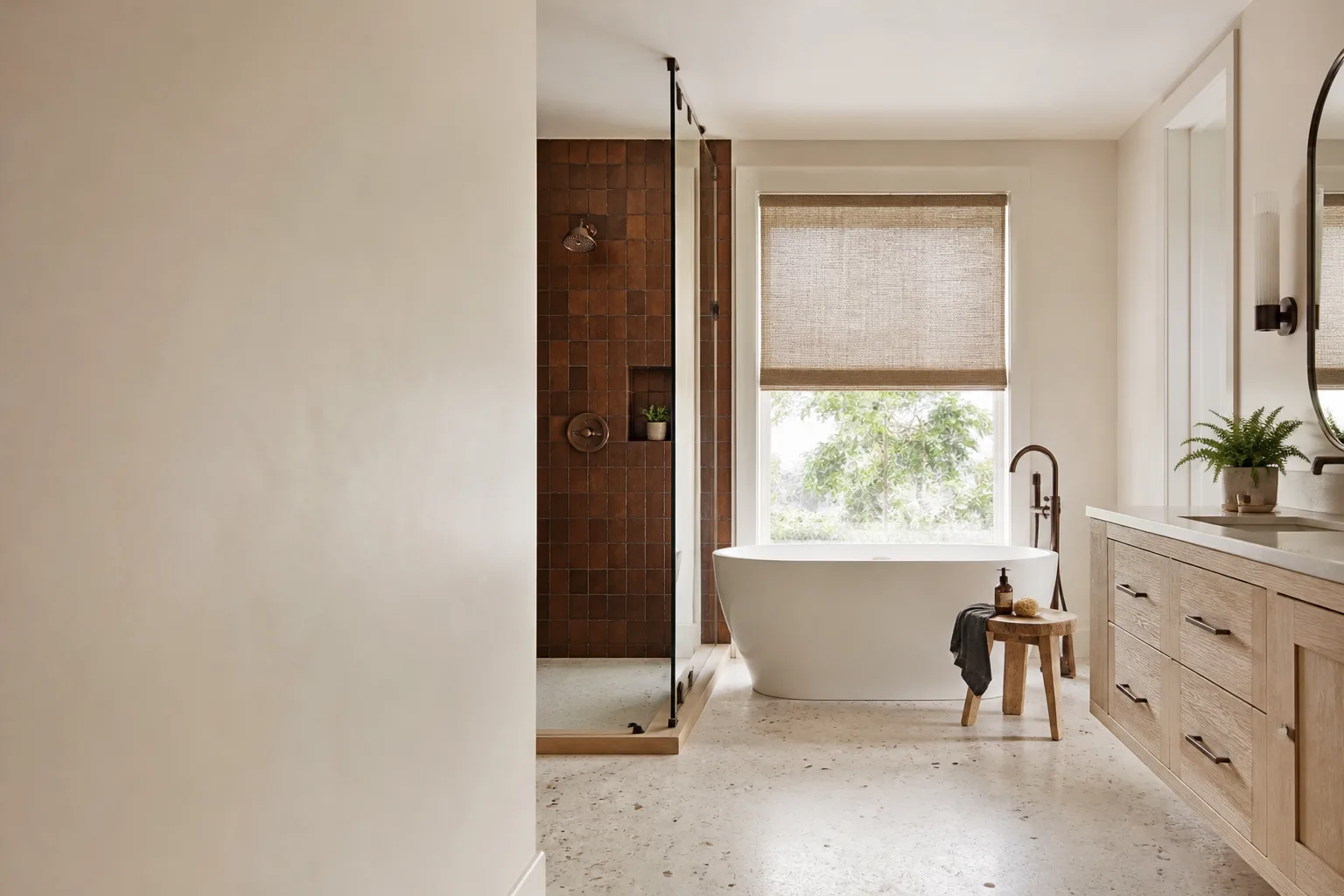
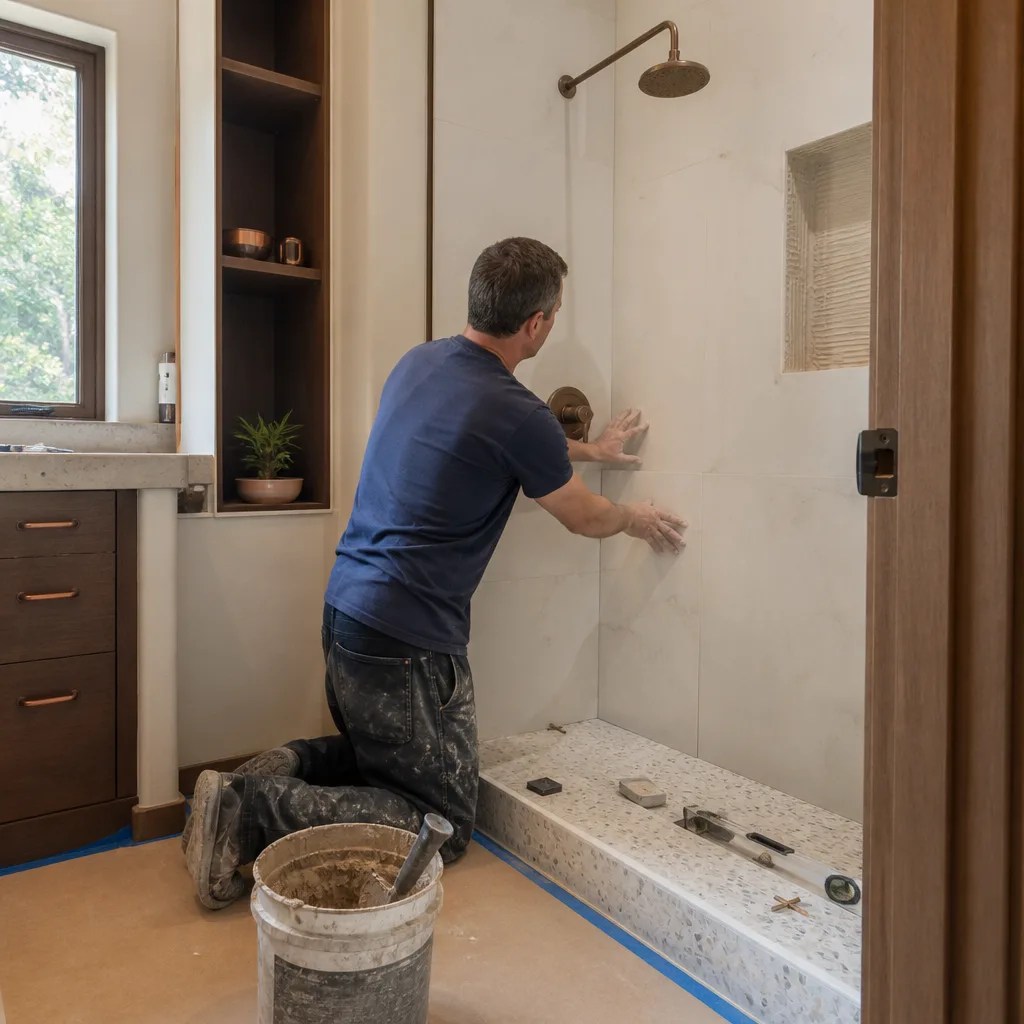
See the difference
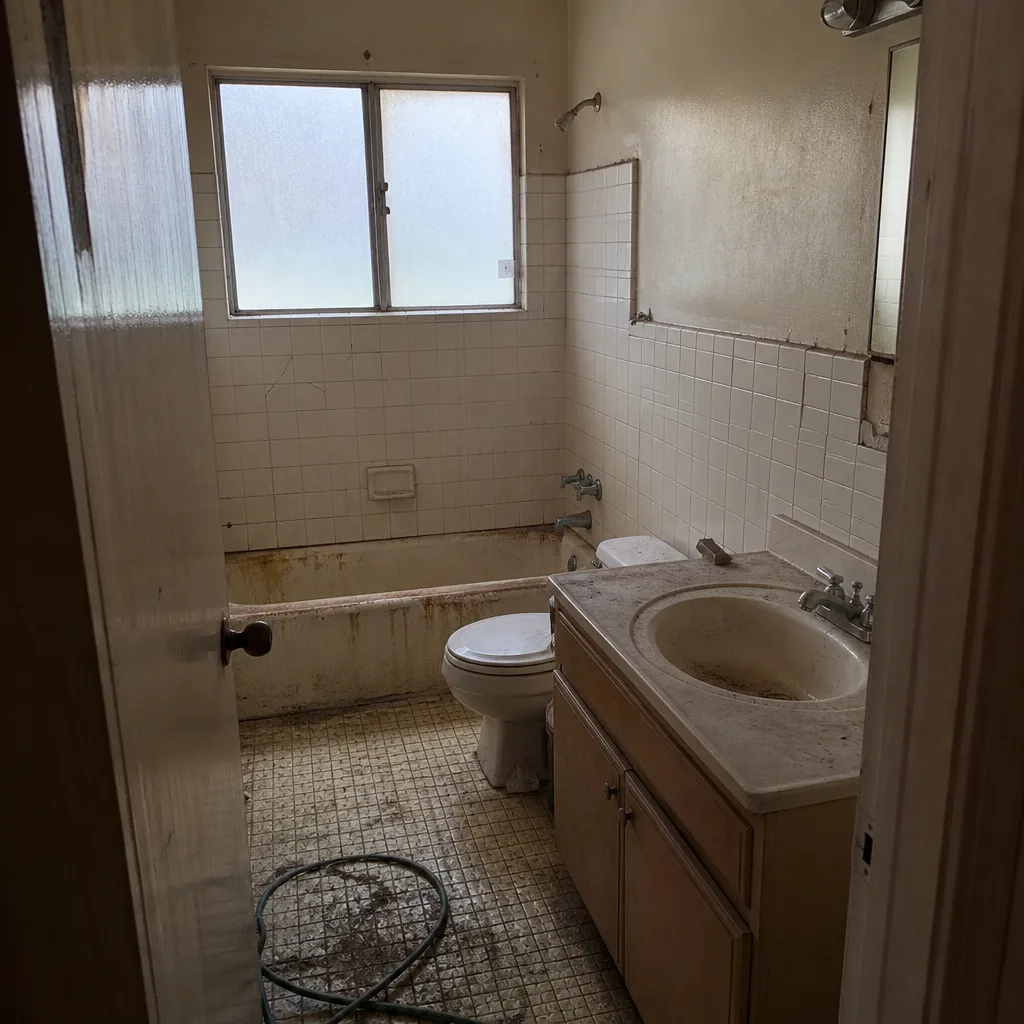 Before
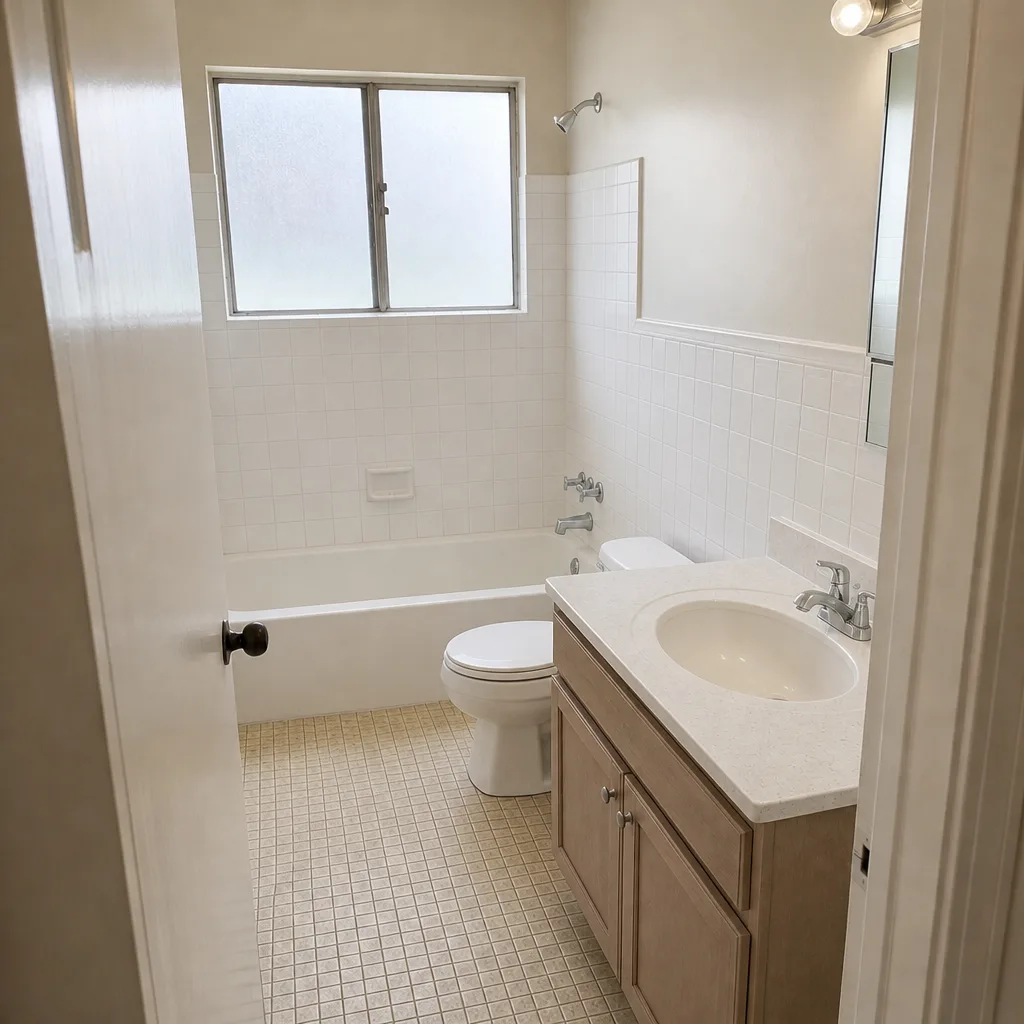 After
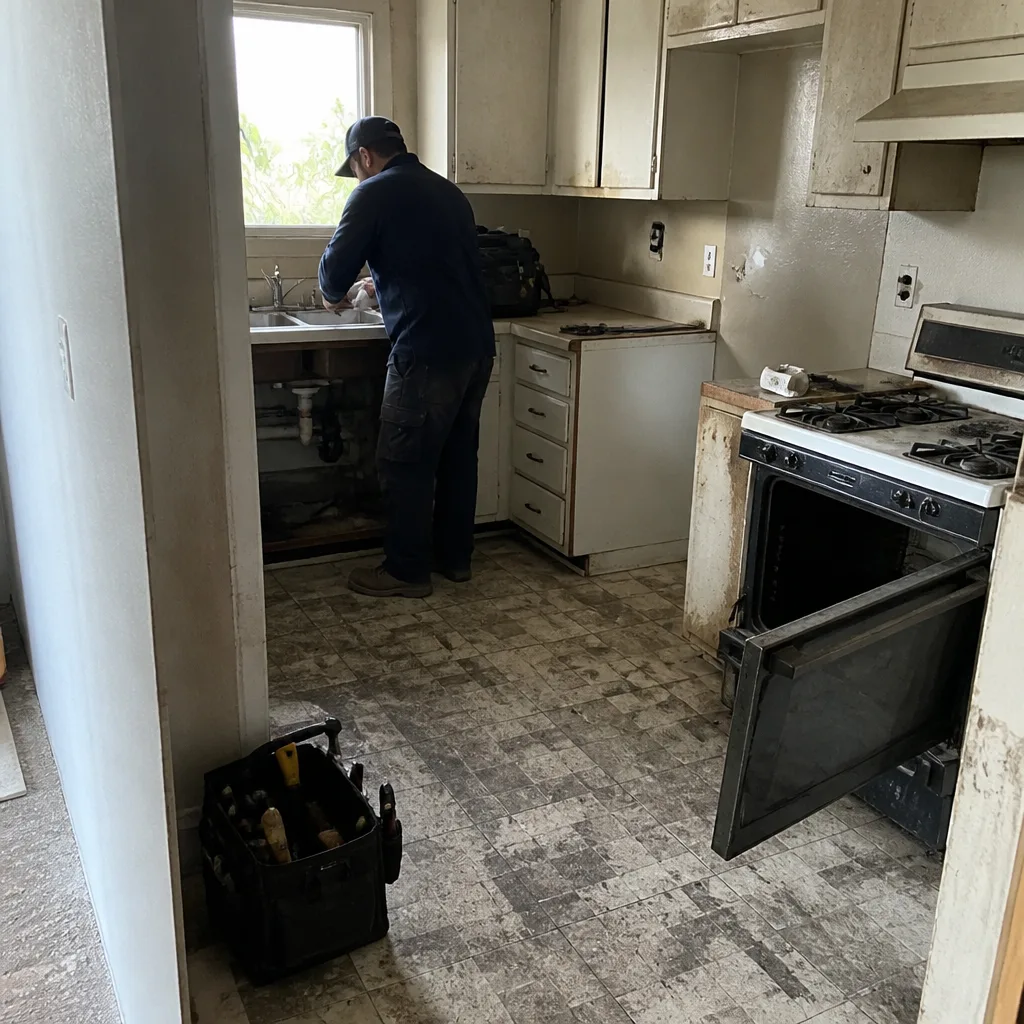 Before
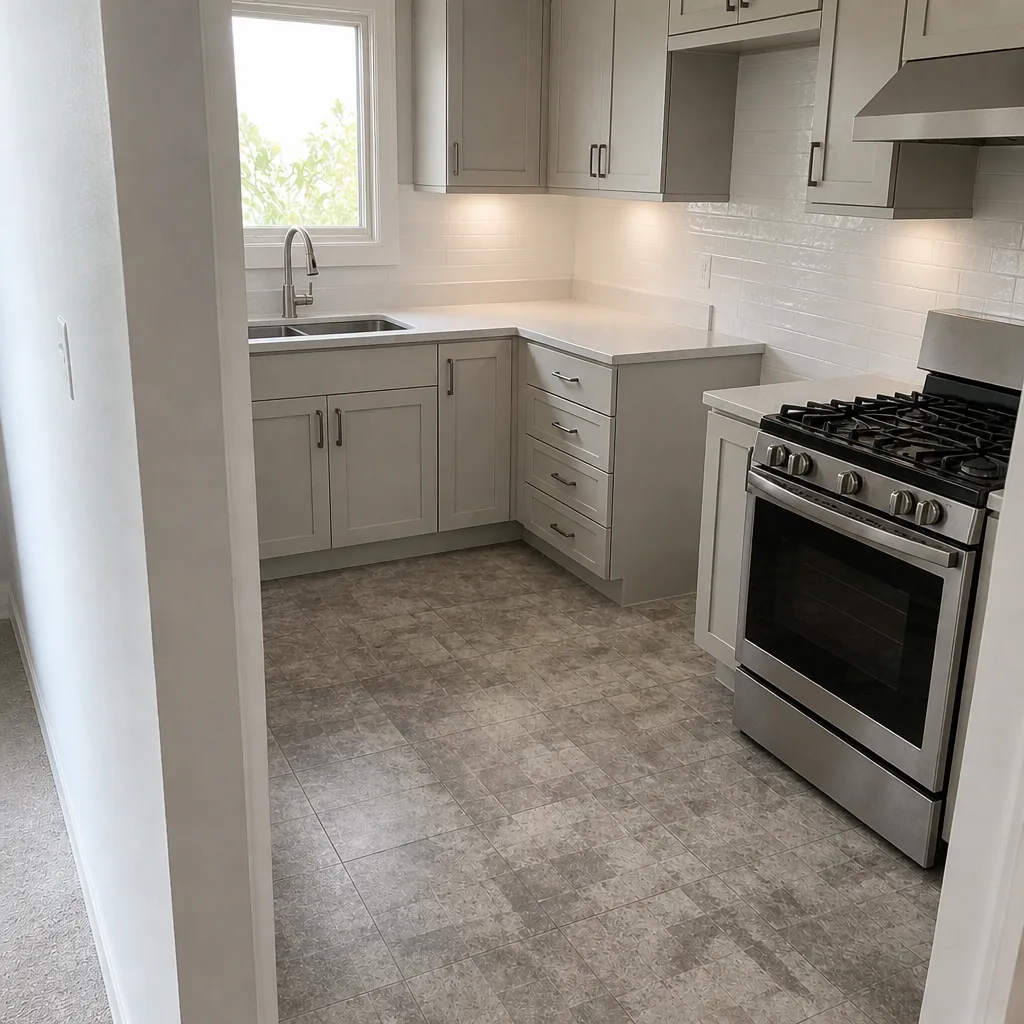 After
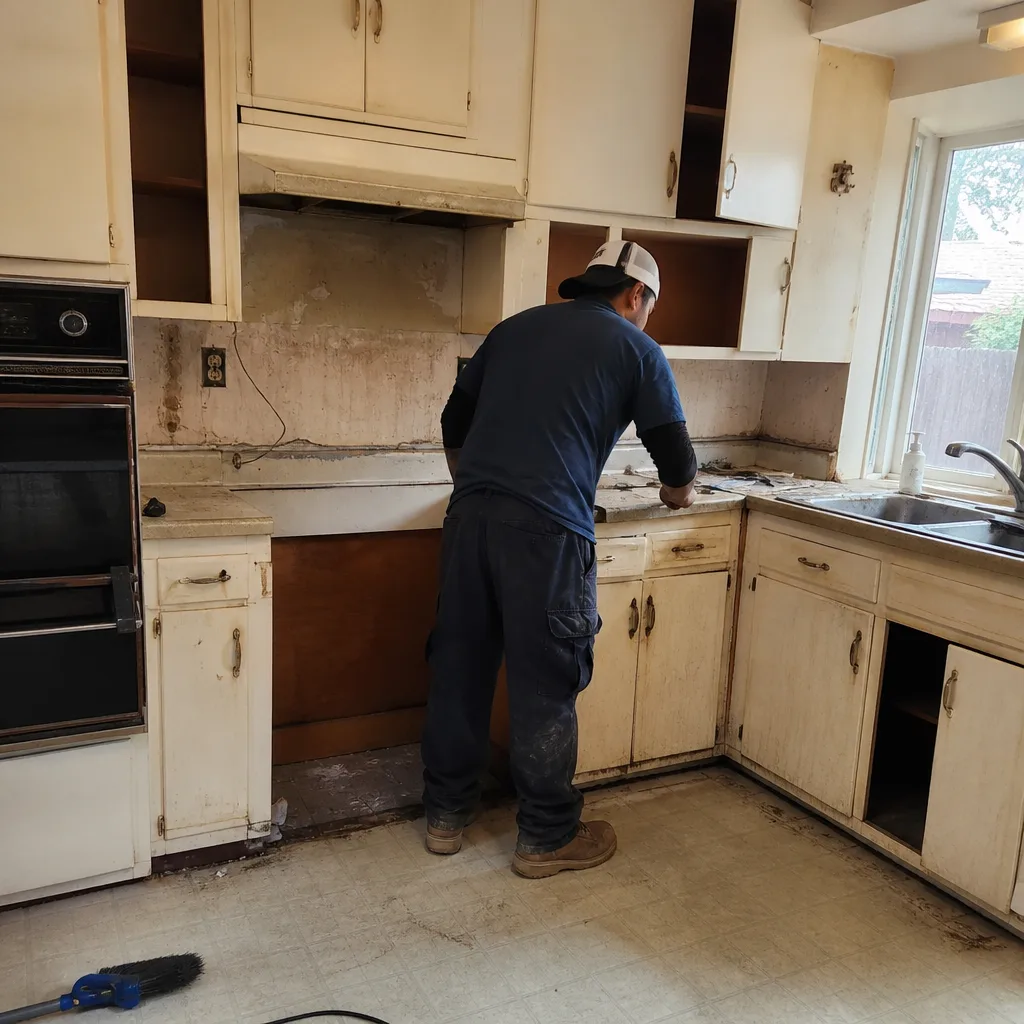 Before
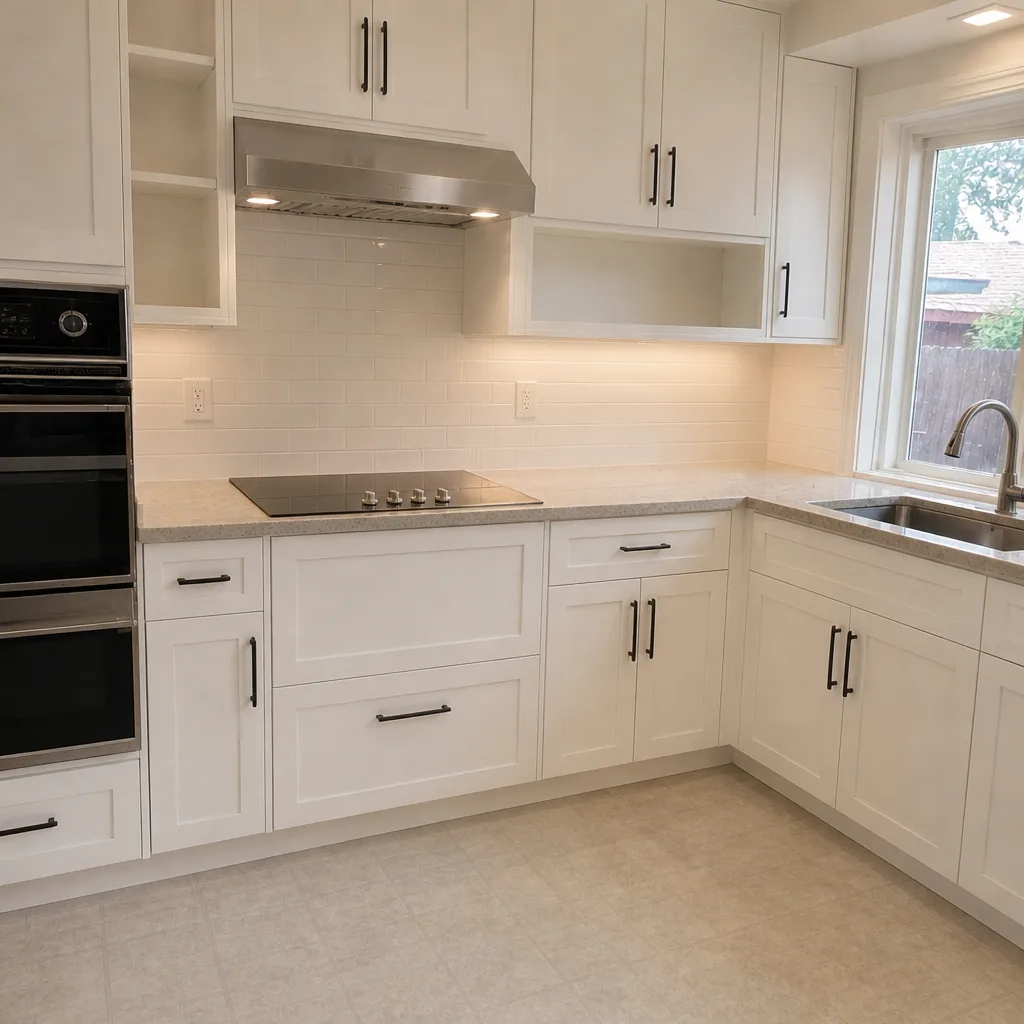 After
When to Call a Professional
Call a professional when water has been active for more than a few days, when a soft spot has appeared on a bathroom floor, when a warning sign on this guide has returned after a prior repair, or when peeling paint has come back after a proper repaint. Any of the previous-remodel red flags in a bathroom you bought recently also warrants a call, because what’s behind the finish is unknown and worth verifying before you spend on finishes. If you’re not sure whether your issue is cosmetic or structural, that’s exactly the call we want, because it’s a cheap conversation and an expensive assumption. Groundwork Construction Co. of Tustin offers free estimates in Tustin. Call (833) 954-6066 to schedule a walkthrough and get a written, line-item scope on what we actually find, not what we hope is there.
Frequently Asked Questions
The earliest warning signs are a soft or spongy floor near the toilet or tub, a persistent musty smell, caulk that fails repeatedly at the same joint, and peeling paint that returns within weeks of repainting. Any of these means moisture has likely been trapped behind a finish for months. Call (833) 954-6066 for a free estimate and an inspection before you commit to cosmetic work.
Active water damage is damp to the touch, has soft or swollen edges, and the stain grows or darkens over days. Old damage is dry, firm, and has a hard edge with a lighter center. If you can’t tell with confidence, treat it as active until a professional confirms otherwise. A free estimate walkthrough is far cheaper than tearing out fresh tile.
The honest answer is that the cost depends on how far the moisture traveled, and a licensed professional needs to open the walls before quoting a real number. A localized repair and a full structural remodel have very different price ranges, and any quote given without an inspection is a guess. Call (833) 954-6066 for a free, written, line-item estimate based on what’s actually in your bathroom.
Sometimes yes, when damage is confined to one wet area and the subfloor and framing are confirmed sound. A partial repair is not viable when water has reached a second wet area, when the subfloor has failed, or when a prior repair has already returned. The difference in cost is meaningful, and getting it right the first time avoids the 18-month trap of redoing the work.
Not on the terms you agreed to. Groundwork Construction Co. of Tustin uses upfront pricing, so the number in the written estimate is the number you pay for the agreed scope. If inspection reveals concealed damage that genuinely changes the scope, you see the change documented and approved before any additional work happens. That’s the only honest way to price a bathroom once repair is involved.
Yes. Permits are pulled where the scope requires them, and inspections are scheduled and passed as part of the project. Unpermitted prior work is one of the most common warning signs we find in Tustin homes, so verifying permit history is part of the first conversation. Call (833) 954-6066 to talk through your bathroom and get the permit question answered for your specific address.
The Bottom Line
Bathroom remodeling warning signs are almost always visible months before the failure. A soft floor, a repeating caulk line, a hollow tile, a returning paint peel, and a previous remodel done wrong are all warning signs you can find yourself in a 10-minute walkthrough. In Tustin, the combination of older housing stock and wet winters turns slow leaks into spring-failure repairs, so checking the floor and the exhaust fan every year pays for itself quickly. Catch the problem at the warning-sign stage and the repair stays a repair. Miss it, and the same bathroom becomes a full remodel. A free estimate is the cheapest step in the whole process, so start there.
If any of the signals in this guide sound familiar, call Groundwork Construction Co. of Tustin at (833) 954-6066 for a free estimate and a written, line-item scope. Our technicians have up to 12 years of experience, every project is covered by our 730-Day Done Right Promise, calls are answered by a live person 24/7, and our pricing is upfront with no surprises. We also offer three standing promotions: $1,000 off projects over $10,000, a free project estimate and design consult, and 0% financing for 18 months. Call today to schedule your walkthrough and find out exactly what your bathroom is telling you.
Written by the team at Groundwork Construction Co. of Tustin. Our technicians have up to 12 years of experience.