Last updated November 17, 2026





Free written scope consultation - allowances, timeline, and change-order rules on paper before a single trade is scheduled
How Long Does Bathroom Remodeling Take? Timelines and What to Expect
The average bathroom remodel takes 3 to 5 weeks on paper. The average bathroom remodel with one hidden water damage discovery, one backordered fixture, and one permit revision takes 7 to 10 weeks – and homeowners who weren’t warned about this end up living out of a hotel they didn’t budget for. That gap between the quoted timeline and the real one is where money disappears and patience runs out. This guide breaks down realistic timelines by scope, then shows you exactly what can blow a schedule up, how much each delay costs you in real dollars, and what you can do before day one to protect the schedule you were quoted. We build bathrooms in Tustin, and the risks here are specific.
Quick Answer
A cosmetic bathroom refresh takes 1 to 2 weeks, a full gut-and-rebuild takes 4 to 6 weeks, and a layout change that moves plumbing or walls takes 7 to 10 weeks. Add 1 to 3 weeks of buffer for hidden conditions and material lead times – most of that buffer never gets used, but the projects that don’t have it are the ones that run two months long. In Tustin, permit review alone can eat 10 to 20 business days before a single tile comes up.
Styles & brands we work with
- Kitchen remodeling
- Bathroom remodeling
- Home additions & ADU
- Roofing
- Windows & doors
- Driveway & pavers
- Fence
Table of Contents
- Timeline by Scope: Cosmetic, Full Gut, and Layout Change
- Week-by-Week Phase Map for a Full Rebuild
- The Five Timeline Killers in Southern California Bathrooms
- Why Material Lead Times Rule Your Schedule
- What Buffer Time Should Actually Look Like
- Your Client-Side Prep Checklist Before Day One
- Common Mistakes to Avoid
- When to Call a Professional
Timeline by Scope: Cosmetic, Full Gut, and Layout Change
“Bathroom remodel” covers three very different projects that share almost no schedule logic. Knowing which tier you’re actually in is the difference between a plan and a guess. Most homeowners walk into a consultation thinking they want a gut renovation when a cosmetic refresh gets them 80% of the result in a third of the time. Others think they want a refresh and discover during demo that the subfloor is rotted beneath the toilet. Here’s how the tiers actually break down.
Cosmetic refresh: 1 to 2 weeks. This is new vanity, mirror, lighting, paint, a reglazed or replaced tub, and tile laid over sound existing substrate. No plumbing moves, no permit needed in most Tustin cases, and the whole job is usually one trade at a time. You may be without a working bathroom for 3 or 4 of those days.
Full gut-and-rebuild: 4 to 6 weeks. Down to studs and subfloor. New waterproofing, new tile, new fixtures in the same locations, new vanity and lighting. This is the tier that requires a permit, plumbing inspection, and a waterproofing inspection before tile goes down. This is the most common bathroom project we build in Tustin.
Layout change: 7 to 10 weeks. Anything that moves a drain, relocates a toilet, steals square footage from a closet, or adds a second sink. Drain relocation on a slab floor means concrete cutting, which means inspection and backfill. Wall relocation means structural review in many Tustin homes where interior walls carry load.
- Cosmetic refresh: 1-2 weeks, no permit, no plumbing moves
- Full gut-and-rebuild: 4-6 weeks, permit required, same fixture locations
- Layout change: 7-10 weeks, permit plus structural or slab work
- Add the buffer: +1 to 3 weeks for hidden conditions and material lead times
Week-by-Week Phase Map for a Full Rebuild
Here’s what a 5-week full gut-and-rebuild actually looks like on a calendar, phase by phase. Every phase has a realistic duration and a cause of slip, and knowing both is how you read your contractor’s schedule instead of trusting it.
- Week 1: Demo and rough-in inspection. Tear-out, haul-away, plumbing rough-in, electrical rough-in. Slip risk: hidden water damage, asbestos in old tile mastic, cast iron drain failure. Any of those adds 3 to 7 days immediately.
- Week 2: Subfloor, waterproofing, and inspections. Subfloor repair, cement board or Schluter membrane install, plumbing and waterproofing inspection. Slip risk: inspection scheduling delays. In Tustin, an inspector visit alone can add 2 to 5 business days if you’re not on the department’s calendar early.
- Week 3: Tile walls and floor. Setting, curing, grouting. This phase is trade-bound, not schedule-bound, and rarely slips if the waterproofing passed. Slip risk only if the tile is backordered.
- Week 4: Vanity, tub or shower enclosure, toilet set, and trim. The “big pieces go in” week, and the week most likely to slip on material lead times.
- Week 5: Fixtures, electrical trim, paint touch-up, punch list. Light fixture install, faucet trim, mirror, final caulk, walkthrough. Slip risk: missing small hardware or a fixture that arrives damaged.
- Week 6: Buffer. Realistically this is a “hold” week. About 40% of our rebuilds use it. The other 60% finish in week 5 and you get the keys back early.
The single most important insight from this map: the phases where a schedule slips are almost never the phases where a homeowner watches the work. Nobody watches week 2. That’s why the schedule slips without warning if the contractor isn’t tracking inspections and lead times actively. Getting the schedule right is one skill; keeping it right through an inspection queue is a different one.
The Five Timeline Killers in Southern California Bathrooms
We’ve built dozens of bathrooms across Tustin and the surrounding neighborhoods, and the same five problems account for roughly 80% of the schedule damage we see. Three of them are specific to older Southern California housing stock. If your home was built before 1990, expect at least one of the first three to show up.
1. Aging cast iron drain lines
Homes built in the 1950s through the late 1970s across Tustin and Orange County were plumbed with cast iron under the slab. Fifty to seventy years later, that pipe has scaled internally to the point where it barely drains, and sometimes the wall of the pipe has corroded through. When it fails during a bathroom remodel, it fails on the drain line you’re reconnecting to – and it can’t be ignored, because the new shower will back up for decades if you do. Budget 2 to 5 days extra and $1,200 to $3,500 in unexpected cost when this comes up.
2. Asbestos in pre-1980 tile mastic and vinyl
The adhesive behind 1960s and 1970s floor tile, and the backing on sheet vinyl of the same era, regularly contain asbestos. You cannot demo through it. It has to be tested, then abated by a licensed abatement contractor if it comes back positive. In Tustin that means 3 to 7 days of testing and abatement plus $500 to $1,800 in cost, and it stops your job until it’s resolved. Anyone scheduling a bathroom remodel in a pre-1980 home without a plan for this is guessing.
3. Slow municipal permit queues
Building departments in Southern California are backed up, and the City of Tustin’s plan review queue for a bathroom remodel is typically 10 to 20 business days for over-the-counter work and longer if the scope touches structural or plumbing relocation. Filing before materials are selected, or filing without a complete plan, restarts the clock. Filing well before demo does not.
4. Backordered fixtures
A freestanding tub, a specific toilet, a particular faucet finish, or a large-format tile that ships from Italy all have lead times. When you order after demo instead of before, a 6-week lead time becomes a 6-week stall.
5. Change orders after demo
The most expensive line item in any remodel. A change made after tile is set costs three to five times what the same change costs before demo, because it means tearing out finished work. Decide everything you can before the first hammer swings.
Why Material Lead Times Rule Your Schedule
In 2024 and 2025, the biggest single scheduling variable in a bathroom remodel isn’t labor. It’s the shipment date of the tile and fixtures you picked. This is a reversal from ten years ago, when the standard practice was to demo first, then order materials in sequence. National tile and fixture lead times have been running 3 to 6 weeks for common items and 8 to 12 weeks for specialty finishes and custom vanities. Faucet finishes like brushed gold and matte black have specific backorder patterns that shift month to month.
The fix is counterintuitive but straightforward: order your materials before demo, not after. Fully select tile, fixtures, vanity, and tub before the first day of demolition. That sequencing pays for itself the first time a tub you loved turned out to be 10 weeks out and you found out on day three instead of day thirty.
Brand partners matter here. With Schluter and Grohe specified in your plan from day one, the waterproofing membrane and the trim kits arrive on the same timeline as the tile, and we can schedule the whole sequence with real dates instead of maybes. That’s why working with a contractor who has established relationships with manufacturers tends to shorten the schedule rather than just the paperwork.
Concrete ordering discipline:
- Tile ordered 4 to 6 weeks before demo. Nothing is a rush order.
- Vanity ordered 6 to 8 weeks before demo if it’s semi-custom, 3 to 4 if stock.
- Tub and shower door ordered 4 to 8 weeks before install window.
- Faucet, shower trim, and toilet ordered with tile, not at the end.
- Anything imported or custom: order first, then commit to demo date.
If a material has a lead time longer than your demo window, you have two options: pick a different material, or shift the demo date to match. Both are scheduled decisions, not crisis decisions, if you know the lead time early.
What Buffer Time Should Actually Look Like in Your Contract
Every competent contractor builds buffer into a project schedule. The question is whether the buffer is there to protect your project from real risk or to protect the contractor from their own mistakes. Here’s how to tell.
Buffer that protects your project shows up as: a schedule that allocates specific days to inspection scheduling, lead times, and hidden conditions, and a written explanation of what would have to happen for those days to be used. The buffer is named. The triggers are named. The cost if the triggers happen is estimated with real ranges.
Buffer that protects the contractor shows up as: a vague timeline (“4 to 6 weeks”) with no phase breakdown, and no explanation of what would push you to the 6. The last week is padding, and it always gets used.
What a good contract includes around schedule:
- A week-by-week phase map with inspections and material deliveries named
- Explicit triggers for schedule extension: found water damage, failed inspection, abatement discovery, backorder
- A written definition of what “substantial completion” means
- A change-order process with time impact stated alongside cost impact
- A clear statement of how delays caused by the contractor are handled
The honest answer for most projects is that a 4 to 6 week quote becomes a 7 to 10 week reality about a third of the time, and the extra 3 to 4 weeks cost $1,500 to $4,000 in contingency spending plus whatever it costs you to live around a nonfunctional bathroom. A contractor who tells you 4 weeks flat and no possibility of extension is either inexperienced or selling you something. Our approach is to build a real schedule, name what can move it, and put the timeline in writing with the triggers spelled out.
Your Client-Side Prep Checklist Before Day One
About half of the schedule risk in a bathroom remodel is on the homeowner’s side, and it’s entirely fixable before demolition starts. Finish this list and you’ve removed most of the reasons a project stalls while you wait on a decision, a shipment, or a signature.
- Finalize every material selection. Tile, grout color, trim, vanity, faucet, shower valve, tub, shower door, mirror, lighting, paint. Every single one, written down and ordered. No exceptions, no “we’ll pick the valve later.”
- Sign the contract and pay the deposit. A deposit is what triggers material ordering, which triggers lead time clocks. Sit on the deposit and you start the clock late.
- Confirm permit filing date with your contractor. Get the date the permit is submitted and the date the contractor expects approval in writing.
- Schedule the asbestos test if your home is pre-1980. Do this before demo, not during. A positive test result that surfaces on demo day adds a week.
- Clear the bathroom and a staging area. Empty the medicine cabinet, clear the hallway and one garage bay for materials delivery. Couriers will not wait while you move a car.
- Arrange your backup bathroom. Know where you’ll shower for 3 to 5 weeks. This is where a hotel stay happens if you don’t plan ahead, and a 3-week hotel stay at $150 a night is $3,150 of pure schedule risk.
- Set a decision window. Agree in advance on how fast you’ll respond to any change question during the job. Twenty-four hours is reasonable. A week is a stall.
Do all seven items and you’ll run about 5 days faster than a homeowner who decides during the job. That’s a real number. Decision latency is the most common self-inflicted delay we see.
Common Mistakes to Avoid
- Treating the contractor’s quoted timeline as a promise instead of a projection. A timeline is a plan, not a guarantee. Ask what has to happen for it to hold. If the contractor can’t answer that, they don’t have a real plan.
- Ordering materials after demo. This is the single most common mistake in Southern California right now. Tile lead times alone kill two to four weeks on projects where ordering started on day one of demolition.
- Skipping the asbestos test on a pre-1980 Tustin home. A 45-minute test costs less than $400. An abatement discovered on demo day costs $500 to $1,800 plus a week. Skip the test and you’ve chosen the expensive path deliberately.
- Making change decisions during construction. A change made while tile is curing costs three to five times the same change made two weeks earlier. Pick every finish before day one.
- Not specifying what “completion” means. “Finished” means different things to different people. Put the exact walkthrough criteria in writing: the punch list closes, the inspection passes, the final invoice matches the contract.
- Using a bathroom remodel as a surprise. If you’re married, in a household with kids, or sharing a bathroom with a teen who has a schedule, align on timing before demo. The project doesn’t need the drama.
- Ignoring the permit timeline in the quote. If the contractor’s 4-week timeline doesn’t mention permit approval, they either haven’t filed or haven’t thought about it. In Tustin that’s a 2 to 3 week overshoot baked in from day one.
One more, less often discussed: don’t decide against a full gut renovation to save time and then find out your subfloor is rotted. A contractor who walks your bathroom during the estimate and doesn’t tell you the cast iron and the subfloor are suspect has skipped the important part. Expect that conversation.
When to Call a Professional
Some bathroom work is genuinely DIY-friendly: repainting, replacing a toilet, swapping a vanity without plumbing moves, new light fixtures on existing circuits. Most of what actually determines your schedule and your budget is not. Bring in a licensed professional if any of the following describe your project: you’re moving a drain or relocating a fixture, your home was built before 1990 with original plumbing, you have any suspicion of water damage under the floor or in the wall cavity, you’re changing the footprint of the room, or you want the schedule actually managed rather than hoped for.
The stakes are real. A failed waterproofing install behind a $6,000 tile job turns into a $15,000 rebuild sixteen months later when the shower pan leaks into the room below. Waterproofing is invisible when done right and catastrophic when done wrong, and the only way to know which you got is the inspection record. A licensed contractor keeps that record. A weekend install does not.
Groundwork Construction Co. of Tustin offers free estimates in Tustin – call (833) 954-6066. We pull the permits, walk the inspections, and put the timeline and the triggers for schedule extension in writing before demo starts. Every project is covered by our 730-Day Done Right Promise: if it’s not done right, we make it right. Upfront pricing, no surprises, and a live person answering the phone around the clock when a question comes up.
We also handle the trades that often get sequenced in around a bathroom project. If you’re considering work outside the bathroom while walls are open, our Groundwork Construction Co. of Tustin home is the place to start, and our Home Additions & ADU in Tustin team handles projects where a bathroom is one phase of something bigger.
See the difference
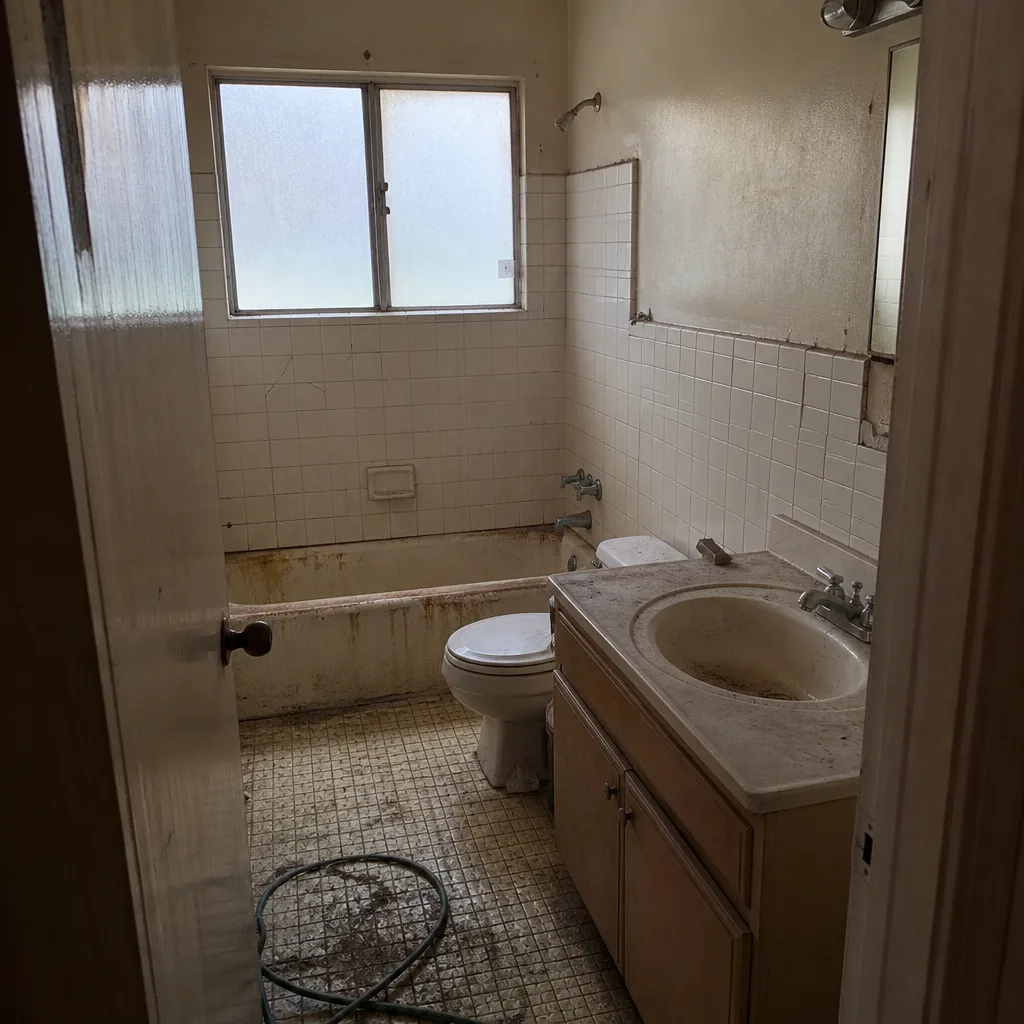 Before
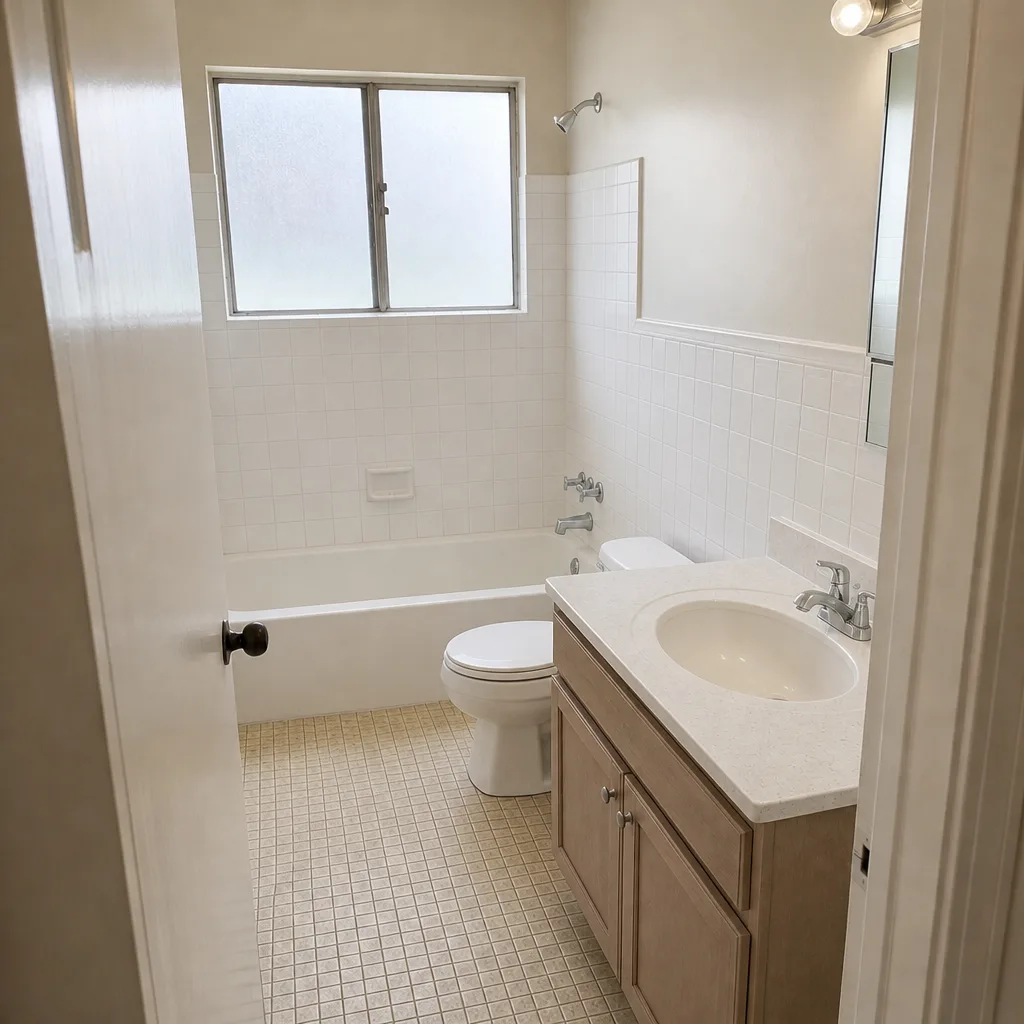 After
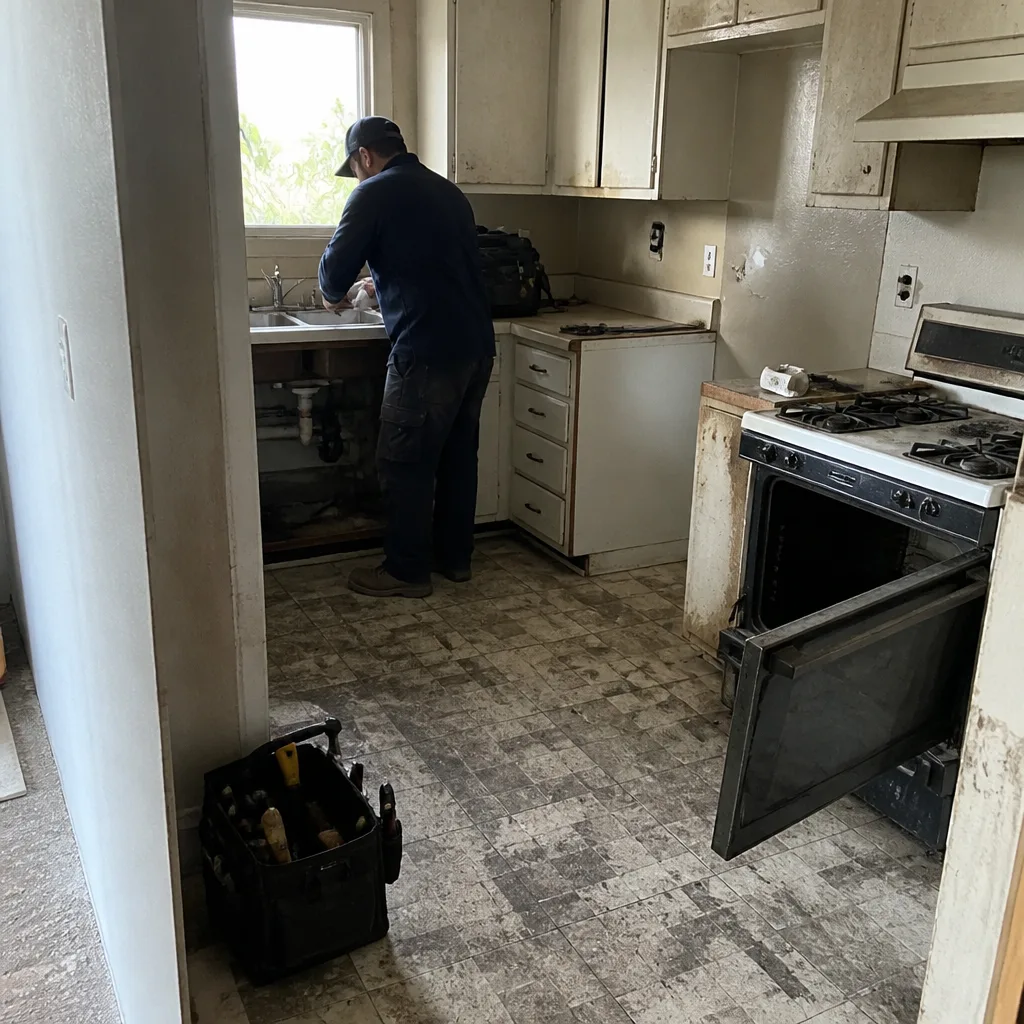 Before
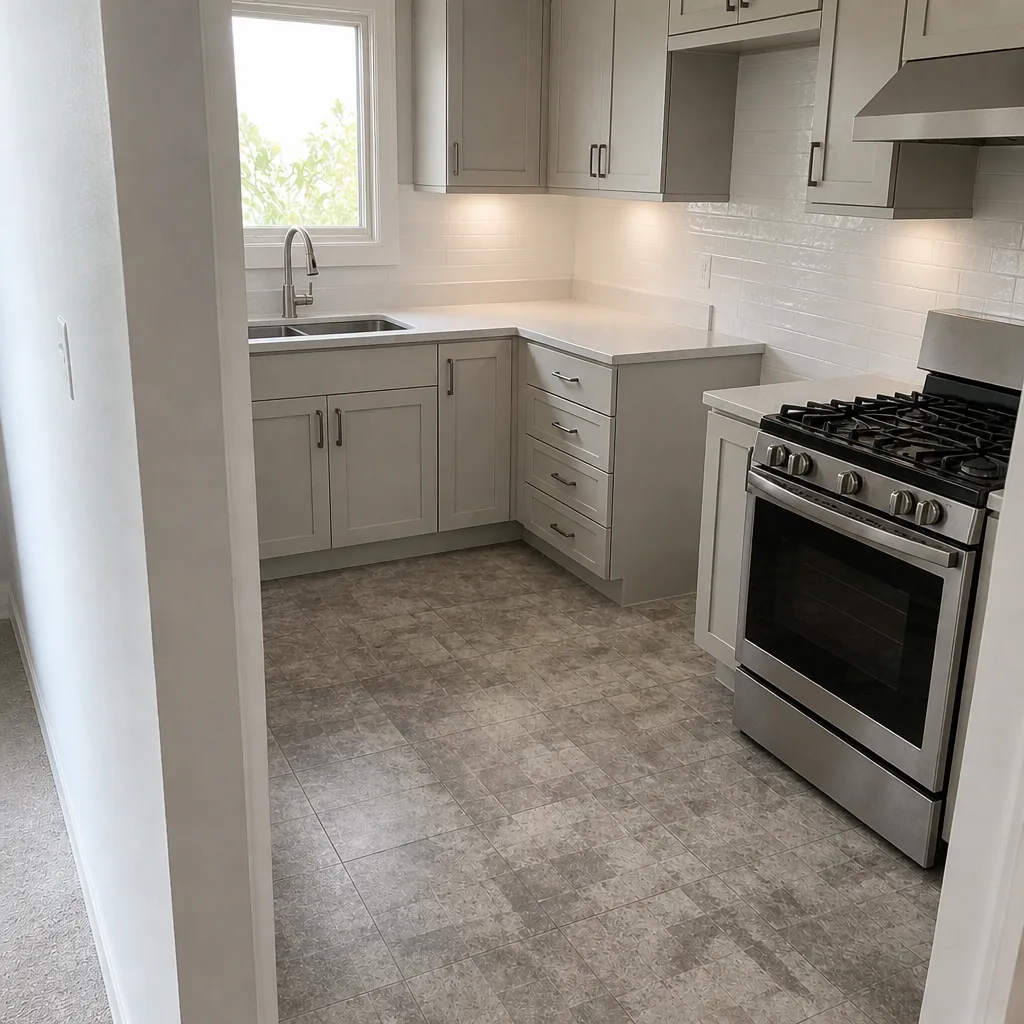 After
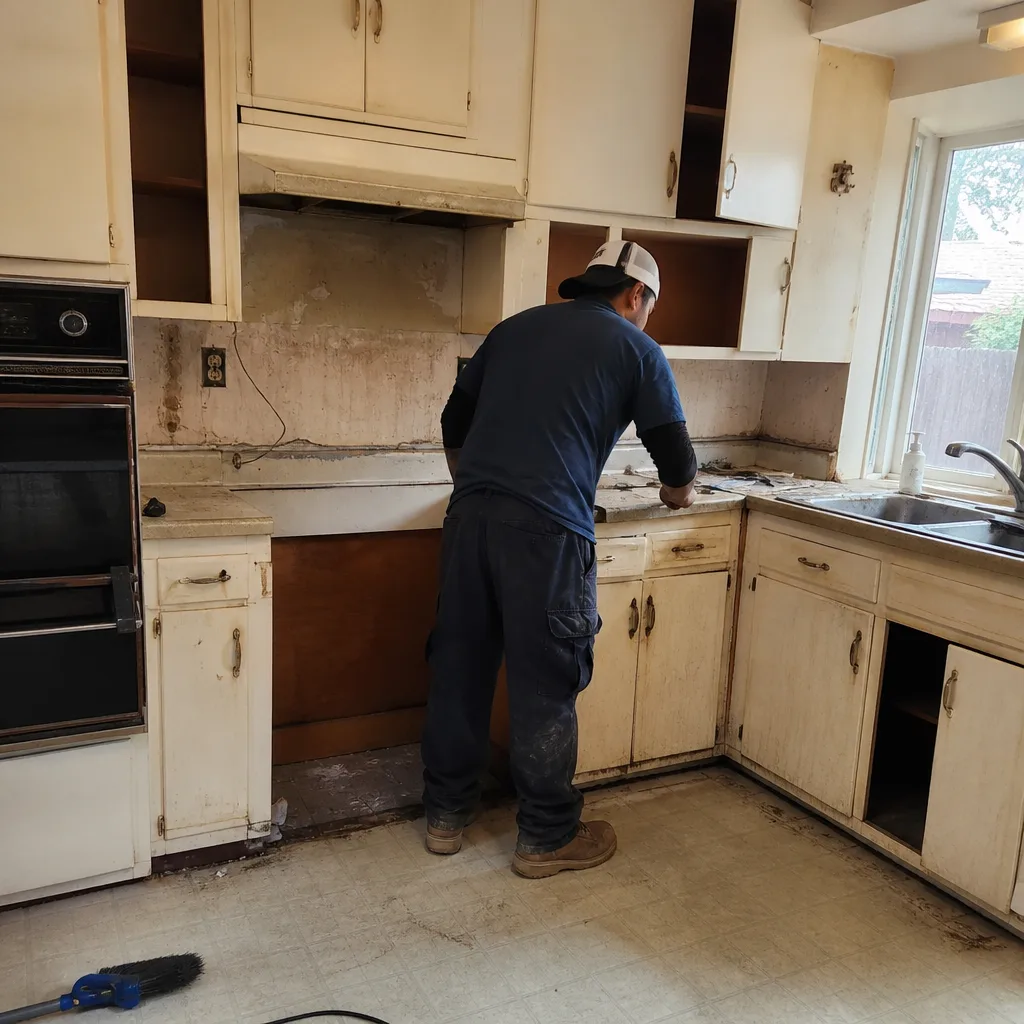 Before
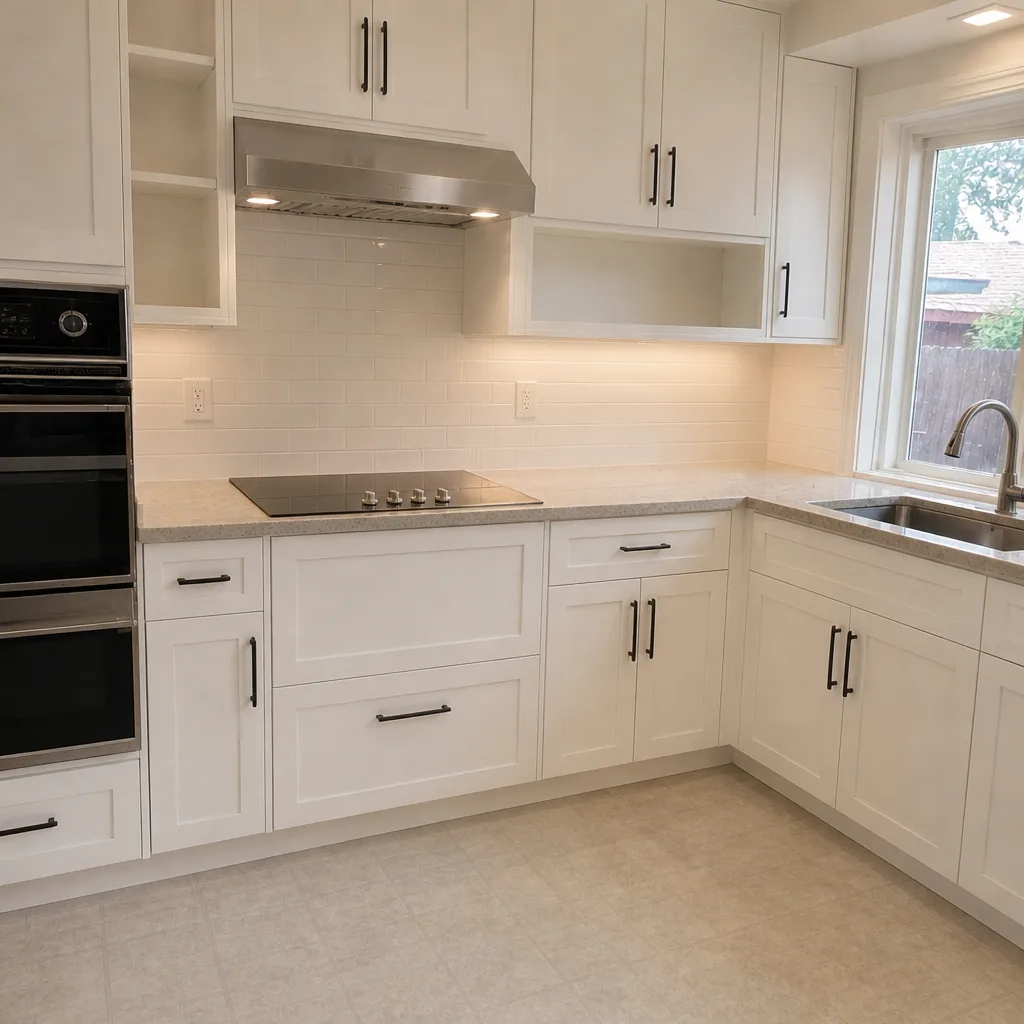 After
Frequently Asked Questions
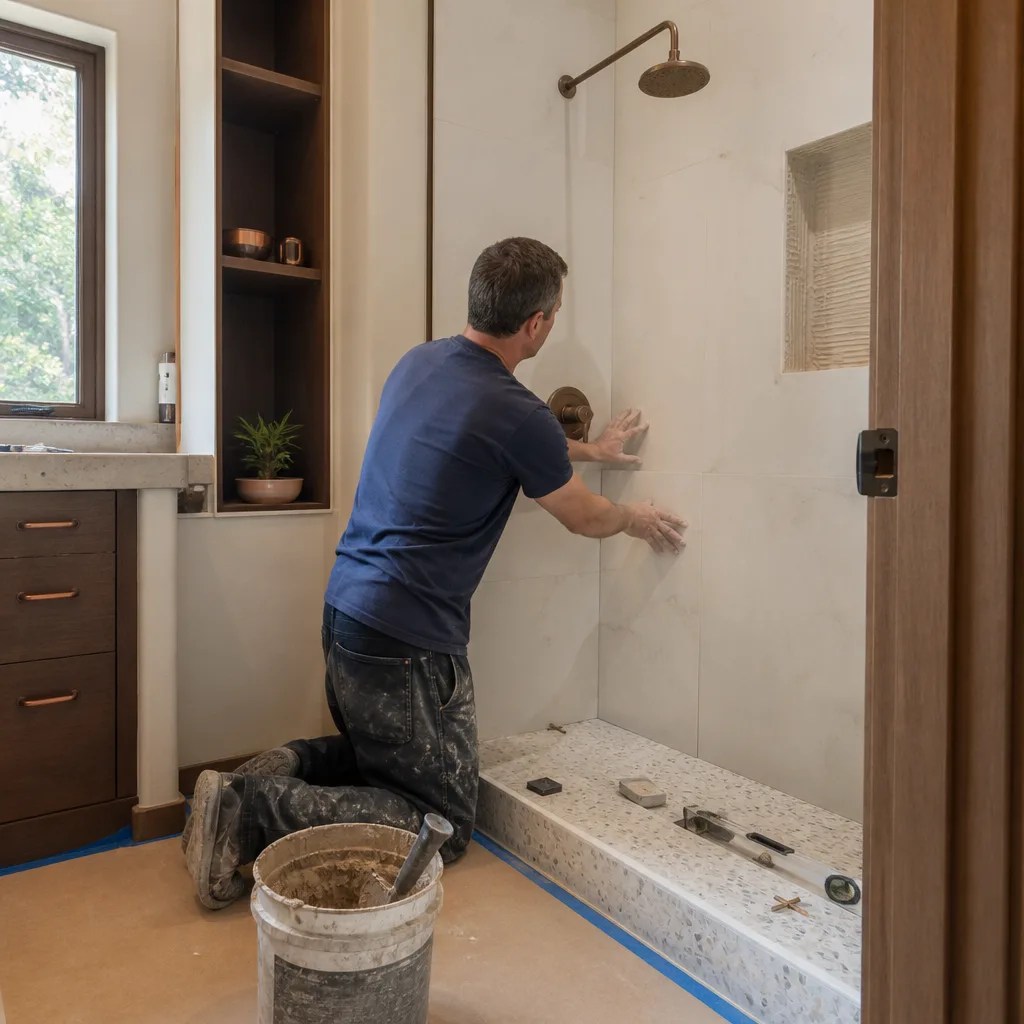
A full gut-and-rebuild bathroom remodel in Tustin typically takes 4 to 6 weeks of active construction, plus 2 to 3 weeks before demolition for permit approval and material lead times. Cosmetic refreshes run 1 to 2 weeks. Layout changes run 7 to 10 weeks. The two biggest variables are permit queue length at the City of Tustin building department and how early you finalize material selections. Call (833) 954-6066 for a Tustin-specific schedule for your project – estimates are free.
Yes, and most Tustin homeowners do. Plan for 3 to 5 weeks without a working shower and toilet in the primary bathroom during a full rebuild, and arrange a backup bathroom on the same floor if possible. Hotels happen when a homeowner doesn’t plan ahead for a secondary bathroom, not when a schedule slips by three days. If you’re doing a layout change, the nonfunctional window can stretch to 5 to 7 weeks.
Because most quoted timelines account for labor only and don’t account for the three things that reliably add days: permit queue length, material lead times, and hidden conditions found during demo. When those three are inside the schedule from day one, the quote holds. When they aren’t, the quote was never a schedule, it was a wish. Ask any contractor you interview: “What specific things will push this timeline?” If the answer isn’t detailed, keep interviewing.
A cosmetic refresh runs $8,000 to $18,000 in the Tustin market. A full gut-and-rebuild on a 5×8 bathroom runs $22,000 to $45,000, and a layout change runs $40,000 to $75,000. Budget a 10% to 15% contingency on top of any quote for the three killers we listed above. Ask for an upfront, line-item quote and a written change-order process. Call (833) 954-6066 for an exact quote – estimates are free.
Sometimes, and a good contractor tells you the specific triggers before demo instead of after. Common triggers in Tustin are cast iron drain failure, asbestos found in pre-1980 tile mastic, or a backordered fixture. Any one adds 3 to 7 days; multiple together add 1 to 2 weeks. A written schedule names the triggers and estimates the cost. A verbal “should be fine” doesn’t.
Yes. Any bathroom project that moves plumbing, adds new electrical circuits, or changes the room layout requires a permit from the City of Tustin. We file the permit, coordinate the plumbing and waterproofing inspections, and don’t set tile until the inspections have passed. Skipping the permit to save 2 to 3 weeks of review is the single fastest way to turn a $30,000 remodel into a $50,000 one when it surfaces during resale or a leak claim. Call (833) 954-6066 to schedule your free estimate.
The Bottom Line
Bathroom remodel timelines run 1 to 2 weeks for a cosmetic refresh, 4 to 6 weeks for a full gut-and-rebuild, and 7 to 10 weeks for a layout change. Add 1 to 3 weeks of buffer for the things that always come up in Southern California housing stock: aging cast iron drains, pre-1980 asbestos in tile mastic, and permit queues at the city. Order your tile and fixtures before demo, not after. Get the buffer and the schedule triggers in writing. Do those three things and you’ll live through the project on the timeline you were quoted, not the hotel-budget timeline that most homeowners end up on. The rest is materials and labor – the schedule is where the money and the peace of mind live.
If you’d like a real schedule, with the specific risks of your bathroom named and the timeline written down, call Groundwork Construction Co. of Tustin at (833) 954-6066 for a free estimate. Curated material partners across every trade – from Schluter waterproofing and Grohe trim to GAF roofing for the rest of the house – mean the schedule runs on real dates, not maybes. 0% financing for 18 months and $1,000 off projects over $10,000 round out the picture. And you’ll reach a live person around the clock, never a voicemail.
While you’re planning the bathroom, it’s often the right moment to look at other work that shares a schedule. Our Driveway & Pavers in Tustin team and our Fence Installation in Tustin team both build in the same neighborhoods, and sequencing exterior work around an interior remodel saves mobilization costs.
Written by the team at Groundwork Construction Co. of Tustin.