Last updated November 17, 2026

Free written scope consultation - allowances, timeline, and change-order rules on paper before a single trade is scheduled
The Complete Driveway & Pavers Guide for Tustin Homeowners
Orange County’s clay soils can swell up to 10% during the wet season. That single fact explains why so many paver driveways around Tustin start heaving, settling, and popping loose within three years. The pavers themselves are rarely the problem. The base underneath them was built for a different kind of ground, and it gave up the first time the soil got a good soak. In this guide you’ll learn how deep a base Tustin lots actually need, which materials survive our UV and heat swings, how local HOA and stormwater rules affect your design, what real installed costs look like here, and the mistakes that turn a 30-year driveway into a short-lived one.
Quick Answer
Driveway pavers in Tustin typically cost $16 to $32 per square foot installed, depending on material and site conditions. Tustin’s expansive clay soil requires a deeper compacted aggregate base than Southern California averages – often 8 to 12 inches versus the standard 4 to 6. The two biggest decisions that determine whether your driveway lasts are base engineering and drainage, not color or style.
Styles & brands we work with
- Kitchen remodeling
- Bathroom remodeling
- Home additions & ADU
- Roofing
- Windows & doors
- Driveway & pavers
- Fence
Table of Contents
- Why Tustin’s Soil Breaks Generic Paver Installations
- How Deep Does the Base Need to Be in Tustin?
- Which Paver Materials Hold Up Best in Tustin?
- HOA Rules and Design Approvals in Tustin
- Permeable Pavers and Orange County Stormwater Rules
- What Do Pavers Cost in Tustin?
- What a Proper Installation Looks Like, Step by Step
- Maintaining a Paver Driveway in Tustin’s Climate
Why Tustin’s Soil Breaks Generic Paver Installations
Tustin sits on what local geotechnical reports call expansive clay – soil with a high montmorillonite content that absorbs water and swells, then shrinks and cracks as it dries. During a wet winter, that soil can expand by close to 10% in volume. Over a summer of 100°F afternoons, it contracts again. A driveway is essentially a rigid surface floating on top of this motion, and if the base isn’t engineered to absorb it, the pavement pays the price.
We’ve seen this pattern across the older neighborhoods near Old Town Tustin, where mature trees pull moisture out of the soil unevenly and create the differential movement that cracks concrete slabs and shifts pavers. The newer developments in Tustin Ranch and along the eastern foothills sit on graded fill that behaves differently again – often more settled but still prone to erosion if drainage is wrong.
Here’s the point most guides miss: a paver system isn’t meant to resist soil movement. It’s meant to flex with it. That’s why pavers are actually the smarter choice over concrete in Tustin, but only when the layers beneath them are designed for movement. Skip that design work and you’ve built a jigsaw puzzle on a trampoline.
If you’re weighing the options for your driveway in Tustin, our Driveway & Pavers in Tustin page covers the material and layout decisions that come before any digging starts.
How Deep Does the Base Need to Be in Tustin?
In most of Southern California, a 4-inch compacted aggregate base under pavers is treated as acceptable. In Tustin, that’s a shortcut that costs you the driveway. For our soil conditions, plan on a base that’s significantly deeper, and let a soil test – not a guess – set the number.
Here’s how base depth typically breaks out once a soil test comes back:
- Low-expansion soil, well-drained lot: 6 to 8 inches of compacted base is often workable.
- Moderate expansive clay (the common case in Tustin): 8 to 10 inches, compacted in lifts of no more than 2 inches at a time.
- High-expansion clay or heavy tree influence: 10 to 12 inches, sometimes with a geotextile separation layer to keep subgrade soil from pumping into the aggregate.
- Sloped lots or areas with drainage concentration: add a drainage plane and consider a geogrid to distribute load.
The soil test matters because it tells us how reactive your specific lot is. Two houses a block apart in Tustin can have meaningfully different results depending on grading history, tree cover, and how the original builder handled the lot. A contractor who quotes you a base depth without testing is quoting you their default, not your property.
Compaction is the second half of the equation. Aggregate only performs when it’s compacted in thin lifts with a plate compactor and tested for density. A thick single pour of gravel that gets a quick pass with a machine looks the same on the surface but behaves nothing like a properly built base. Ask any contractor how they compact and what they use to verify it.
Which Paver Materials Hold Up Best in Tustin?
Tustin’s UV index sits high most of the year, and the temperature swings from 45°F winter mornings to 100°F-plus summer afternoons stress any outdoor surface. Materials that resist UV fading and handle thermal expansion well are the ones that still look sharp a decade in.
Here’s how the main options break down for this climate:
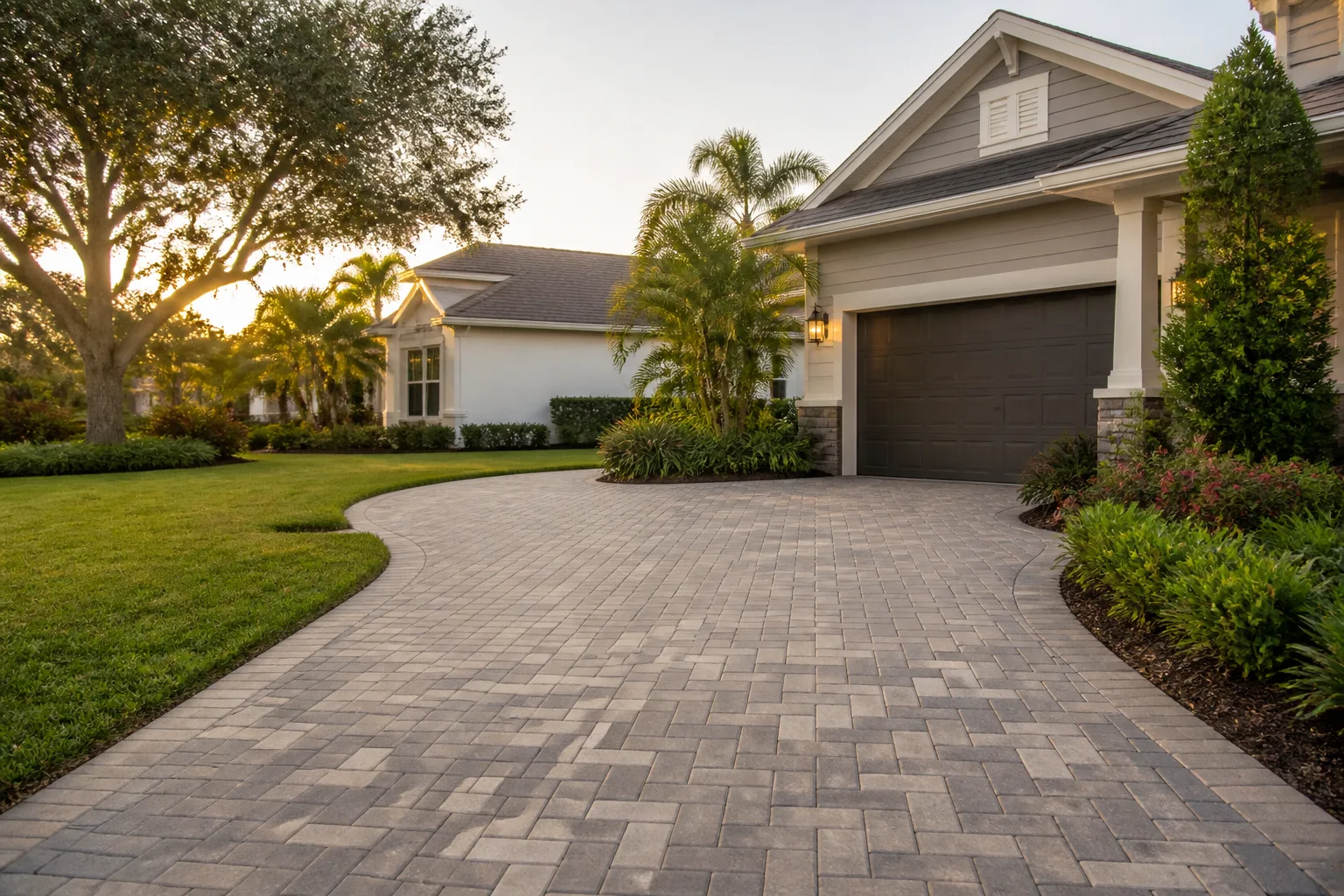
- Concrete pavers (interlocking): The workhorse choice for most Tustin driveways. They flex with soil movement, resist UV degradation well when made with quality pigments, and are easy to repair if a section ever fails. Brands like Belgard offer a wide enough range that you can match most HOA palettes.
- Clay brick pavers: Genuinely long-lived and color-stable because the color runs through the body of the brick, not just the surface. They handle heat well, though they’re a higher-cost option and can chip under heavy vehicle loads if not rated for driveways.
- Porcelain pavers: Excellent UV stability and very low water absorption, but they’re rigid and less forgiving on reactive clay unless the base is faultless. Often better for patios and walkways than full driveways in this soil.
- Permeable concrete pavers: Increasingly favored for the stormwater reasons covered below, with design features that let water pass between or through the units.
Color fading is a real concern in Tustin. Cheaper pavers made with surface-applied colorants can fade visibly within five years under our UV load. Through-body pigmented pavers or clay brick hold their color far longer. It’s one of the choices that separates a driveway that still looks new from one that looks tired.
Planning a larger front-yard project around the driveway? Our guide to Fence Installation in Tustin covers how fence lines and paver aprons are typically coordinated so materials and grades match.
HOA Rules and Design Approvals in Tustin
A large share of Tustin homes – especially in the master-planned communities tied to Irvine Company development, and neighborhoods like Tustin Ranch and Columbus Square – sit under HOAs with design review requirements. Paver color, pattern, and even the width of the apron where your driveway meets the street can be subject to approval. Getting this handled early saves months of back-and-forth and, in some cases, tear-out.
The steps we typically see work best:
- Get your CC&Rs first. Most HOAs spell out approved palette ranges and any restrictions on visible joints, borders, or run-off direction.
- Submit a design package, not a verbal idea. Include a plan view, paver product samples or manufacturer spec sheets, and a color photo or rendering.
- Note any drainage changes. HOAs and the city both care if your new surface directs water toward a neighbor’s lot or the public right-of-way.
- Confirm whether the driveway apron is HOA or city jurisdiction. In some Tustin communities the apron falls under the city’s right-of-way permit process instead.
- Get written approval before ordering materials. Verbal sign-off from a board member doesn’t hold if the architectural committee later objects.
It’s also worth pulling your home’s design guidelines before you fall in love with a herringbone pattern in charcoal – some Tustin HOAs restrict pattern styles to running bond or specify border colors. We help homeowners build the design package so it clears review the first time.
Permeable Pavers and Orange County Stormwater Rules
Orange County’s stormwater regulations have been tightening for years, and permeable paving is one of the tools local jurisdictions favor to reduce runoff from hard surfaces. For a Tustin homeowner replacing or expanding a driveway, this can affect both design and cost – and in some cases it’s the smarter choice regardless of regulation.
Permeable pavers work by leaving gaps or voids between units, often filled with small aggregate, so water passes through to a stone reservoir below and slowly infiltrates. Whether your lot qualifies depends on a few things:
- Soil infiltration rate. Expansive clay drains slowly, so a permeable system in Tustin almost always needs an underdrain or a designed storage layer to perform – the soil itself won’t absorb fast enough on its own.
- Slope. Steeper drives need careful grading so water doesn’t run off the surface before it can infiltrate.
- Proximity to foundations and property lines. Infiltration has to be directed away from your house and your neighbor’s.
- Local stormwater requirements. Depending on the scope of work and whether it triggers a permit, the city may encourage or require runoff management.
When a lot doesn’t meet infiltration criteria, a conventional paver driveway with well-designed surface drainage – graded to a channel drain or a pop-up emitter – remains a solid, code-compliant approach. The point is to design drainage deliberately rather than hope the slope works out.
What Do Pavers Cost in Tustin?
National averages for paver driveways underquote Tustin projects badly – often by 30% or more. The reason is the base. Deeper compaction, soil testing, and sometimes underdrains push installed cost above what a national average assumes for a thin, dry-climate base.
Here’s a realistic breakdown for the current Tustin market. These are installed ranges, meaning materials, labor, base prep, and cleanup:
| Line Item | Typical Range (Installed) |
|---|---|
| Concrete pavers, basic | $16 – $22 per sq ft |
| Concrete pavers, premium or large-format | $22 – $30 per sq ft |
| Clay brick pavers | $24 – $32 per sq ft |
| Permeable paver system | $24 – $34 per sq ft |
| Soil test / geotechnical report | $400 – $900 |
| Subgrade excavation & haul-away | $3 – $6 per sq ft |
| Underdrain or drainage work | $1,800 – $5,500 depending on run |
| Old driveway removal | $2 – $5 per sq ft |
A typical two-car Tustin driveway runs somewhere around 500 to 700 square feet, which puts most full projects in the $11,000 to $20,000 range once base, drainage, and removal are factored. A large driveway with permeable pavers and an underdrain can go higher.
The number that matters is a written, line-item quote that separates base prep, drainage, and paver material. If a bid comes in as one lump sum, you can’t compare it honestly against others. Groundwork Construction Co. of Tustin builds these quotes line by line, and pricing is fixed going in – no change orders after work starts. Free estimates in Tustin come with a design consult, and the standing offer of $1,000 off projects over $10,000 applies. Call (833) 954-6066.
What a Proper Installation Looks Like, Step by Step
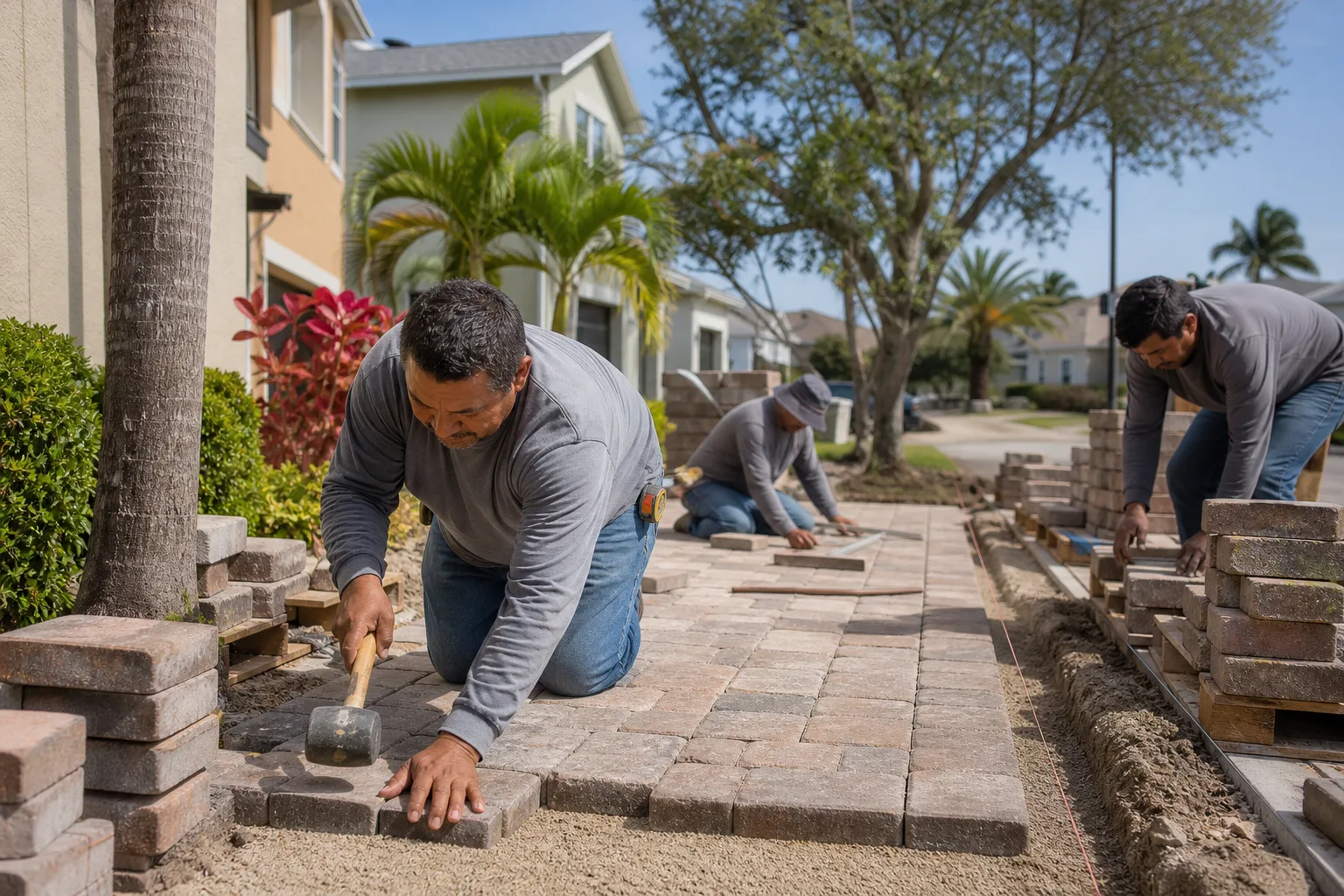
A paver driveway is mostly hidden work. The surface is what you see, but the performance comes from what’s underneath. Here’s the sequence a properly built Tustin driveway follows:
- Site assessment and soil test. Check grade, drainage, tree influence, and pull a geotechnical sample to size the base.
- Utility locate and scope confirmation. Mark any buried lines and confirm the final layout, drainage direction, and HOA or city sign-off.
- Excavation and subgrade prep. Remove old surface, dig to base depth plus bedding, and proof-roll the subgrade to spot soft spots.
- Base installation in lifts. Place aggregate in 2-inch lifts, compact each lift, and verify density. Add geotextile or geogrid where the soil test calls for it.
- Drainage detailing. Set underdrains or channel drains and confirm they run to a legal outlet.
- Bedding layer and edge restraint. A thin layer of sand or fine aggregate for leveling, plus a rigid edge restraint to keep the field from creeping.
- Paver layout and cuts. Install with the approved pattern, cut edges cleanly, and pay attention to where the field meets the apron and garage.
- Polymeric sand and compaction. Sweep joint sand in, activate it, and run a final plate pass. Then clean the surface and give you a walkthrough.
Skipping steps 3, 4, or 5 is where most failures originate. A shortcut in excavation or base compaction doesn’t show up for one to three seasons, which is exactly why cheap bids look fine up front and then cost more later. If part of your project also involves a new fence along the driveway, you’ll want to sequence it so posts and paver edges don’t get installed on top of each other’s footings; our Fence Installation in Tustin guide covers that coordination.
Maintaining a Paver Driveway in Tustin’s Climate
Once it’s in, a paver driveway in Tustin is low-maintenance, but not zero-maintenance. Our UV and heat cycles mean you want to keep the surface protected and the joints filled. A few habits go a long way.
- Re-sand joints as needed. Polymeric joint sand degrades slowly. Re-fill low joints every few years to keep pavers interlocked and prevent pest entry and weed growth.
- Seal every 3 to 5 years with a breathable sealer. Not every paver needs sealer, but a UV-stable breathable sealer helps color retention and discourages stains from oil drops and yard debris.
- Rinse and sweep regularly. Our dry summers send dust and debris across the surface; a rinse keeps the color crisp and keeps grit out of the joints.
- Check drainage after the first big rain. Make sure water sheds off the drive to where it’s supposed to go – especially around aprons, edges, and any low spots against the garage.
- Catch joint-level settling early. If a section starts to look uneven after a wet winter, have it looked at promptly rather than waiting for the whole field to shift.
Keeping pavers in good shape also matters for resale, and Tustin homes with a clean, well-drained driveway photograph better in a market where buyers are already comparing curb appeal. If a future Home Additions & ADU in Tustin project is on your list, having driveway access and grading sorted early makes that build easier too.
Common Mistakes to Avoid
- Skipping the soil test. A base built to a Southern California default on Tustin clay is likely to fail within three years. The test costs a fraction of a replacement.
- Compacting in one thick lift. A deep base doesn’t work if it’s compacted in a single pass. It has to be built in thin, tested lifts.
- Ignoring tree roots when planning base depth. Mature street trees in Old Town Tustin pull moisture unevenly and drive differential movement. Base depth and drainage have to account for them.
- Choosing pavers on color alone. A paver that photographs beautifully but fades to dull under Tustin’s UV load is a false economy. Check whether the color is through-body or surface-applied.
- Overlooking HOA design review. Ordering pavers before the architectural committee signs off is one of the costliest mistakes we see. Get approval in writing first.
- Forgetting drainage. Even a perfectly built base fails if water sits against the garage apron or pools in a low spot. Grade and drainage should be designed, not left to gravity’s default.
- Signing a single-line bid. A bid that doesn’t separate base, drainage, and material can’t be compared to another. Insist on line items.
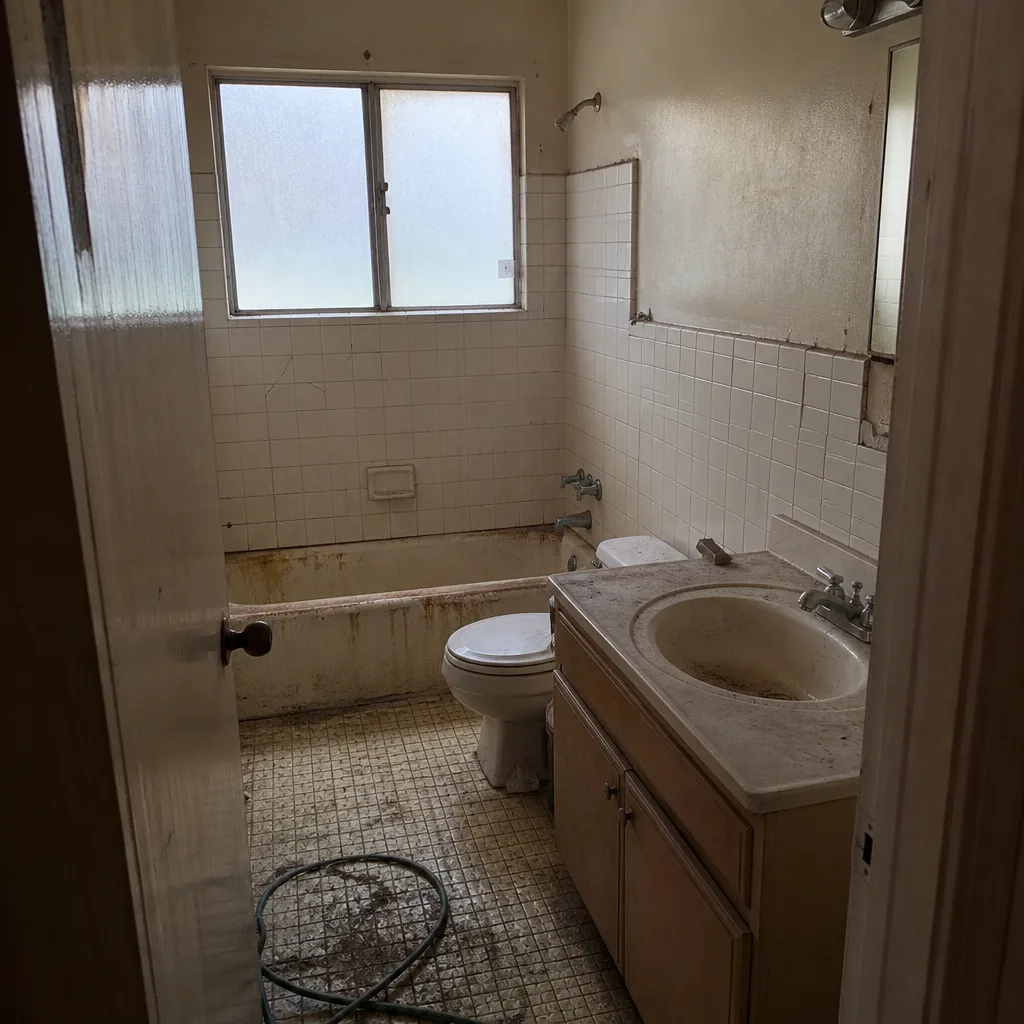
See the difference
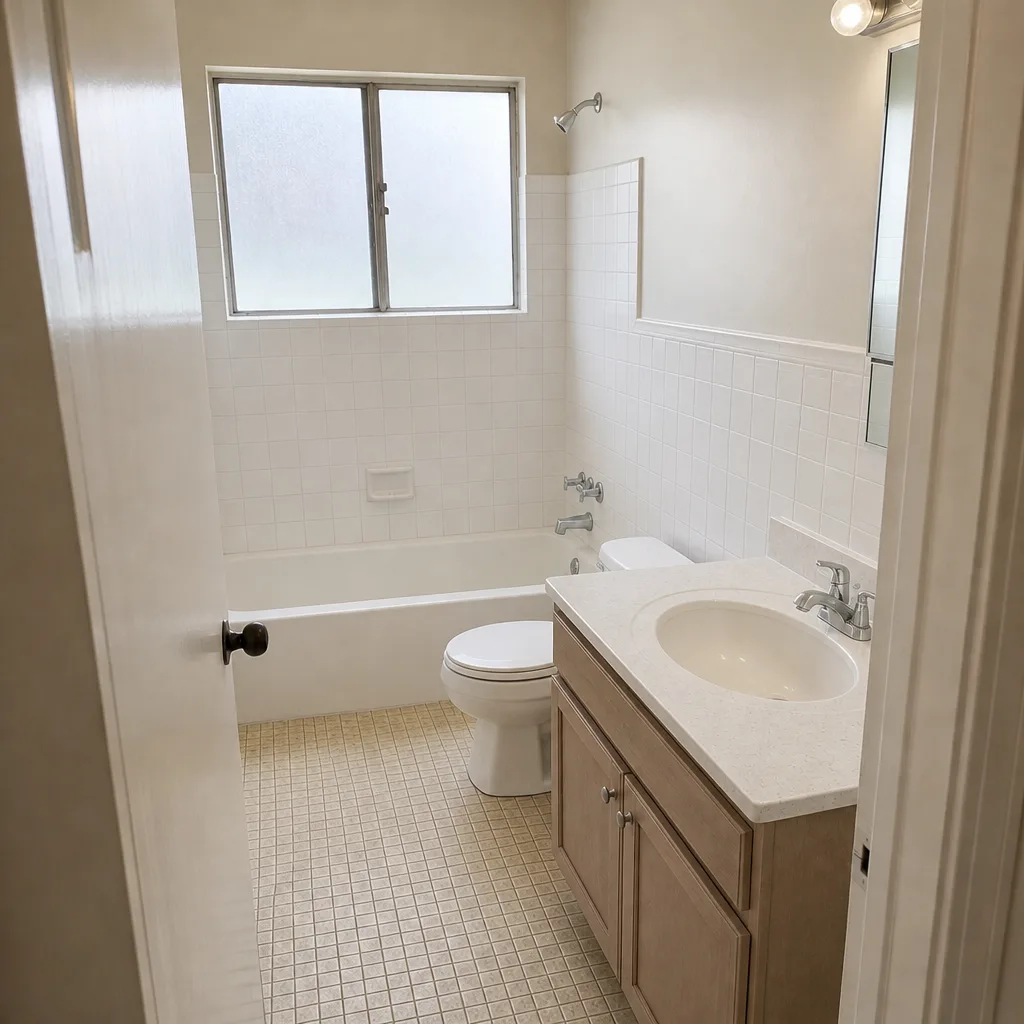
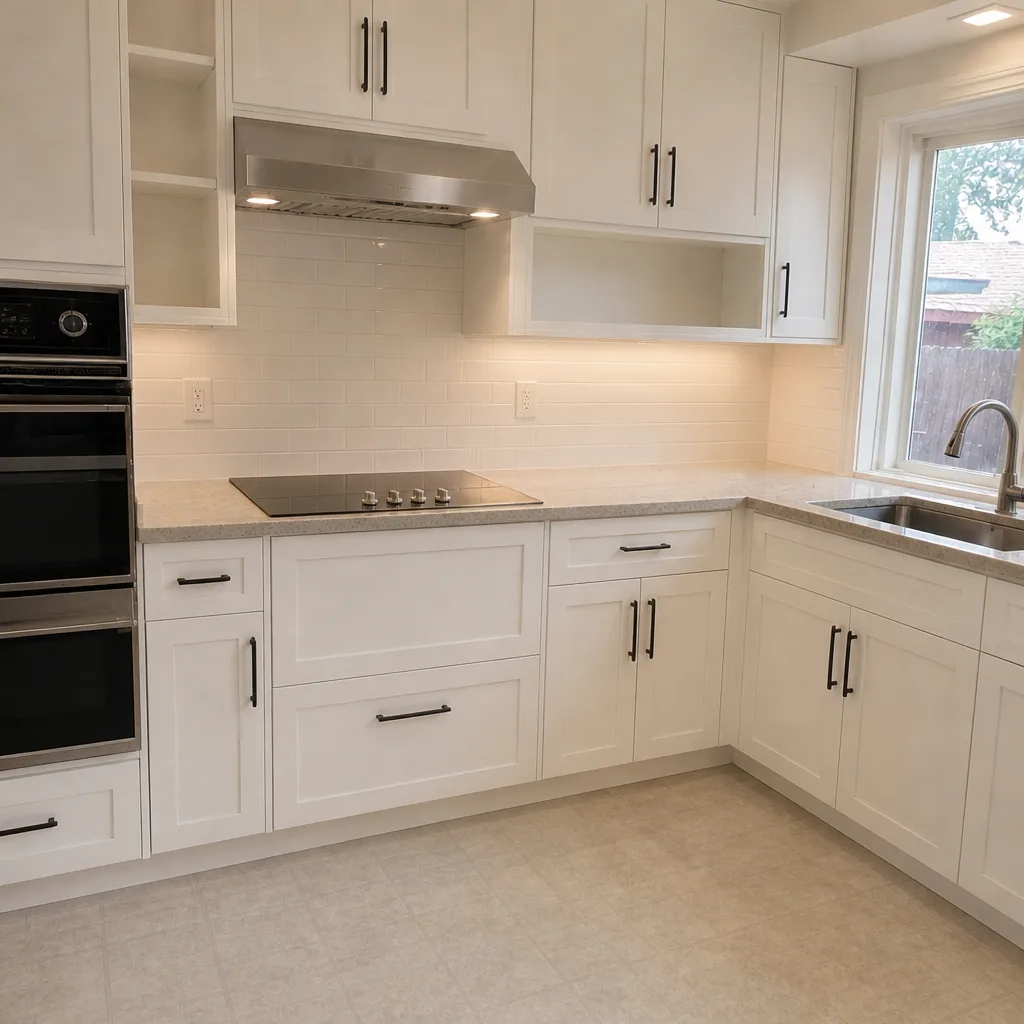
 Before
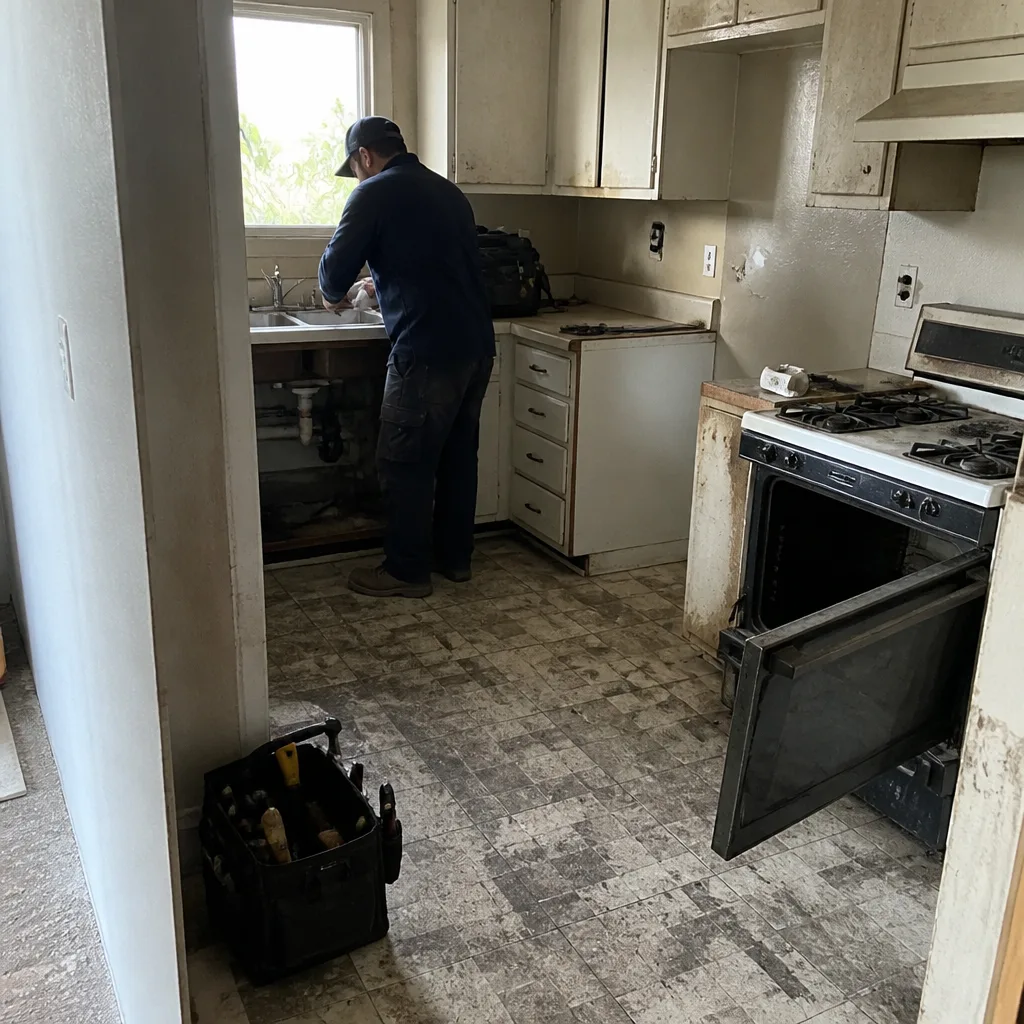
 After
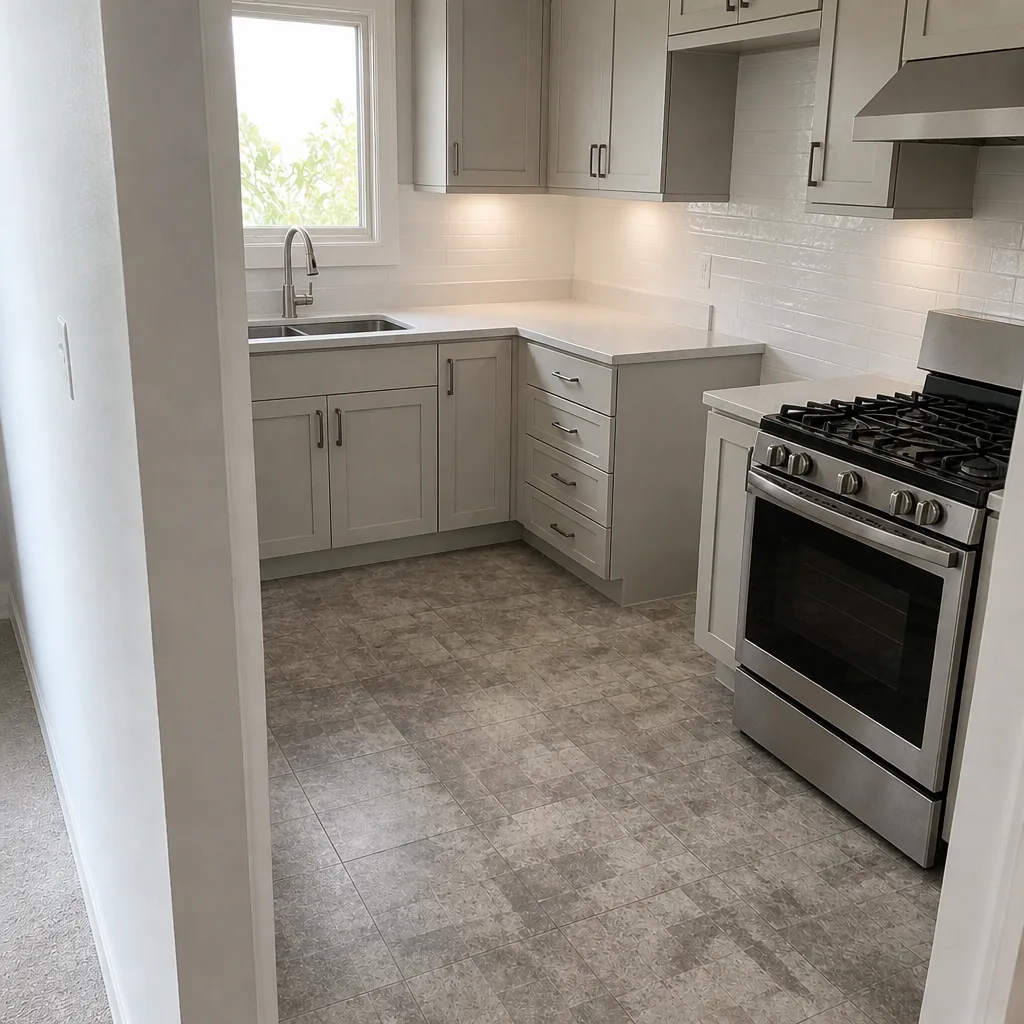
 Before
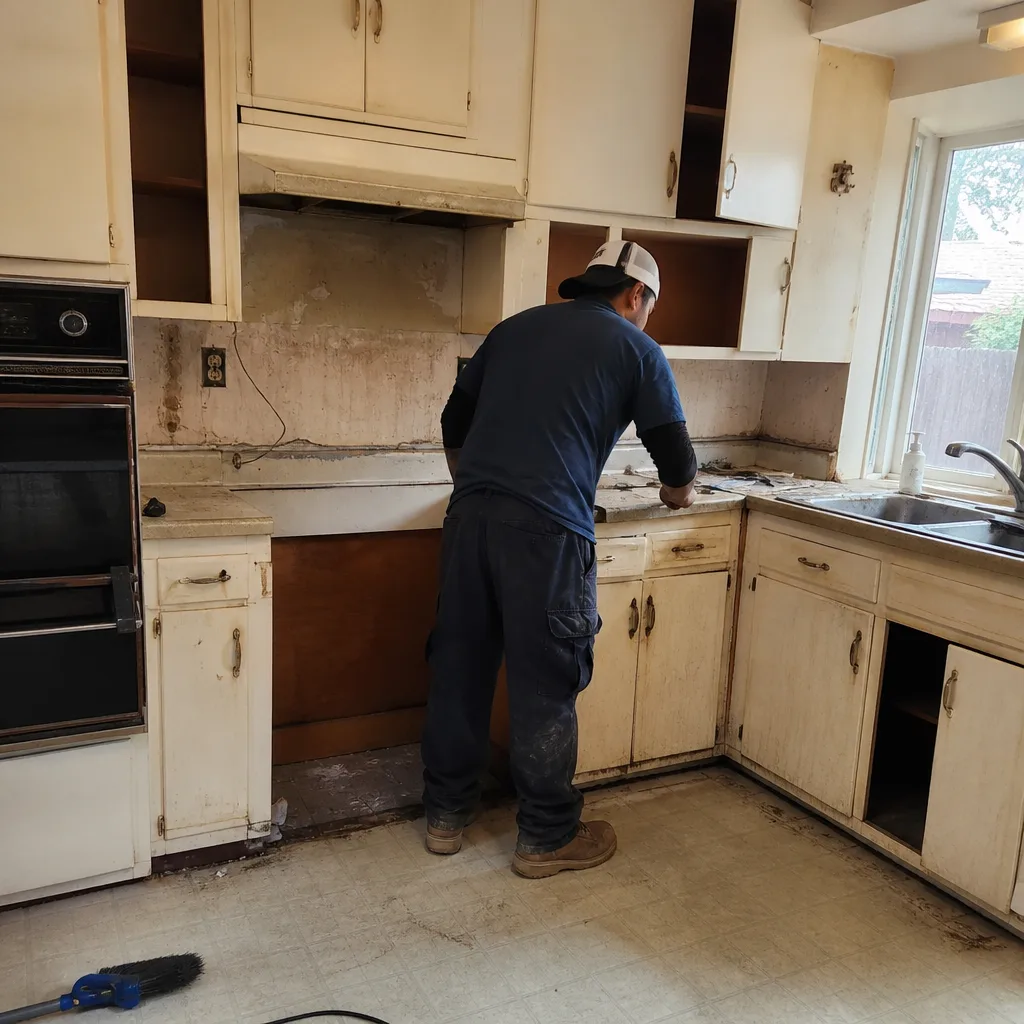
 After
 Before
 After
When to Call a Professional
Some driveway work genuinely requires a trained installer: base engineering on clay, permit-driven drainage, and any paver layout over 200 square feet. A paver driveway looks simple at the surface, but the compaction, testing, and drainage design are where an experienced contractor earns their place. If your current driveway is heaving, popping loose, or pooling water against the garage, the problem is almost always below the pavers – and it will not fix itself.
A few specific situations call for a pro:
- Base depth uncertain or soil history unknown.
- Existing drainage problems or signs of erosion.
- HOA design review or city permit required.
- Any project combining driveway work with fence, ADU, or other structural changes.
Groundwork Construction Co. of Tustin offers free estimates in Tustin and throughout the surrounding area. Call (833) 954-6066 to schedule yours. The 730-Day Done Right Promise covers the workmanship – if it’s not done right, we make it right – so a problem found in year two is ours to correct, not yours.
Frequently Asked Questions
Most Tustin paver driveways run $16 to $32 per square foot installed. A typical two-car driveway of 500 to 700 square feet comes in around $11,000 to $20,000 once base preparation, drainage, and old surface removal are included. Do not compare these numbers to national averages – our soil conditions require a deeper base than typical, and that raises the number honestly. Call (833) 954-6066 for a line-item quote on your specific property; estimates are free.
It depends on scope. A like-for-like surface replacement often doesn’t need a permit, but expanding the driveway footprint, altering drainage to the street, or reaching into the public right-of-way typically does. HOAs may add their own design review on top of the city process. Get the answer for your specific lot before ordering materials, and confirm who pulls the permit – we pull permits and pass inspections as part of the job.
A typical Tustin driveway takes one to two weeks from demolition to finish, depending on size, access, and how much base work and drainage are required. Deep clay base projects lean toward the longer end. Weather during the wet season can add days. We give you a start date and a completion date in writing so you know what to plan around.
Interlocking pavers won’t crack like concrete because they’re designed to flex. But they can shift and heave if the base under them isn’t built for expansive clay. A properly engineered 8- to 12-inch compacted base with the right drainage holds up, while a shallow default base fails within about three years. The paver is not the variable; the base is.
Not always, but Orange County stormwater rules make them more attractive, and some projects encourage or require runoff management. Whether your lot qualifies depends on soil infiltration rate, slope, and drainage outlets. Tustin’s clay drains slowly, so a permeable system here usually needs an underdrain or storage layer to work properly. We can tell you in one site visit whether permeable paving is a good fit.
Get your CC&Rs and design guidelines first, then submit a design package – plan view, paver samples, and color selection – in writing. Do not order material until you have written approval. Many Tustin HOAs, particularly in master-planned communities, have specific palette and pattern rules; getting them right up front prevents an expensive redo. Call (833) 954-6066 and we’ll help you build a package that clears review.
The Bottom Line
A paver driveway in Tustin succeeds or fails on what’s underground. Local clay swells up to 10% in wet season, and a 4-inch base built for a drier climate can’t absorb that movement. The right recipe is a tested, deeper compacted base, drainage designed on purpose, pavers chosen for UV and heat stability, and HOA and city requirements cleared in writing before work starts. Get those right and a Tustin driveway can look new for decades; skip them and it may fail within three years. If you want an experienced second look at your property, our Groundwork Construction Co. of Tustin home page lists everything we handle – and for a specific driveway quote, call (833) 954-6066 for a free estimate and design consult.
Written by the team at Groundwork Construction Co. of Tustin.