
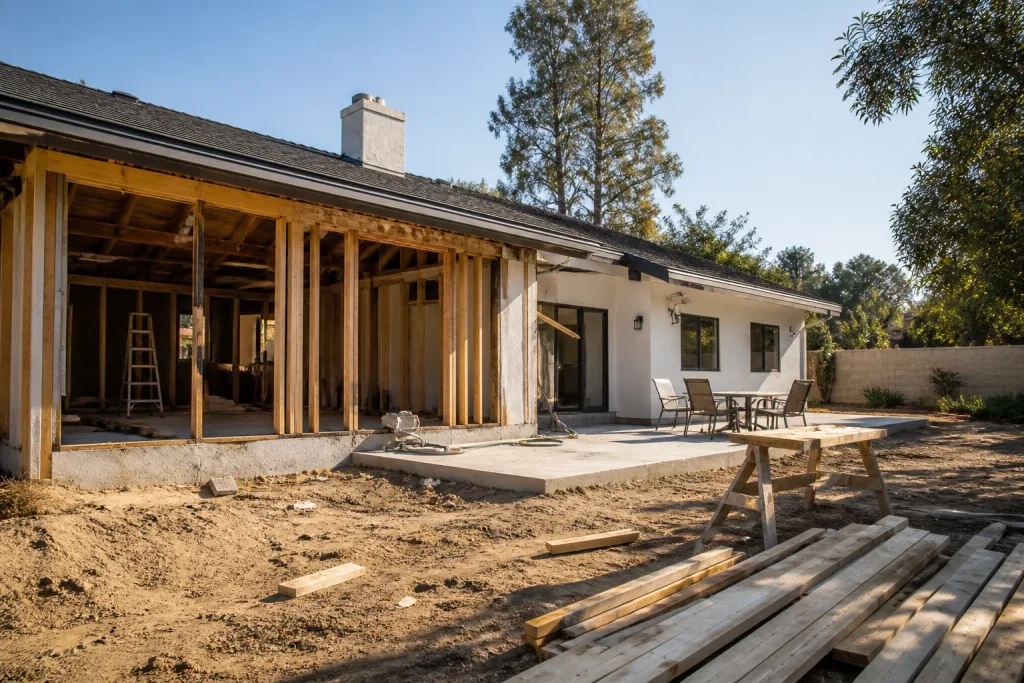
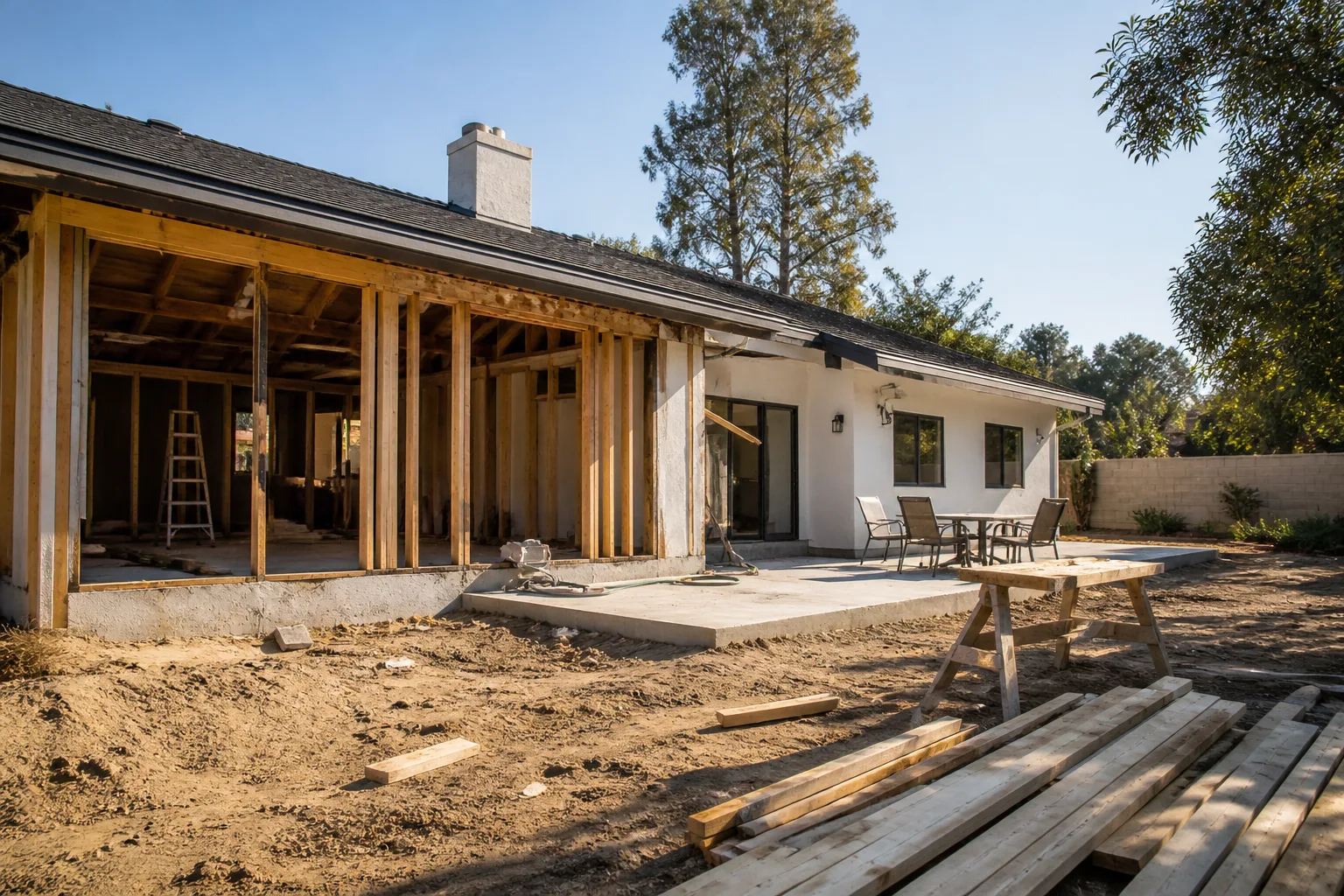
Home Additions & ADU: Repair or Replace? How Tustin Homeowners Decide
Whether to convert an existing structure into an ADU or start from scratch comes down to three things: the foundation, the framing, and the electrical panel. If all three check out, a conversion usually costs less than a new build. If any one of them fails, remediation can push the conversion past the price of new construction. Tustin’s ordinance allows up to 1,200 square feet on most single-family lots, which makes the math tempting – but an aging garage or bonus room that needs a new slab and a panel upgrade can eat that advantage fast. If you’d rather not sort through it alone, call (833) 954-6066 and we’ll walk the structure with you.
What are the three structural checkpoints that decide repair vs. replace?
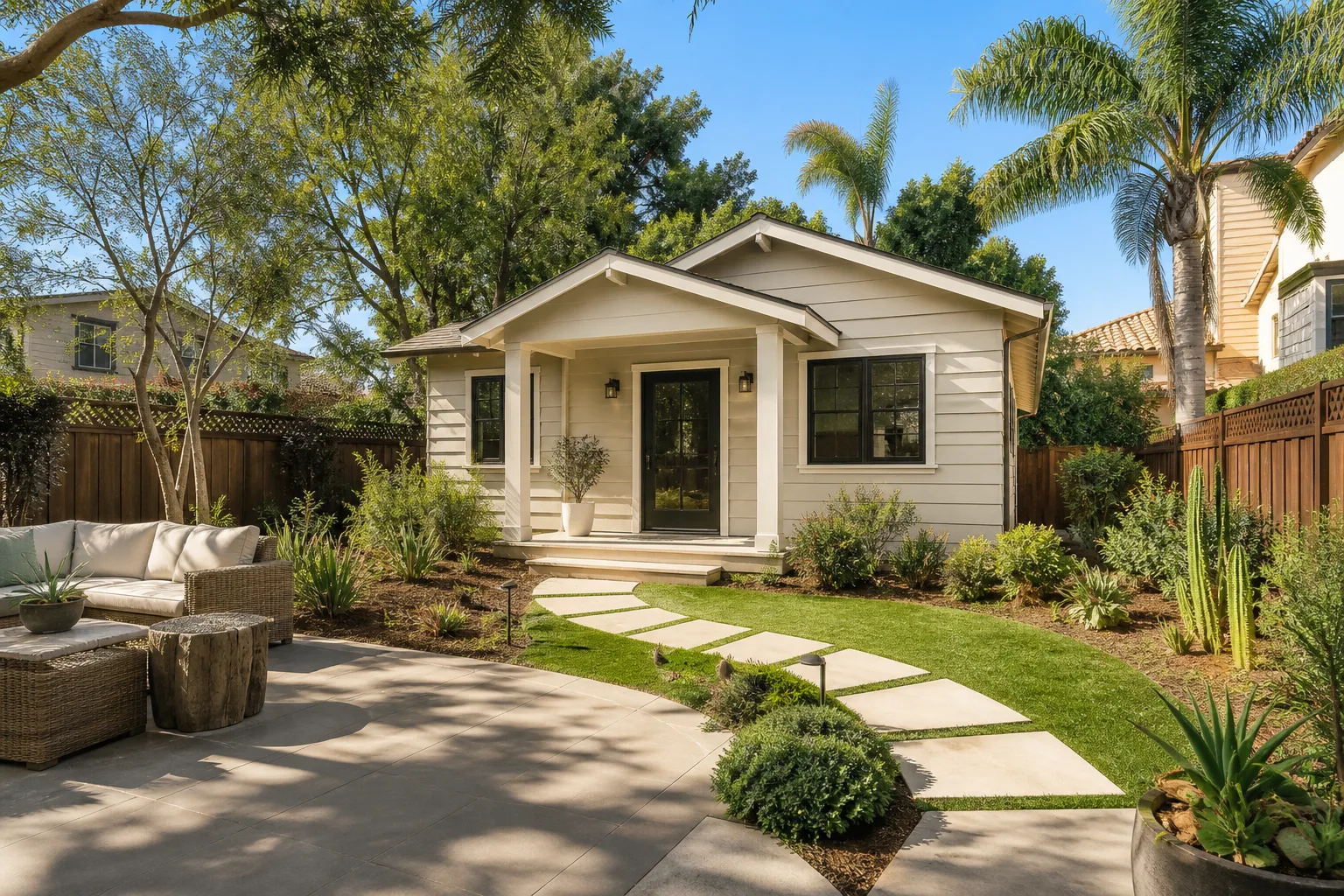
Most homeowners focus on finishes – flooring, cabinets, the bathroom tile – because that’s what they can see. The decision actually turns on what’s underneath. In our experience across Tustin, these three checkpoints settle the question more often than any budget spreadsheet.
- Foundation. A detached garage built in the 1950s or 1960s often sits on a shallow slab poured for a car, not a living space. If it’s cracked, settling, or under-thick, you’re looking at a new slab or a pier system before anything else happens. That single line item can run past the cost of a fresh foundation on a new footprint.
- Framing. Garage walls were framed to hold up a roof, not a second story or a set of windows. We check span, stud spacing, and whether the wall can carry the load of insulation, drywall, and a real ceiling. Older bonus rooms over garages are a common problem spot in Tustin – the floor system was never designed for living-room loads.
- Electrical panel. An ADU needs its own circuits, and often its own meter. A 100-amp panel from decades past usually won’t carry a kitchenette, a mini-split, and a water heater. A panel upgrade plus the trenching and separate service can be a five-figure line item on its own.
When all three pass, you’re in conversion territory and the existing structure is genuinely worth keeping. When two or more fail, replacement usually pencils out better – and we say so plainly rather than selling you a patched job that runs into trouble in year three.
Which Tustin ADU rules eliminate a structure before condition even matters?
Sometimes the structure is fine and the answer is still no. Tustin’s ADU rules put hard limits on where a conversion can go, and those limits can rule out a building regardless of how solid it is. The setback and height requirements are the ones that catch homeowners off guard.
On a typical single-family lot in Tustin, an ADU has to respect rear and side setbacks, and the height limit for a detached unit is generally lower than what a two-story garage addition might suggest. A structure sitting too close to the property line, or one already pushing the lot coverage limit, can’t be converted as-is – no amount of foundation work fixes a setback problem. Attached and detached units also follow different rules, and a garage conversion has its own path. That’s why we check zoning and setback math before we ever talk finishes.
This is where a lot of well-meaning plans die. A homeowner buys a conversion plan online, gets a contractor bid, then discovers the existing shed sits three feet inside the required setback. The structure was never eligible. Walking the lot with a tape measure and the current ordinance in hand takes an afternoon and saves months.
How does California’s ADU permitting streamlining actually work in Tustin?
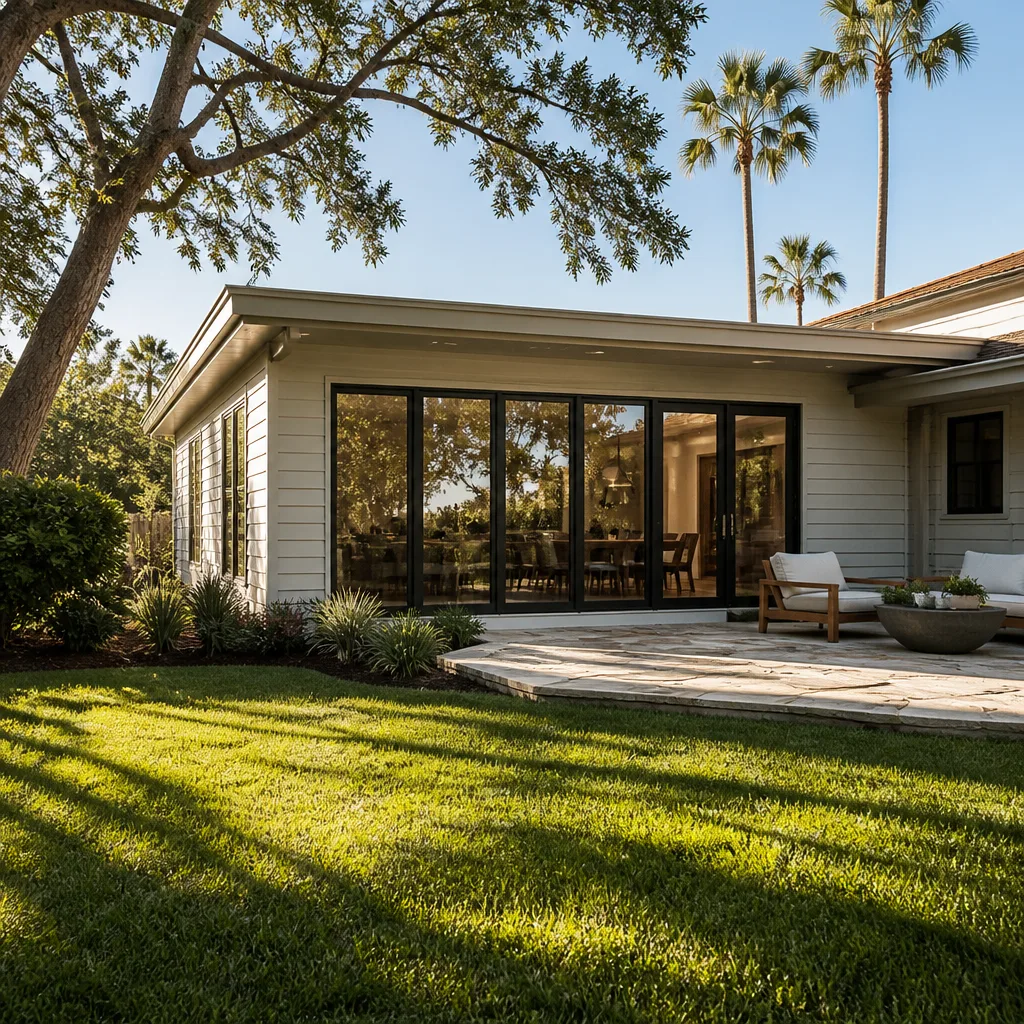
State law now pushes cities to approve qualifying ADUs on a faster, more predictable timeline than a standard addition, and Tustin follows that framework. In plain terms: a project that meets the state’s size, height, and setback standards gets a review path with defined deadlines, and the city can’t apply some of the discretionary design conditions it once did. That’s real progress for homeowners who remember when an ADU permit could drag on for a year.
What streamlining does not do is skip the technical review. You still need stamped plans, a site plan showing setbacks, and compliance with the building code on the structure itself. The speed comes from removing roadblocks, not from lowering standards. In practice, a clean, complete submittal on an eligible lot moves noticeably faster than a conversion that needs variances or a lot-coverage exception. The single biggest timeline factor we see in Tustin is whether the existing structure and lot already fit the rules. If they do, permitting is predictable. If they don’t, you’re in variance territory and the clock changes.
Get the plans and the setback math right the first time and the streamlined path works the way it’s supposed to. Get them wrong and you’ll spend the difference in resubmittals.
When does a full replacement ADU pay back the premium within five years?
A new detached ADU costs more up front than a patched conversion – often meaningfully more. The question is whether that premium earns itself back through rent and lower long-term costs. In our experience, it usually does when the conversion would have required major remediation.
Here’s the rental income math in plain terms. A legal, well-built 600 to 1,000 square foot ADU in Tustin rents for real money in this market – enough that the monthly gap between a patched conversion and a clean new build closes within a few years. Run the numbers this way:
- Add up the conversion’s full cost, including foundation repair, framing upgrades, and panel work – not just finishes.
- Compare that to a new build on the same lot, including site work and utility trenching.
- Estimate the monthly rent each version can realistically command. A conversion that still feels like a converted garage rents lower than a purpose-built unit with proper ceiling height and windows.
- Divide the cost difference by the monthly rent gap. If the premium recovers inside five years, replacement is the better financial move.
The other half of the math is maintenance. A patched conversion built on a marginal structure tends to generate repair calls – settling floors, moisture, electrical quirks. Those costs don’t show up in the first bid, but they show up in years two through ten.
What does “repair” actually mean in an ADU context?
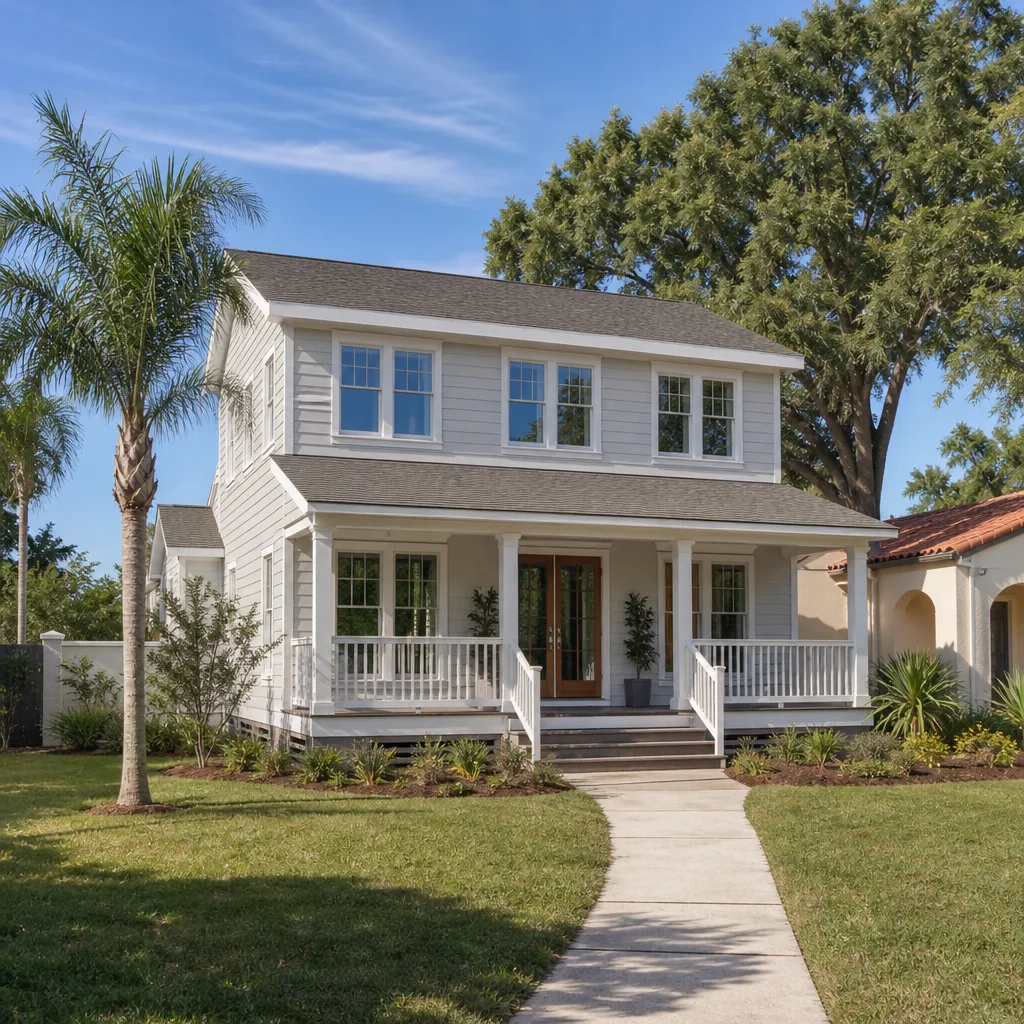
Repair isn’t a dirty word. When a structure is sound, targeted upgrades preserve real value and cost a fraction of a new build. The trick is knowing which upgrades are investments and which are just delaying the inevitable.
Worth doing when the structure passes the three checkpoints: a panel upgrade to carry the ADU loads, new windows and doors for energy performance and code, insulation and drywall to bring a garage shell up to living standards, and a proper mini-split for heating and cooling. These are the upgrades that turn a sound shell into a legal, rentable unit without touching the foundation. We lean on quality door and window lines – Therma-Tru for entry doors and ViewLux for the window package – because the envelope is what you’ll live with for decades.
Delaying the inevitable looks different. Patching a cracked slab instead of addressing the cause. Adding a second layer of flooring over a settling subfloor. Dropping a new panel in without checking whether the service line can carry it. Those moves buy a year or two and cost more later. If the foundation or framing is failing, “repair” becomes a euphemism for throwing money at a structure that won’t hold. We’ve pulled apart conversions where the previous work hid a failing slab under fresh flooring, and the homeowner paid twice for the same problem.
When to call a pro
An ADU touches structural, electrical, and permitting work that’s genuinely risky to handle alone – a foundation or panel decision made wrong can cost far more than the job itself. This is a spot where a trained professional walks the structure and reads the ordinance with you before you commit to either path. We offer a free project estimate and design consult so you can see the real numbers on both options before you decide. If you’re in Tustin and weighing a home addition or ADU, we’ll tell you honestly which way the structure points.
Related services in Tustin: Home Additions & ADU in Tustin, and for the exterior work that often comes with a backyard build, Driveway & Pavers in Tustin and Fence Installation in Tustin. You can also start at our Groundwork Construction Co. of Tustin home page.
The Bottom Line
Repair wins when the foundation, framing, and electrical panel all check out and the lot already fits Tustin’s setback and height rules. Replace wins when two or more of those checkpoints fail, when the existing structure sits outside what the ordinance allows, or when the rental premium on a purpose-built ADU recovers its cost inside five years. Run the three checkpoints first. The rest of the decision gets a lot clearer once you know what’s under the floor.
- Check foundation, framing, and panel before pricing finishes.
- Confirm setback and height eligibility early – condition can’t fix a zoning problem.
- Streamlined permitting rewards a clean, complete submittal.
- Targeted upgrades (panel, envelope, HVAC) preserve value on a sound shell; patching a failing structure doesn’t.
If you’re in Tustin and need help deciding, Groundwork Construction Co. of Tustin offers free estimates – call (833) 954-6066. Every project we take on is backed by our 730-Day Done Right Promise, with upfront pricing and no surprises from first walkthrough to final inspection.
Frequently Asked Questions
Often yes, if the structure passes the foundation, framing, and electrical panel checks and the lot meets Tustin’s setback and height rules for a conversion. A garage conversion follows a specific path under state ADU law. The deciding factor is usually whether the existing slab and framing can carry living loads without major remediation.
Conversion is usually cheaper when the existing structure is sound. When two or more structural checkpoints fail – a bad slab, inadequate framing, an undersized panel – remediation costs can push conversion past the price of a new build. Walk the structure and compare full numbers before deciding.
Qualifying ADUs move through a streamlined state review path with defined deadlines, so a complete, eligible submittal is predictable. Projects that need variances or lot-coverage exceptions take longer. The biggest timeline variable is whether the structure and lot already fit the rules before you submit.
Not with a proper scope and upfront pricing. We provide a written line-item estimate before work begins, and the number you see is the number you pay. Unexpected conditions found during demo get discussed and documented before any added work proceeds – no surprise change orders.
We build to code and pull permits as part of the project, so inspections are planned milestones, not surprises. If a correction comes up, it’s handled before the next inspection and covered under our 730-Day Done Right Promise – if it’s not done right, we make it right.
Written by the team at Groundwork Construction Co. of Tustin.
Need Construction Help?
Call Groundwork Construction Co. of Tustin - licensed & insured, here with fast after-hours help in Tustin.
(833) 954-6066